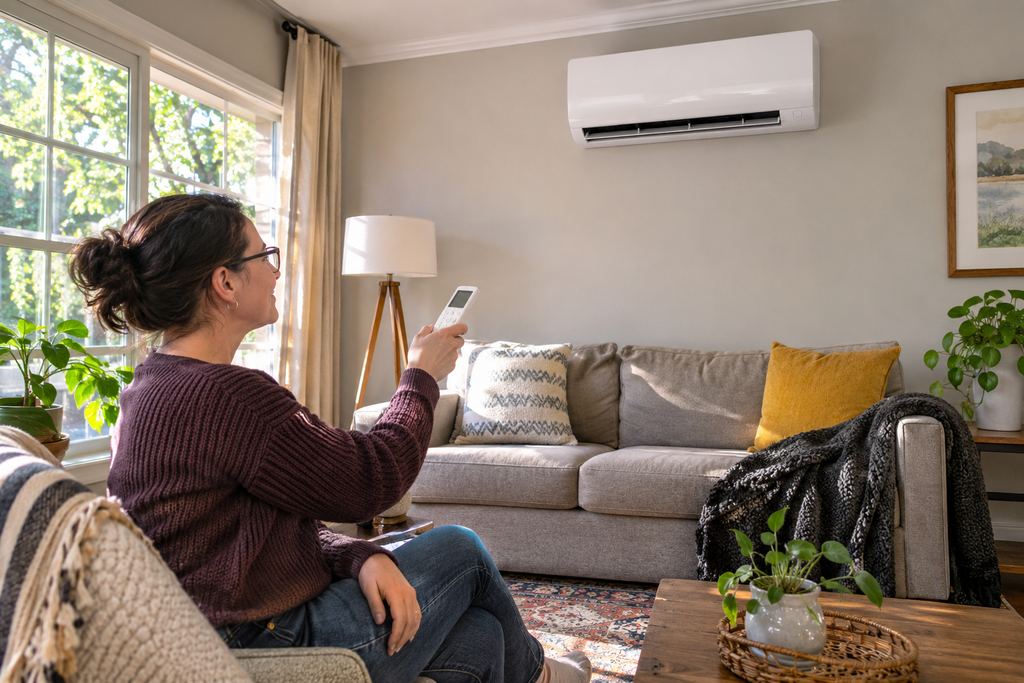
How an Inverter Air Conditioner Works and When It Pays Off
An inverter air conditioner uses electronics to run its compressor at many speeds. Instead of cycling between full power and off, it slows down as the room approaches the set temperature and keeps humming along at low output.
The inverter board converts incoming alternating current to direct current, then builds a new output at whatever frequency the compressor needs. Lower frequency means a slower compressor and less power drawn. The payoff is steadier temperatures, quieter running and lower energy use in climates and rooms where the unit spends long hours at part load.
What the inverter actually changes
Household power in the US arrives as 60 Hz alternating current. A conventional compressor motor is wired straight to it, so it has one speed: on. The thermostat controls temperature by starting and stopping it, and each start pulls a surge of current.
An inverter drive sits between the power supply and the motor. It rectifies the incoming power to DC and then synthesizes a variable-frequency output, ramping the compressor from a crawl to full speed and anywhere between. On a mild evening the unit might run at a fraction of its rated capacity for hours instead of blasting cold air for ten minutes and shutting off.
Where you will find inverter compressors
Inverter and fixed-speed side by side
| Trait | Fixed-speed compressor | Inverter compressor |
|---|---|---|
| How it holds temperature | Full power, then off, then full power again | Speeds up and slows down to match the load |
| Room temperature swing | Noticeable rise and fall | Small and gradual |
| Startup current | Large surge at each start | Soft ramp from low speed |
| Sound | Clunk at startup, steady roar | Low hum at part load |
| Purchase price | Lower | Higher |
| Repair parts | Simpler controls | Electronic boards that cost more to replace |
Is an inverter AC cheaper to own?
It costs more to buy and usually less to run. Savings are largest where a unit spends most of the season at part load: long cooling seasons, rooms that are not baking in direct sun all day, and systems that are a little large for the space. A fixed-speed unit in that situation cycles constantly. In a room that needs full output for most of the afternoon, both types run near full speed and the gap narrows.
Moisture control also improves. Long, slow run times keep the coil cold for longer, so more humidity condenses and drains away instead of returning to the room.
Comparing efficiency labels
Labels differ by product type. Window and portable units are rated in CEER. Ducted central systems and mini splits are rated in SEER2. Do not compare a CEER number with a SEER2 number; compare like with like. ENERGY STAR certified room air conditioners exceed the federal minimum, so the label is a reasonable first filter when shopping for a window unit. To find the unit that uses the least electricity for your room, compare the CEER or SEER2 of models that fit the size you need, then look at the estimated yearly energy cost on the yellow EnergyGuide label where one is printed.
Signs an inverter unit is not behaving
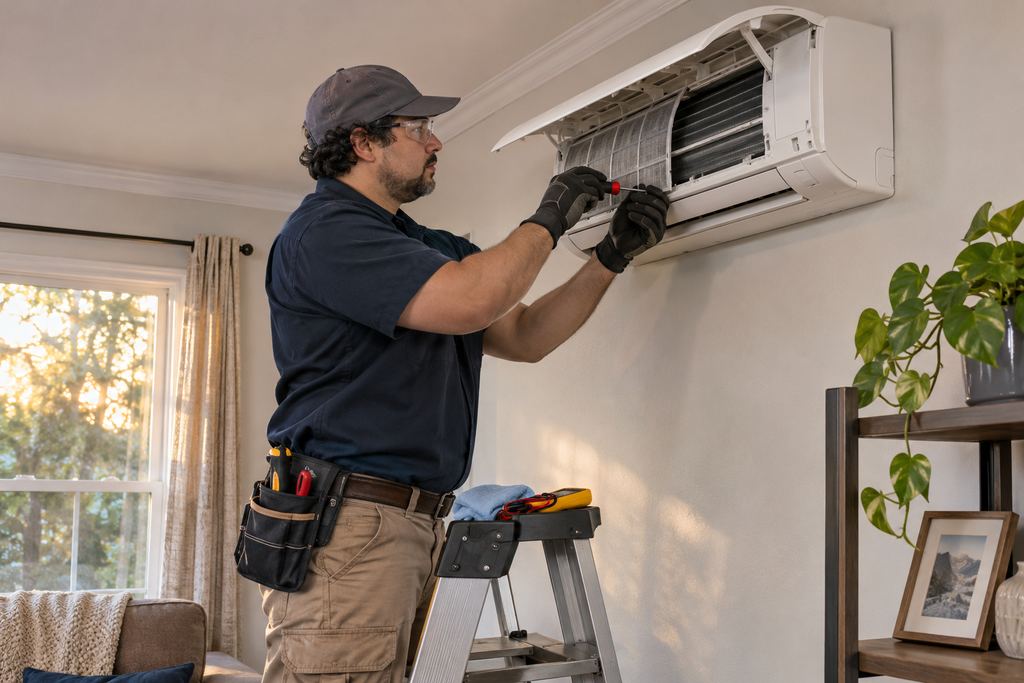
Inverter systems report many faults through blinking lights or error codes. These symptoms deserve a call to a technician.
- Error code on the display or blinking LEDs: Note the pattern and look it up in the manual before the visit.
- Runs at full roar and never slows: Could point to low charge, a sensor problem or an undersized unit.
- Starts, stops and restarts within minutes: Inverters should not short cycle; a protection fault may be tripping.
- Outdoor unit silent while the indoor fan runs: The board, the compressor or its wiring may have failed. See mini-split repair.
Sizing still matters
A wide speed range forgives a little oversizing, but not a lot. If the minimum speed still outputs more than the room needs, the unit will cycle like a fixed-speed model. Match the capacity to the room using the manufacturer's chart or a contractor's load estimate, and for whole-house systems ask for a load calculation. Our central air guide explains how that works.
Frequently asked questions
What does inverter mean on an air conditioner?
It means the compressor runs on a variable-frequency drive, so its speed changes with demand instead of being fixed.
How many hours can an AC run on a power inverter and battery?
Divide usable battery energy by the AC's running watts. A 4,000 watt-hour battery feeding an 800 watt unit lasts about five hours before conversion losses, which shorten that. Check the unit's startup draw as well; inverter ACs start gently, which helps.
Which inverter AC saves the most electricity?
The one with the highest CEER or SEER2 among models sized correctly for your room. A high-rated unit that is far too large or too small will not deliver its label savings.
Are inverter units quieter?
Usually, because they spend most of their time at low speed. Compare published sound levels at low and high fan settings. If one room needs a temporary fix, see the portable air conditioner guide, though portables tend to be louder.
Related guides and services
Compare inverter options with a contractor
Tell us the space you want to cool and what you have now. A local contractor can suggest the type and size that fit.
Tell us the space you want to cool and the system you have now.
Please keep this page open.
- We pair the request with an independent contractor or partner network that works in your ZIP code.
- The contractor gets in touch to go over the details and agree on a visit.
- After checking the system they quote the job, and you choose whether to proceed.
Read how requests are handled.
Online requests are not connected to a contractor network yet. Nothing you typed was sent or saved. Please phone us instead, or try again later.
Call (888) 555-0199