AC Leaking Water: Finding the Source and Stopping It
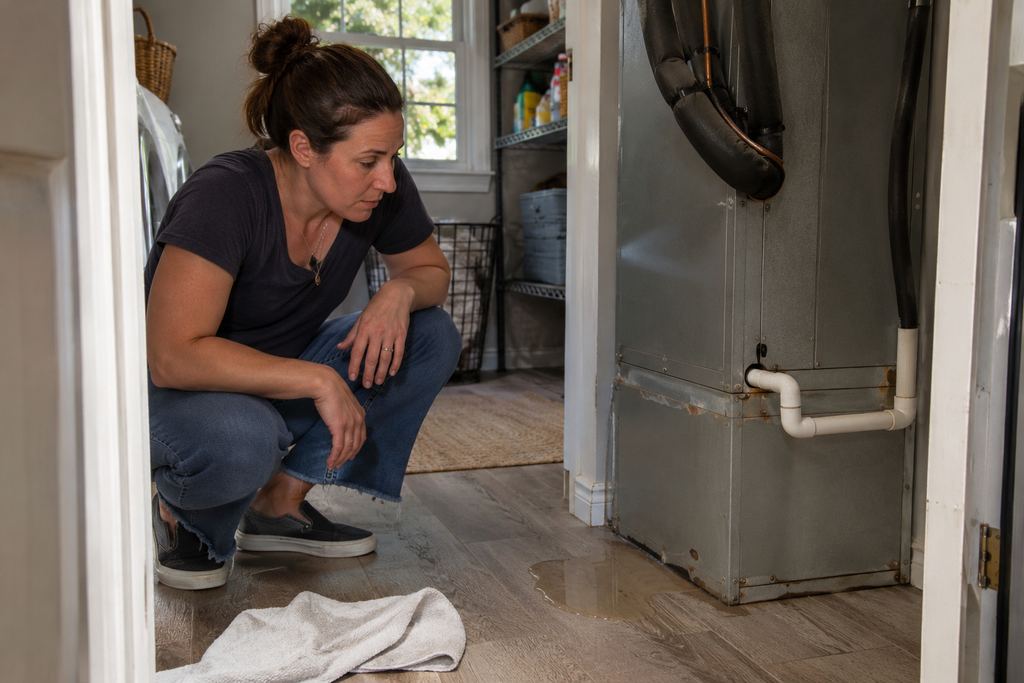
An AC leaking water inside the house is nearly always condensate that missed the drain. Air conditioners pull moisture out of the air on purpose, and that water is supposed to run from a pan to a drain line and out of the house.
Turn the system off at the thermostat and keep electrical items out of the water. Check the filter and look for ice on the copper lines. Then find the drain pan under the indoor coil: a full pan points to a clogged drain line or failed condensate pump, an empty pan with water on the floor points to a crack or a disconnected line. Water dripping outside from a small pipe is normal; water inside is not.
Why there is water in an AC at all
The indoor coil is cold enough that moisture in the air condenses on it, like water beading on a cold drink. That water drips into a pan below the coil, then flows through a drain line to a floor drain, a pipe outdoors or a condensate pump. On a humid day the flow is steady. A leak means some part of that path is blocked, broken or overwhelmed.
The most common causes
What to do right now
- Turn cooling off
Set the thermostat to Off. If you see ice, set the fan to On to thaw.
- Contain the water
Towels, a wet/dry vacuum or a shallow tray under the drip. Move boxes and rugs.
- Look at the pan and line
Full pan: drain or pump issue. Dry pan with a puddle: crack or loose fitting.
- Check the filter
Replace it if it is dirty.
- Clear the drain if your manual allows
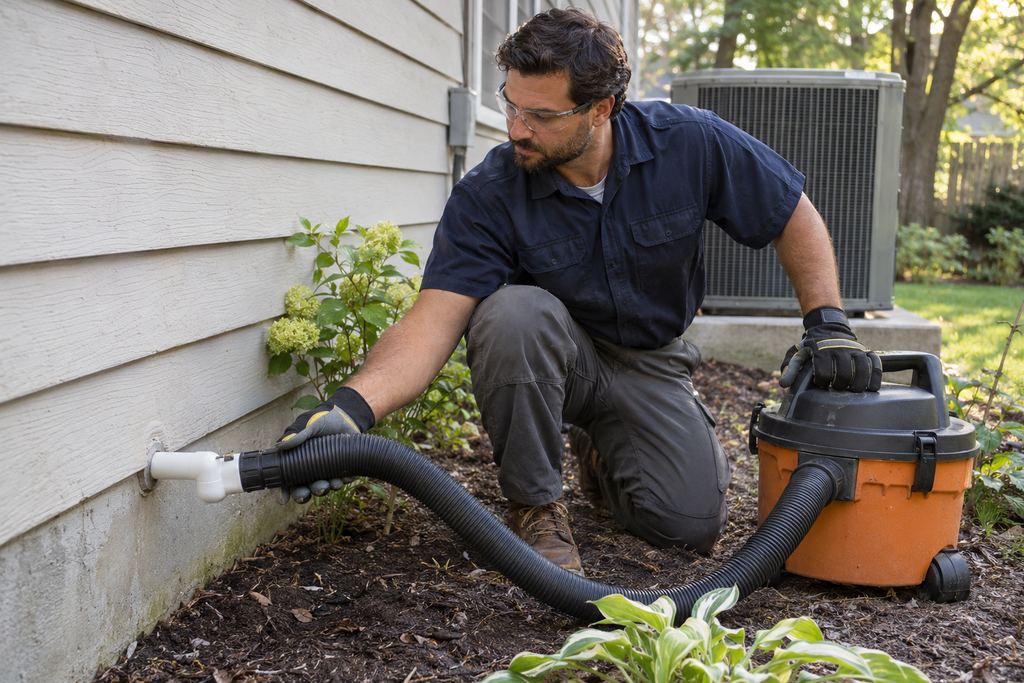
A wet/dry vacuum on the outdoor end often pulls a soft clog. Do not bypass a float switch.
- Dry wet materials
Fix the leak and dry drywall, carpet and insulation within a day or two to limit mold growth.
Homeowner fixes vs. technician repairs
Safe checks you can do
No tools beyond a flashlight. Turn the system off at the thermostat before opening any filter or access door.
- Replacing the filter.
- Vacuuming or flushing the drain line as the manual describes.
- Plugging in or resetting a condensate pump per its instructions.
- Thawing an iced coil with the fan on and cooling off.
Leave these to a licensed technician
These involve high voltage, refrigerant or sealed components. Refrigerant work requires EPA Section 608 certification.
- Clearing a blockage the vacuum cannot reach, or a line in a wall.
- Replacing a pan, pump or float switch. Cleaning is covered on drain line cleaning.
- Finding the cause of a frozen coil, including refrigerant leaks.
- Re-sloping or rerouting the drain.
Other units, other leak points
Ductless indoor heads drain through a thin hose behind the unit, and a kinked or clogged hose drips down the wall below. The mini-split leaking water guide covers those. Window units are built to drip outside; water dripping into the room usually means the unit is tilted the wrong way or its drain channels are blocked.
If the leak tripped a float switch and the system will not start even after the water is gone, read AC not turning on.
Keeping the drain path clear
- Change the filter on its schedule so less dust reaches the coil and pan.
- Flush the drain line at the start of the cooling season if your manual allows.
- Check that a condensate pump turns on when you pour a little water in its reservoir.
- Ask for the pan, drain and float switch to be inspected at each tune-up.
Frequently asked questions
Is it okay for water to drip from an AC?
Outside, yes. A steady drip from a drain pipe near the condenser or a window unit's back edge is normal on humid days. Water inside the house means the drain path has a problem.
What should I do if the AC drain line is clogged?
Turn the system off, empty the pan, and clear the line with a wet/dry vacuum at the outdoor end or a flush through the access port if your manual allows. If it stays blocked, call a technician.
How much does it cost to fix an AC water leak?
It depends on the cause: clearing a drain is a short visit, while a new pan, pump or a refrigerant leak repair costs more. Ask for a written quote; AC repair costs lists the factors.
Does a short pause before the AC restarts after a leak mean something is wrong?
Not by itself. Many controls hold the compressor off for about three to five minutes after any stop. A system that stays off long after the water is gone may have a float switch still tripped.
Can an AC water leak cause mold?
Yes. Mold grows on materials that stay wet. Stop the leak and dry the area quickly. EPA guidance treats moisture control as the key to mold control indoors.
Related guides and services
Stop the AC water leak
Tell us where the water is and what the pan looks like. A local contractor can contact you about a visit to find and fix the source. Availability varies by ZIP code and season.
Say where the water is and how much. A local contractor can follow up about a visit.
Please keep this page open.
- We pair the request with an independent contractor or partner network that works in your ZIP code.
- The contractor gets in touch to go over the details and agree on a visit.
- After checking the system they quote the job, and you choose whether to proceed.
Read how requests are handled.
Online requests are not connected to a contractor network yet. Nothing you typed was sent or saved. Please phone us instead, or try again later.
Call (888) 555-0199