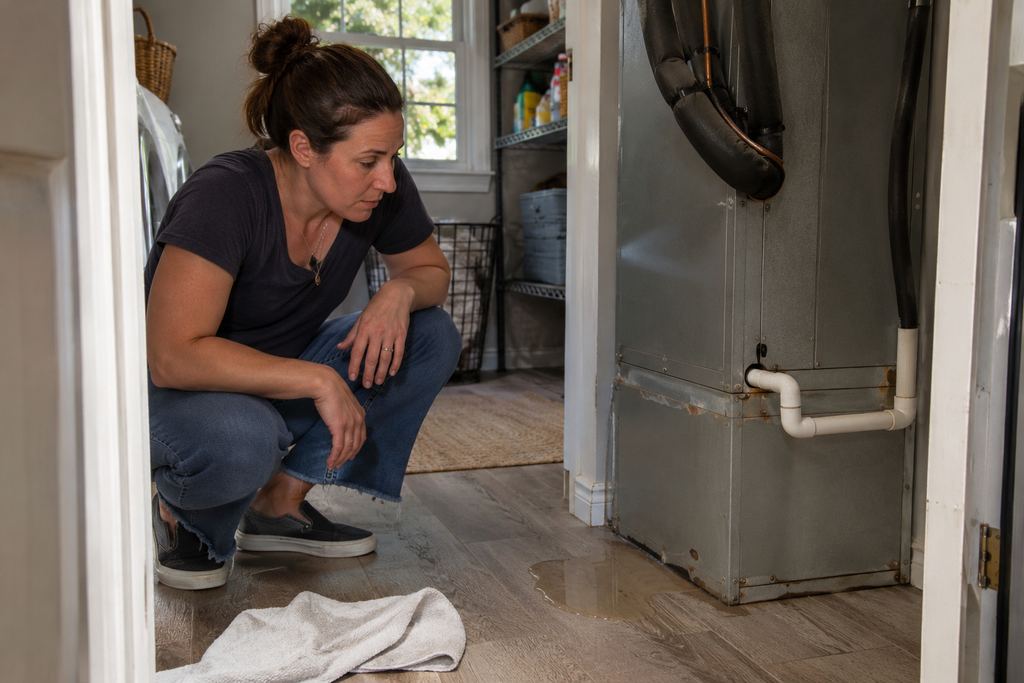
Why a Mini Split Leaks Water Into the Room
A mini split leaking water is almost always a condensate problem. The indoor coil pulls moisture out of the air all day, and that water has to drain somewhere. When the path is blocked, kinked or sloped the wrong way, it comes out of the unit and down your wall.
The usual causes are a clogged drain hose or pan, a drain line that rises instead of falling, a unit mounted out of level, a failed condensate pump on cassettes and ducted heads, and a frozen coil that floods the pan when it melts. Turn the unit off, dry the area and check the filters. Drain and pump repairs and anything involving refrigerant need a technician.
Do this first
- Turn the unit off: Stop cooling so no more condensate forms.
- Protect the room: Move electronics and furniture away and dry the wall and floor.
- Look for ice: If the coil is frosted, run fan only until it melts. Ice is a separate problem covered on mini split freezing up.
- Check the filters: Clogged filters can lead to icing and then overflow.
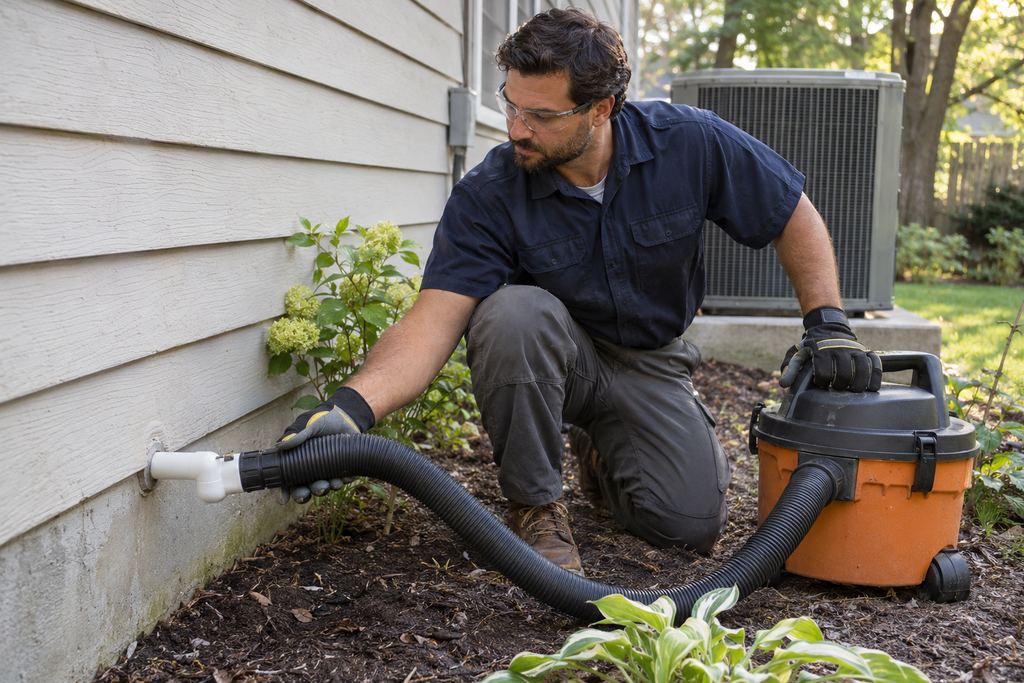
- Find the outside drain end: Follow the line set outside. A small flexible hose should end where water can run out freely.
Where the water comes from
How the setup changes the cause
Where the water shows up says a lot about the setup. A wall-mounted head that drips from the bottom edge usually has a drain or slope problem. On a ceiling cassette, a stain around the grille is often a pump or float switch issue. Floor consoles tend to leak from the base when the pan or hose is blocked. Ducted mini splits hidden in an attic or closet can leak into the ceiling before you see anything in the room, so check below them after a hot spell.
On multi-zone systems, each head has its own drain. One leaking head rarely means the others are at fault.
What a homeowner can handle
Safe checks you can do
No tools beyond a flashlight. Turn the system off at the thermostat before opening any filter or access door.
- Clean or rinse the washable filters as the manual describes.
- Check that the outdoor end of the drain hose is not crushed, buried in mulch or blocked by a nest.
- Look at the head with a level app on your phone to see if it is obviously tilted.
- Use fan mode to thaw a frozen coil before restarting cooling.
Leave these to a licensed technician
These involve high voltage, refrigerant or sealed components. Refrigerant work requires EPA Section 608 certification.
- Taking the cover off and removing the drain pan to clean it.
- Rerouting a drain hose or adding slope inside the wall.
- Testing and replacing a condensate pump or float switch.
- Remounting the wall bracket to correct level.
- Checking refrigerant charge and leaks when the coil keeps freezing.
What happens on a service visit
- Inspection
The technician checks the filters, coil and where the water exits the unit.
- Drain test
Water is poured into the pan to see how fast it drains and where it escapes.
- Line and pump check
The hose slope, outdoor outlet and any pump are tested.
- Charge check if icing
If ice was part of the problem, refrigerant pressures and temperatures are measured.
- Written repair price
Ask for the cause and the cost in writing before the work starts.
Damage and mold
Water running behind drywall for days can cause rot and mold. EPA advises fixing the moisture source and drying wet materials quickly. If the leak has been going a while, check the wall cavity and the ceiling below, and tell the contractor how long it has been happening. The general AC leaking water page covers central systems if your home has both.
Preventing the next leak
Clean filters on schedule and book a professional cleaning when the coil or blower looks dirty. A mini-split cleaning usually includes flushing the drain pan and hose. Check the outside end of the drain each spring. In humid regions, ask the installer whether the drain and line insulation are sized for your climate. If the system needs other work, the mini-split repair page lists common jobs.
Frequently asked questions
Where do mini splits usually leak?
Most leaks come out of the bottom of the indoor head on the side where the drain connects, or around the grille on ceiling cassettes. Refrigerant leaks are different and are usually at flare connections, which does not drip water.
Why is my split AC dripping water inside the room?
The condensate is not leaving the unit. A clogged drain, a hose that loses slope, a tilted head or a frozen coil are the common reasons.
How much does it cost to fix a mini split leak?
A drain clean is usually a modest job, while a pump replacement, a drain reroute inside a wall or a refrigerant leak repair costs more. Ask for a written quote. The mini-split repair cost section explains the factors.
Can I put leak sealant in a mini split?
Many manufacturers and technicians discourage refrigerant sealants because they can clog small passages and complicate later repairs. A refrigerant leak should be found and fixed by a certified technician.
Can I keep using the mini split while it leaks?
It is better to stop. Running it keeps producing water that can damage the wall and the electronics inside the head.
Does a mini split need a drain at all?
Yes. Every ductless indoor unit makes condensate in cooling mode, and in heating mode the outdoor unit sheds meltwater during defrost. Both need a place to go.
Related guides and services
Request help with a leaking mini split
Share where the water comes out and how long it has been happening. An independent local contractor can follow up.
Tell us where the water appears and what type of indoor unit you have.
Please keep this page open.
- We pair the request with an independent contractor or partner network that works in your ZIP code.
- The contractor gets in touch to go over the details and agree on a visit.
- After checking the system they quote the job, and you choose whether to proceed.
Read how requests are handled.
Online requests are not connected to a contractor network yet. Nothing you typed was sent or saved. Please phone us instead, or try again later.
Call (888) 555-0199