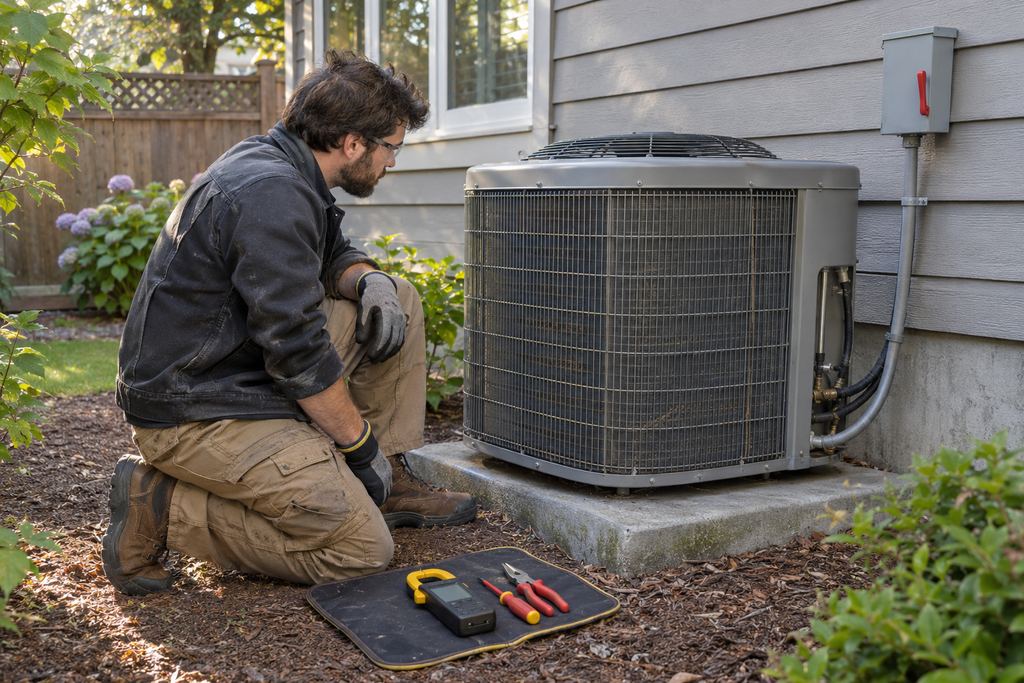
AC Making Loud Noise: What Each Sound Points To
An AC making loud noise is giving you a clue about which part is struggling. Squeals and grinding are mechanical, buzzing and humming are usually electrical, and bangs mean something is loose or hitting a fan.
Turn the system off for grinding, metal on metal scraping, loud banging, or a hum with the outdoor fan standing still. Those can turn a small repair into a compressor or motor replacement if the unit keeps running. Squealing usually means worn motor bearings or, on older blowers, a belt. Rattling often means loose panels or debris. A whoosh from a heat pump during winter defrost is normal.
Sound guide
| Sound | Likely source | What to do |
|---|---|---|
| High pitched squeal | Worn bearings in the blower or condenser fan motor; a slipping belt on older belt-drive blowers | Schedule repair soon |
| Grinding or scraping | Metal contact: failing bearings, a fan blade hitting the housing | Turn off now |
| Loud bang or clank at startup | Loose or broken part, compressor problem, or a duct panel flexing | Turn off and call |
| Steady loud hum, fan not turning | Failed capacitor or a motor that cannot start | Turn off now |
| Buzzing at the outdoor unit | Contactor, loose wiring, or electrical arcing | Turn off and call |
| Rattling | Loose screws, panels, debris in the unit, or a failing fan | Check for debris; call if it continues |
| Hissing or whistling | Air through a restriction, or a refrigerant leak | Call; refrigerant work needs a certified technician |
| Whoosh during winter on a heat pump | Reversing valve shifting during defrost | Normal |
What is behind the loudest sounds
Motors and bearings
The blower in the air handler and the fan on top of the condenser both ride on bearings. As those wear, the motor starts to squeal, then grind. A motor that runs hot and loud is close to failing. See condenser fan motor replacement.
Capacitors and contactors
A loud hum with no movement usually means a motor is getting power but cannot start, often from a failed capacitor. Buzzing at the condenser can come from a worn contactor or loose wiring. These parts carry high voltage and stay charged after shutdown, so they are not homeowner work. Rapid clicking is covered on AC clicking noise.
Compressor
Hard starts, loud knocking from inside the condenser, or a heavy clunk at shutdown can mean the compressor is in trouble. A technician can measure amp draw and check start components before that becomes a replacement.
Loose hardware and debris
Panels, fan guards and mounting screws loosen over years of vibration. Sticks and leaves in the condenser make a clatter. For persistent rattles, see AC rattling noise.
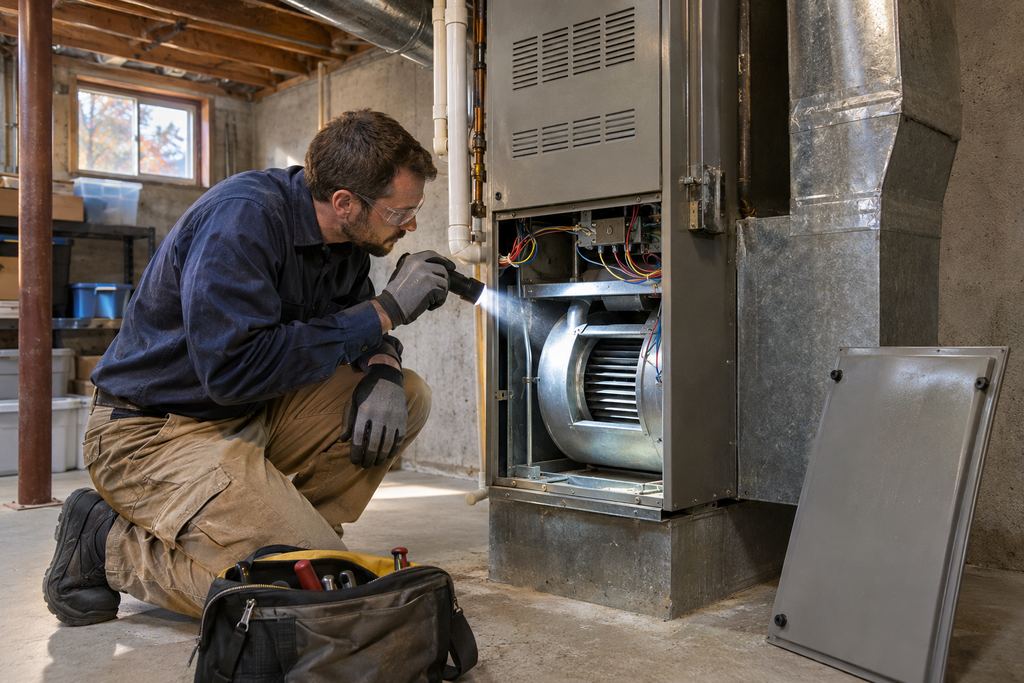
Noise by system type
Safe checks and when to stop
Safe checks you can do
No tools beyond a flashlight. Turn the system off at the thermostat before opening any filter or access door.
- Turn the system off and look around the condenser for sticks, toys or leaves caught in the grille.
- Check that outdoor panels and the fan guard are not visibly loose; tell the technician if they are.
- Replace a dirty filter; a starved blower can whistle and strain.
- Note when the noise happens and record a short video.
Leave these to a licensed technician
These involve high voltage, refrigerant or sealed components. Refrigerant work requires EPA Section 608 certification.
- Opening panels and testing capacitors, contactors and wiring.
- Replacing motors, bearings, belts or fan blades.
- Diagnosing a compressor noise.
- Finding and repairing a refrigerant leak.
Repair or replace when the noise is serious
Prices depend on the part, the equipment and the season, so ask for a written quote after diagnosis.
A common repair on otherwise healthy systems. Typical factors are on blower motor cost.
A small part and usually a short visit.
The most expensive repair. On an older system, compare it with replacement.
Systems built for R-22 face higher refrigerant costs because production of R-22 ended in 2020. Newer systems use R-410A or A2L refrigerants such as R-454B or R-32.
Keeping the system quieter
Most loud failures start as small noises. A yearly tune-up that includes checking motor amps, tightening hardware and testing electrical parts catches many of them early. Keep the filter fresh and the area around the condenser clear. If the noise came with weaker cooling, check AC not cooling as well.
Frequently asked questions
Why is my AC so loud when it runs?
Common reasons are worn motor bearings, a failing capacitor, loose panels, debris in the condenser or a compressor problem. The type of sound tells you which.
How much does it cost to replace an AC fan motor?
It depends on the motor type, whether it is the indoor blower or the outdoor fan, access and your region. Ask for a written quote after diagnosis.
Is it normal for the AC to be quiet for a few minutes before the outdoor unit starts?
Yes. Many thermostats and controls hold the compressor off for about three to five minutes after a stop. Loud noise when it does start is a separate issue.
How can I tell if my AC is about to fail?
Grinding, banging, loud buzzing, a burning smell or breakers tripping are serious warning signs. Turn the system off and have it inspected.
Should I turn off my AC if it is making noise?
For grinding, banging, loud buzzing or a hum without fan movement, yes. For a light rattle you can check for debris, but if it continues, schedule a visit.
Related guides and services
Have the noise checked
Tell us what the sound is like and where it comes from. A local HVAC contractor can contact you about scheduling a repair visit. Availability varies by ZIP code and season.
Describe the sound and whether it comes from inside or outside. A local contractor can follow up.
Please keep this page open.
- We pair the request with an independent contractor or partner network that works in your ZIP code.
- The contractor gets in touch to go over the details and agree on a visit.
- After checking the system they quote the job, and you choose whether to proceed.
Read how requests are handled.
Online requests are not connected to a contractor network yet. Nothing you typed was sent or saved. Please phone us instead, or try again later.
Call (888) 555-0199