Window AC Leaking Water: Normal Drip or a Problem
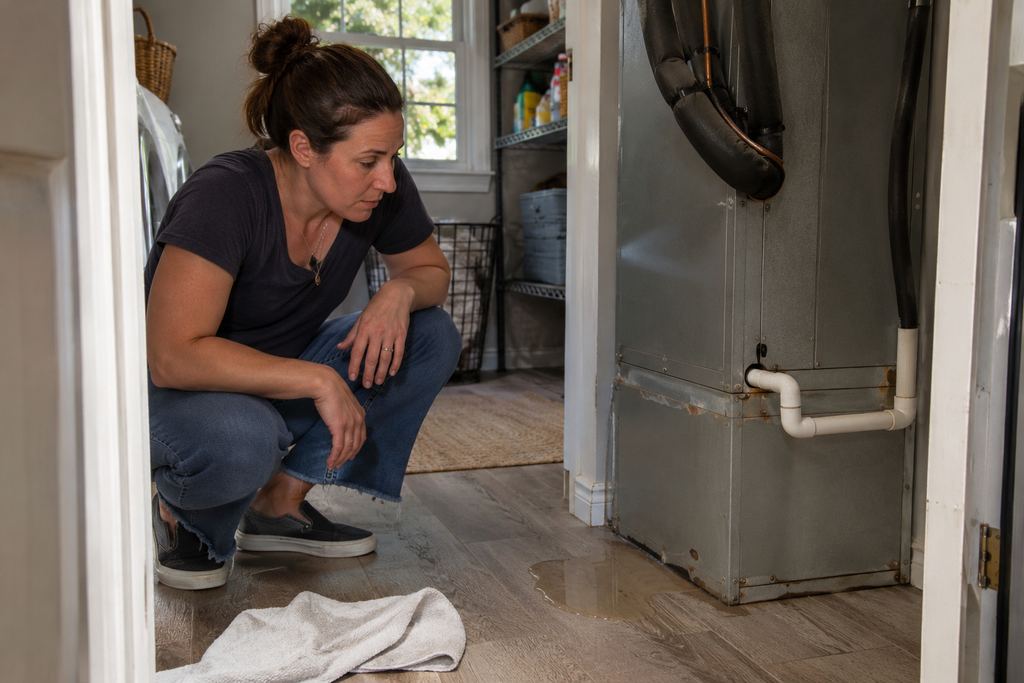
A window air conditioner leaking water outdoors is doing its job, since condensate from the cooling coil has to go somewhere. Water inside the room, on the sill or down the wall means the drain path is blocked, the unit is tilted the wrong way or the coil has iced.
Check the tilt first: most installation instructions call for a slight slope toward the outside. Then clean the filter, look for ice on the front coil and clear the drain channels in the base pan. Water that keeps coming in after those checks usually means a clogged pan or a damaged seal that needs attention.
Where the water shows up
| Location | What it means | What to do |
|---|---|---|
| Dripping outside from the back | Normal condensate drain | Nothing, unless it lands on a walkway or neighbor |
| Pooling on the indoor sill | Unit tilted toward the room or clogged pan | Check tilt and clean the base pan |
| Running down the inside wall | Gaps in the side panels or sleeve seal | Reseal the panels and sleeve |
| Water with ice on the front coil | Airflow problem causing a freeze | Thaw on fan only and clean the filter |
| Spitting or splashing noise | Condenser fan throwing pan water | Usually normal on many units |
Why water comes inside
How window units handle water
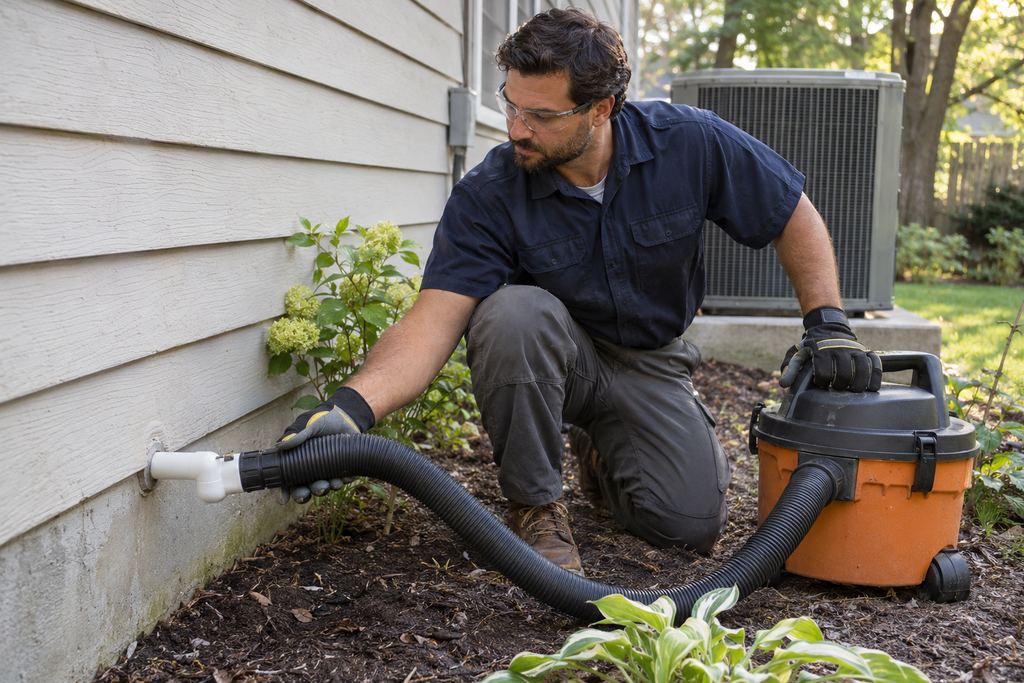
Many window units use a slinger ring on the condenser fan to splash pan water onto the hot outdoor coil, where some of it evaporates. That is why you may hear splashing. Through-the-wall units drain through their sleeve, and casement or slider models often have tighter pans that clog faster. If yours has a drain plug at the back, check the manual before removing it, since some models are designed to keep a little water for the slinger ring.
Choosing a new unit? The window air conditioner guide covers types and sizing.
Homeowner fixes and service work
Safe checks you can do
No tools beyond a flashlight. Turn the system off at the thermostat before opening any filter or access door.
- Unplug the unit before any inspection.
- Adjust the tilt toward the outside per the installation instructions.
- Clean the filter and front grille.
- Clear visible debris from the rear drain channels.
- Reseal side panels with weatherstrip.
Leave these to a licensed technician
These involve high voltage, refrigerant or sealed components. Refrigerant work requires EPA Section 608 certification.
- Removing the chassis to clean the base pan and coil.
- Fixing a cracked pan or damaged sleeve.
- Checking for a refrigerant leak if the coil keeps freezing.
Damage, mold and when to stop using it
Water on a sill or inside a wall can lead to mold, which EPA ties to ongoing indoor moisture. Stop using the unit if water is reaching the wall or outlet below it, dry the area and fix the cause. Check the electrical outlet and cord for moisture before plugging it back in.
Repair or replace
Window AC lifespan is often put at around a decade, though it varies with use and care. A cleaning and tilt correction is cheap. A refrigerant leak or failed compressor often costs close to a new unit. Ask a contractor whether they service window units and for a written estimate. The window AC repair page covers common fixes. If you replace the unit, the old one's refrigerant has to be recovered before disposal. See AC disposal. For central systems, see AC leaking water.
Frequently asked questions
Are window AC units supposed to drip water?
Yes, outside. Condensate from the cooling coil drains out the back. Water inside is the problem.
Can I still use my window AC if it leaks?
If it only drips outside, yes. If water comes inside, stop using it until you fix the tilt or drain, especially if water is near an outlet.
How much does it cost to fix an AC leak in a house?
It depends on the system and the cause. A window unit tilt or cleaning fix may cost nothing. Pan or refrigerant repairs cost more. Ask for a written quote and compare it with replacement.
What's the average lifespan of a window AC unit?
It is often estimated at around ten years, though use, climate and maintenance change that. Clean filters and seasonal cleaning help.
Related guides and services
Request window AC help
Share where the water appears and how old the unit is. An independent local contractor can follow up if they work on window units.
Tell us where the water appears and the unit's age. Ask whether the contractor services window units.
Please keep this page open.
- We pair the request with an independent contractor or partner network that works in your ZIP code.
- The contractor gets in touch to go over the details and agree on a visit.
- After checking the system they quote the job, and you choose whether to proceed.
Read how requests are handled.
Online requests are not connected to a contractor network yet. Nothing you typed was sent or saved. Please phone us instead, or try again later.
Call (888) 555-0199