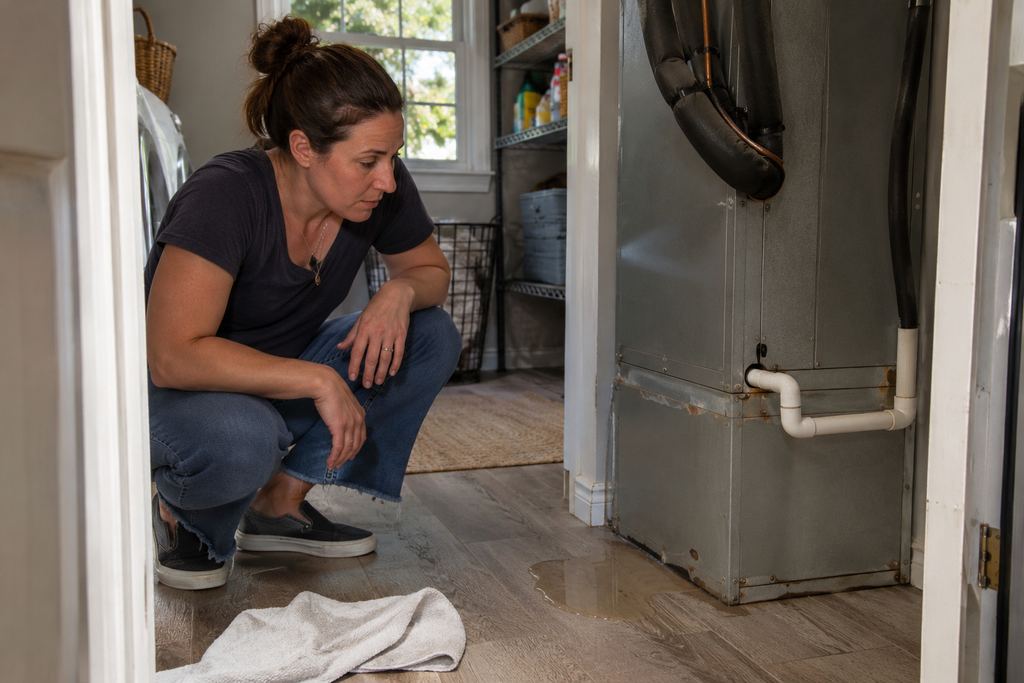
Refrigerant Leak Repair for Home Air Conditioners
An air conditioner's refrigerant moves in a sealed loop and is not used up. If the level drops, there is a hole somewhere. AC refrigerant leak repair means finding that hole, repairing or replacing the leaking part, then restoring the exact charge the manufacturer specifies. Adding refrigerant without a repair only delays the next service call.
- A recharge without a leak search is not a repair
- Refrigerant work requires an EPA Section 608 certified technician
- Leaks in coils often mean part replacement rather than a patch
Describe what you have noticed. A local contractor confirms the leak before quoting.
Please keep this page open.
- We pair the request with an independent contractor or partner network that works in your ZIP code.
- The contractor gets in touch to go over the details and agree on a visit.
- After checking the system they quote the job, and you choose whether to proceed.
Read how requests are handled.
Online requests are not connected to a contractor network yet. Nothing you typed was sent or saved. Please phone us instead, or try again later.
Call (888) 555-0199Symptoms that point to a leak
- Cooling fades over weeks: The house takes longer to cool each week, and the system runs nearly nonstop.
- Ice on the copper suction line: Low charge drops the coil temperature below freezing. See AC freezing up.
- Hiss or gurgle: A fast leak can be audible near the indoor coil or at the outdoor valves.
- Oily residue: Refrigerant carries compressor oil, which leaves a stain at the leak point.
- Lukewarm air from the vents: More in AC not cooling.
- Repeat recharges: Needing refrigerant in back-to-back seasons is the clearest sign.
Where leaks start
Indoor evaporator coils are the most common source in many homes. Copper tubing can develop pinholes from formicary corrosion, a type of corrosion linked to organic acids from some household cleaners, adhesives and building materials. Those pinholes are spread across the coil and are hard to repair permanently.
Other leak points include flare and brazed joints, service valves and their cores, tubing that rubs against a cabinet or another line, and line sets nicked during remodeling or yard work. Outdoor coils can leak from corrosion, hail or a lawn trimmer. Vibration over many seasons loosens fittings in both halves of the system.
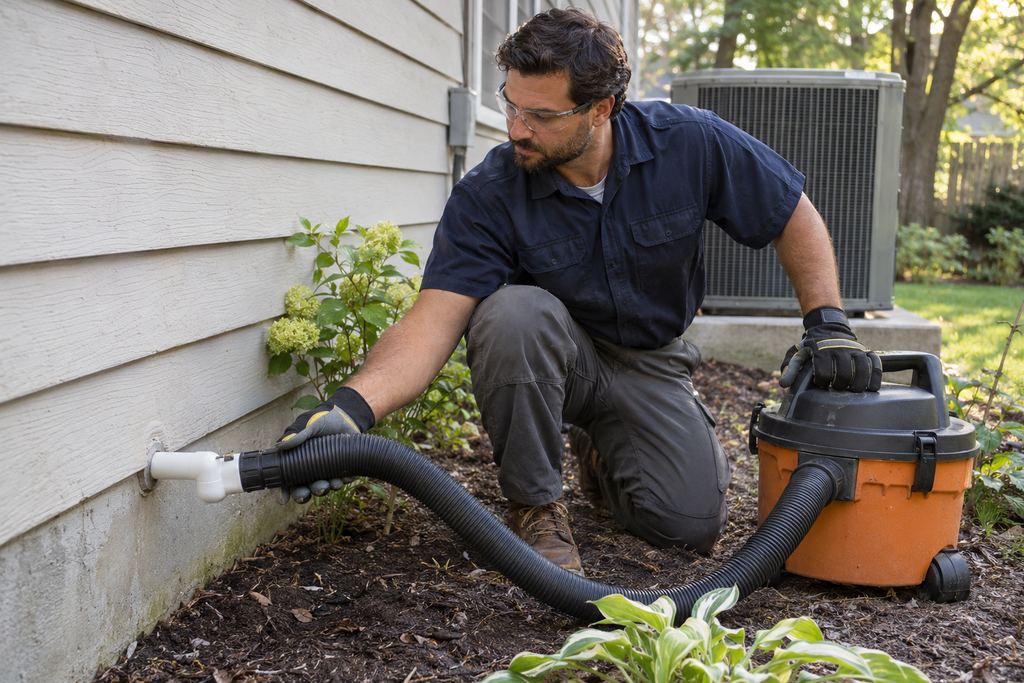
How a proper leak repair goes
- Confirm low charge
The technician measures pressures and temperatures and compares them with the maker's specification.
- Search for the leak
Electronic detector, bubble solution, UV dye or a standing nitrogen test, depending on the system and how slow the leak is.
- Recover refrigerant
What remains is pulled into a recovery cylinder. Venting is illegal.
- Repair or replace
Rebraze a joint, replace a valve core or section of line, or replace a coil.
- Pressure test
The repaired system holds nitrogen pressure to prove it is tight.
- Vacuum and charge
Moisture and air are pulled out, then refrigerant is weighed in to the specified charge.
Refrigerant is heavier than air and can displace oxygen in a small, closed room. If you hear a loud hiss indoors, turn the system off, open windows and leave the room. If anyone feels dizzy, short of breath or unwell, get to fresh air and call 911. Newer A2L refrigerants such as R-454B and R-32 are rated mildly flammable, so keep flames and sparks away until a technician has checked the system.
Your role and the technician's
Safe checks you can do
No tools beyond a flashlight. Turn the system off at the thermostat before opening any filter or access door.
- Turn the system off if the coil is iced, or run fan-only to thaw it
- Replace a dirty air filter, since airflow problems mimic low charge
- Note when cooling began to fade and any past recharges
- Keep household chemicals stored away from the indoor coil closet
Leave these to a licensed technician
These involve high voltage, refrigerant or sealed components. Refrigerant work requires EPA Section 608 certification.
- Measuring pressures, superheat and subcooling
- Finding and repairing the leak
- Recovering and charging refrigerant
- Checking compressor health after running low
Systems with different leak patterns
Refrigerant leak repair cost
A leak bill has three parts: finding the leak, fixing it and recharging the system with the right refrigerant. This Old House's 2026 repair guide lists refrigerant leak repair at $200 to $1,500 or more, and its April 2026 refrigerant guide says a leak repair usually costs $400 to $1,500 depending on where in the system it is. Both are national estimates, not HVAC Service Near Me prices, and the recharge after the repair is often billed as a separate line.
Location sets most of the price. A loose valve core is a small job, while a leaking coil usually turns into a coil replacement, priced on the evaporator coil cost page. Older R-22 equipment runs up the refill line, since new R-22 has not been produced since 2020. Ask for the breakdown on paper before work starts.
A small leak on a younger system is almost always worth fixing. When the leak is in a coil, the system uses R-22 or the compressor is already weak, price the repair next to a new matched system. The compressor replacement cost section covers the other big-ticket repair.
Where leaks happen and how big the job is
| Leak location | Usual repair | Relative cost |
|---|---|---|
| Service valve core or cap | Tighten or replace the core | Low |
| Flare nut or brazed joint you can reach | Re-flare or rebraze | Low to moderate |
| Line set in a wall or attic | Section repair or new line set | Moderate to high |
| Indoor evaporator coil | Coil replacement in most cases | High |
| Outdoor condenser coil | Coil or outdoor unit replacement | High |
How the leak repair bill breaks down
Sniffers, soap bubbles, UV dye or isolating sections under nitrogen. A slow leak behind drywall eats hours.
From a valve core to brazing to a new coil. The location sets most of the price.
Billed by the pound. Leftover R-22 supply keeps its price high, while R-410A and the mildly flammable A2L blends in 2025-and-later equipment (R-454B, R-32) each carry their own rate.
After any opening of the circuit, the system is evacuated and weighed back to the correct charge.
Some contractors return to confirm the pressure held. Ask whether that visit is included.
Vet the contractor before the work
- Will you find the leak before charging?
A firm yes is the answer you want. - How will you confirm the repair holds?
Look for a nitrogen pressure test and a vacuum before charging. - Are your technicians EPA Section 608 certified?
Federal rules require it for refrigerant handling. See the EPA Section 608 page. - Is the company licensed for HVAC work here?
Check the license on your state or local licensing board site. - What warranty covers the repair?
Get the parts and labor terms in writing.
Keeping leaks from coming back
Yearly maintenance gives a technician a chance to spot oil stains, rubbing lines and loose caps before they leak. Keep the outdoor unit clear and protected from mower and trimmer damage. Avoid storing paints, solvents and cleaning products in the closet or attic space around the indoor coil. Availability of leak repair visits varies by ZIP code and season, so book early if cooling is already slipping.
How a service request works
HVAC Service Near Me is a referral service. We don't send our own technicians. We connect you with independent local contractors.
- Describe the job
Type your ZIP code, pick a service and add a line or two about the problem or project.
- We pass it on
An independent HVAC contractor or partner network that works in your area and does that kind of job receives it.
- You hear back
The contractor gets in touch to check the details and set a time to come out.
- The choice is yours
After a diagnosis the contractor gives you a quote. Price, timing and warranty are agreed directly between the two of you.
Frequently asked questions
Is it worth fixing a refrigerant leak?
Usually, when the leak is at a reachable joint or valve and the system is in good shape. A leaking coil on an older R-22 system is often the point where owners price replacement.
How is an air conditioner leak fixed?
In order: prove the charge is short, pin down the hole, pull out what refrigerant is left, mend or swap the failed part, hold the circuit under nitrogen, evacuate it and weigh in a fresh charge.
Is it safe to stay home with a refrigerant leak?
A slow leak from a home AC is usually not an immediate danger in a ventilated house. A large leak in a small closed room can displace oxygen. Turn the system off, ventilate and leave the room; call 911 if anyone feels unwell.
Can I seal the leak with a can from the store?
We do not recommend it. Sealant products can clog valves and metering devices, and many contractors will not work on a system that contains them. Refrigerant handling also requires EPA certification.
What is the 3-minute rule?
Wait roughly three minutes after shutdown before restarting so the compressor is not starting against unequal pressures. Many modern controls add this delay on their own.
Can I fix a compressor myself?
No. Compressor work involves line voltage and refrigerant recovery, both technician tasks. See compressor replacement.
Should I just recharge the system?
Not without a leak search. A recharge alone wastes refrigerant and money. Read refrigerant recharge for when a charge adjustment is the right call.
Related guides and services
Request refrigerant leak repair
Describe what you have noticed and whether the system has been recharged before. A local contractor can follow up to find the leak and quote the repair.
Describe what you have noticed. A local contractor confirms the leak before quoting.
Please keep this page open.
- We pair the request with an independent contractor or partner network that works in your ZIP code.
- The contractor gets in touch to go over the details and agree on a visit.
- After checking the system they quote the job, and you choose whether to proceed.
Read how requests are handled.
Online requests are not connected to a contractor network yet. Nothing you typed was sent or saved. Please phone us instead, or try again later.
Call (888) 555-0199