AC Inspection and Air Conditioner Diagnostics
An AC inspection answers one question with numbers: is this system healthy, and if not, which part is the problem? Book one when cooling has faded but nothing has fully broken, before buying a house, or ahead of summer on equipment older than ten years. HVAC Service Near Me forwards the request to an independent contractor near you.
- Readings on electrical parts, refrigerant pressures and airflow
- A written list of findings you can price out or compare
- Useful before a home purchase, a big repair or a replacement decision
Tell us what the system is doing, or that you want a checkup. A contractor in your area follows up to schedule.
Please keep this page open.
- We pair the request with an independent contractor or partner network that works in your ZIP code.
- The contractor gets in touch to go over the details and agree on a visit.
- After checking the system they quote the job, and you choose whether to proceed.
Read how requests are handled.
Online requests are not connected to a contractor network yet. Nothing you typed was sent or saved. Please phone us instead, or try again later.
Call (888) 555-0199Inspection, diagnostic call or tune-up?
The words overlap, and contractors use them differently, so ask what the visit includes when you book. In general a diagnostic call is triggered by a symptom: the unit hums, trips, freezes or blows warm, and the technician hunts for the cause. An inspection is a structured look at a system that may still run fine, ending in a report. A tune-up adds hands-on cleaning, such as washing the condenser coil and flushing the drain. Many companies fold inspection steps into their maintenance visits; others price them separately. The diagnostic cost section below explains how visit fees are usually structured.
Items a thorough air conditioner inspection covers
Not every company checks every line below. Use it to compare what two contractors are offering.
- Thermostat and control wiring: Does the call for cooling reach the outdoor unit and the blower?
- Run capacitor: Measured in microfarads against the rating printed on its label. Weak capacitors are among the parts that fail most.
- Contactor: Pitted or burned contacts cause hard starts and intermittent shutdowns.
- Refrigerant pressures and temperatures: Superheat or subcooling readings show whether the charge is right. Low charge points to a leak.
- Temperature split: The difference between return air and supply air across the indoor coil.
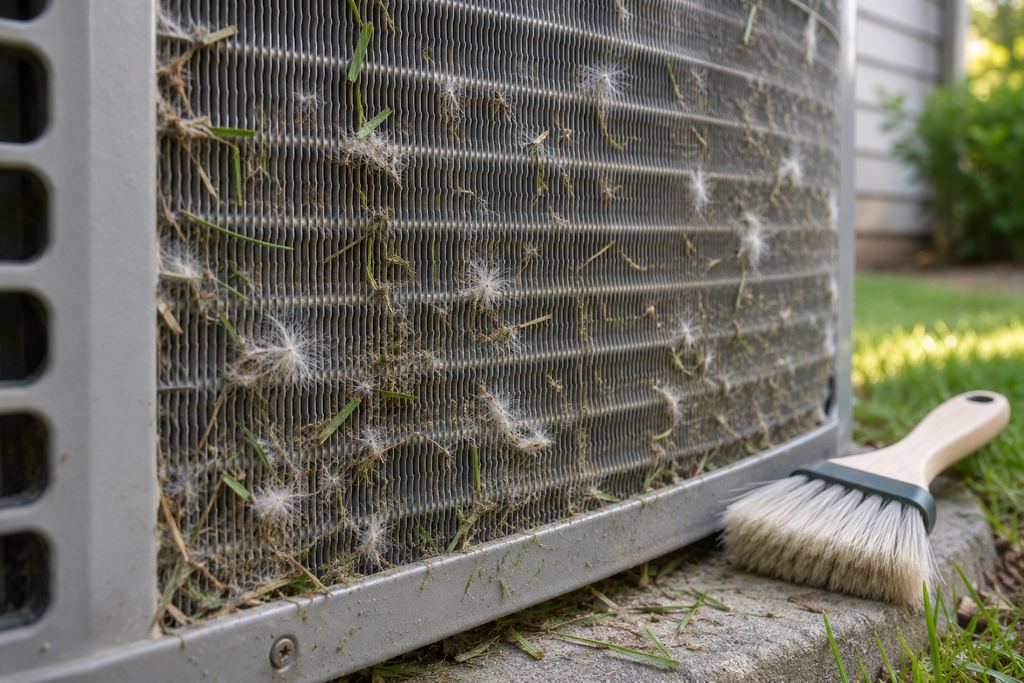
- Coils: Dirt on the outdoor coil or the evaporator cuts capacity and raises head pressure.
- Blower and airflow: Filter condition, blower wheel, static pressure and obvious duct leaks.
- Condensate drain and pan: Slow drains, algae, rust and the float switch if one is installed.
- Compressor and fan motor amperage: Current draw compared with the nameplate data.
- Electrical safety: Disconnect, wire connections, signs of overheating.
Systems that can be inspected
What tends to fail, and what the report should tell you
Run capacitors and contactors rank among the most frequently replaced parts on residential systems. They live in the hot outdoor cabinet and wear with every start. Fan motors, clogged drains and refrigerant leaks at coils or flare fittings follow. A useful report names the part, the reading that flagged it, and how urgent the fix is. "Capacitor at 32 microfarads on a 40 rated part" is useful. "System needs attention" is not.
If the inspection finds a serious fault on an older unit, expect the technician to raise the repair or replace question. Some use the informal $5,000 rule of thumb, age times repair price. It is not a standard; it is a way to start the conversation. Treat the rule as an informal screen rather than a DOE or trade standard; check warranty coverage first, then get the fault diagnosed and compare real quotes for the repair and for a new system before you choose either path. You can get a second opinion before deciding, and our AC replacement page explains what a replacement quote should contain.
AC diagnostic cost and what the fee pays for
Before anyone can price a repair, a technician has to find the fault, and most HVAC companies charge a diagnostic or service call fee for that trip and the testing. This Old House's 2026 AC repair guide says many companies charge a flat diagnostic fee of around $75 to $150. Trane's May 2026 repair cost article gives a service call average of $50 to $200 and notes that some companies apply it toward the repair if you hire them. These are national figures from those publishers, not prices from HVAC Service Near Me.
The fee covers the visit, the technician's time and the tests; the part and the repair labor are priced separately once the fault is found. A typical residential diagnosis takes about 30 to 60 minutes, longer for intermittent problems. A diagnostic fee, a tune-up price and a replacement estimate are three different things: troubleshooting a system that acts up, scheduled upkeep on one that works, and a sales visit for new equipment. If the AC has stopped cooling, a tune-up booking will usually turn into a diagnostic call anyway, sometimes at a different rate.
What changes the diagnostic fee
Typical influences on the service call charge. Amounts come from each contractor.
| Situation | Effect on the fee | Why |
|---|---|---|
| Weekday, business hours | Base rate | Normal scheduling and labor |
| Evening, weekend or holiday | Higher | After-hours labor rates |
| Rural or long drive | May be higher | Travel time and distance |
| Fee credited to repair | Lower net cost | Some companies apply the fee if you approve the work |
| Maintenance plan member | Often reduced | Plan terms vary by contractor |
| Multiple systems | May be higher | Each system takes its own testing |
Things that make a diagnosis take longer
A system that only fails on the hottest afternoon may not misbehave during the visit.
Attic air handlers and rooftop units take longer to inspect safely.
The ice has to melt before refrigerant readings mean anything.
Finding a refrigerant leak can be a separate, longer test with its own charge.
Variable-speed and communicating equipment needs brand-specific diagnostics.
Questions for the contractor before the visit
- What does your inspection include?
Ask for the list of checks. Compare it with the checklist above. - Is there a flat fee, and is it credited toward repairs?
Companies handle this differently. Get the answer before they arrive. - Will I receive the findings in writing?
Photos and readings make it easier to get a second quote. - Who will do the refrigerant checks?
Connecting gauges and adjusting charge requires EPA Section 608 certification. - Can I look up your license?
Check the number on your state contractor board's site. In some areas licensing is handled by the city or county.
How a service request works
HVAC Service Near Me is a referral service. We don't send our own technicians. We connect you with independent local contractors.
- Describe the job
Type your ZIP code, pick a service and add a line or two about the problem or project.
- We pass it on
An independent HVAC contractor or partner network that works in your area and does that kind of job receives it.
- You hear back
The contractor gets in touch to check the details and set a time to come out.
- The choice is yours
After a diagnosis the contractor gives you a quote. Price, timing and warranty are agreed directly between the two of you.
Frequently asked questions
How often should an air conditioner be inspected?
Once a year is common advice for central systems, usually in spring. Heat pumps that also heat the home are often checked in spring and fall. A system that just had a major repair can be rechecked sooner if the symptom returns.
How long does an AC diagnostic take, and what does it cost?
About 30 to 60 minutes for a typical home system with a clear fault; intermittent problems, leak searches and hard-to-reach equipment take longer. Published 2026 estimates from This Old House and Trane put the fee at roughly $50 to $200 nationally, and each contractor sets its own.
Do any companies diagnose an AC without a fee?
Some contractors waive or reduce the charge in certain cases, such as when you approve the repair or when the visit is a replacement consultation. Policies change by company and season, so ask on the phone before the technician drives out.
Which part of an AC fails most often?
On home systems, the run capacitor and the contactor in the outdoor unit. Both are wear parts and usually quick to replace. Clogged condensate drains are the most common cause of water problems.
Which AC brand lasts the longest?
Service life depends more on correct sizing, installation quality, climate and maintenance than on the name on the cabinet. An inspection can tell you how a particular system is holding up, whatever the brand.
What is the $5,000 AC rule?
A rule of thumb: multiply the system's age by the repair quote. A result above 5,000 suggests pricing a replacement. It is informal and ignores things like efficiency gains and how long you plan to stay in the home. Use it only as an informal screen; it is not a DOE rule or an industry standard; check warranty coverage first, then get the fault diagnosed and compare real quotes for the repair and for a new system.
Can an inspection find a refrigerant leak?
It can show that the charge is low, which means there is a leak. Finding the exact spot can need more time with an electronic detector, dye or a pressure test, and that is often quoted as a separate job. See refrigerant leak repair.
Related guides and services
Ask for an AC inspection
Say whether something is wrong or you just want a checkup, and give the system type if you know it. An independent contractor serving your ZIP code contacts you to set a time. Availability depends on the area and the season.
Tell us what the system is doing, or that you want a checkup. A contractor in your area follows up to schedule.
Please keep this page open.
- We pair the request with an independent contractor or partner network that works in your ZIP code.
- The contractor gets in touch to go over the details and agree on a visit.
- After checking the system they quote the job, and you choose whether to proceed.
Read how requests are handled.
Online requests are not connected to a contractor network yet. Nothing you typed was sent or saved. Please phone us instead, or try again later.
Call (888) 555-0199