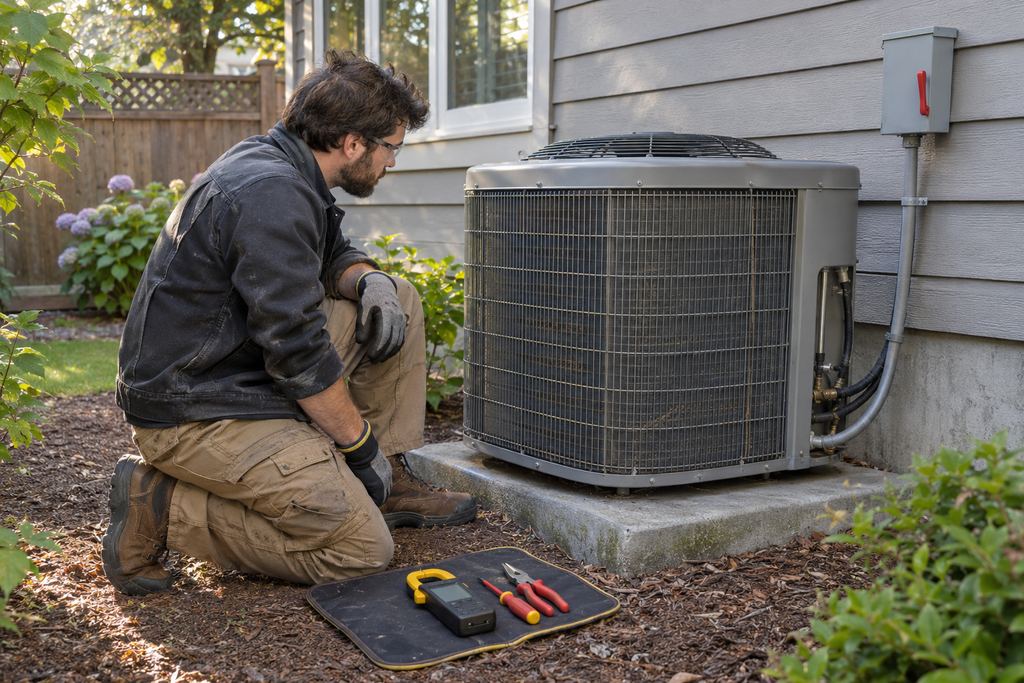
Air Conditioner Runs Nonstop: Causes and Next Steps
On the hottest afternoons a healthy air conditioner can run for hours without stopping. If yours keeps going on mild days, or the house never reaches the set temperature, something is reducing how much heat it moves.
Long run times are normal in extreme heat, especially when the thermostat is set far below the outdoor temperature. Constant running on ordinary days usually comes from a clogged filter, dirty coils, leaky ducts, low refrigerant or a system that is too small for the space. Check the filter and thermostat first, then have a technician measure airflow and refrigerant charge.
Start with these quick checks
- Thermostat mode and fan: Set it to COOL and the fan to AUTO. With the fan on ON, the blower keeps running even when cooling stops.
- Filter: Hold it up to a light. If you cannot see through it, replace it.
- Outdoor unit: Clear grass clippings, leaves and shrubs so air can move through the coil.
- Vents and returns: Open closed supply registers and move furniture off return grilles.
Why the system keeps going
How the type of system changes the picture
Variable-speed and inverter systems are designed to run for long stretches at low output, so near-constant operation can be normal for them. Single-stage systems run at full output, then stop, so they should cycle off once the house reaches the setpoint on a moderate day. Check your equipment documentation to see which kind you have before assuming a fault.
Maintenance that shortens run times
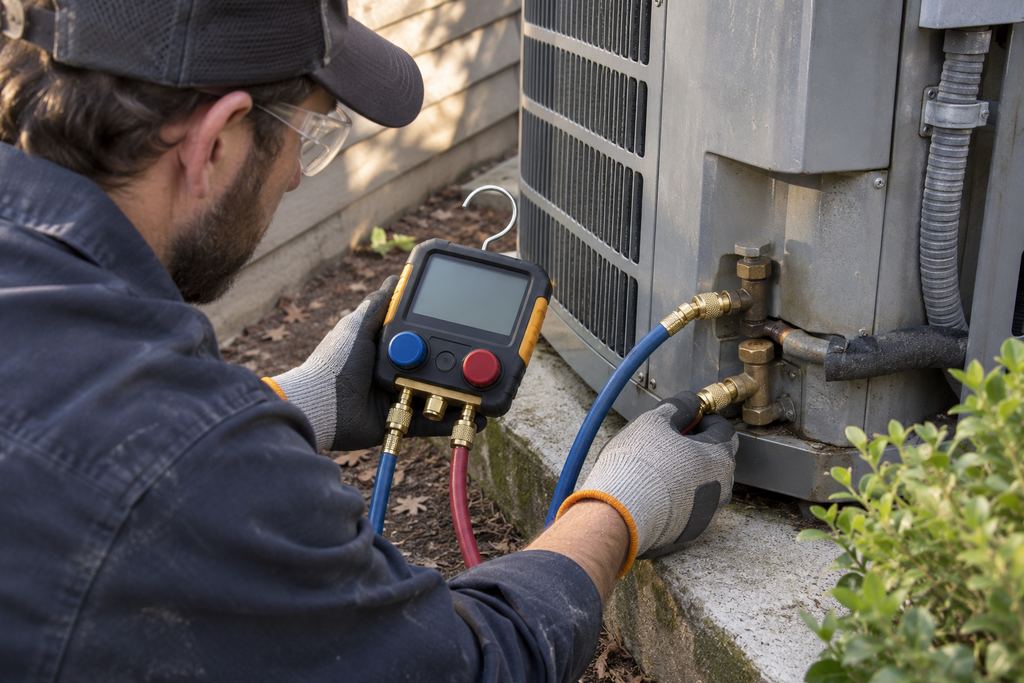
Dirty filters and coils reduce airflow and efficiency, which is why ENERGY STAR lists filter changes and an annual professional check among basic upkeep steps. A tune-up usually includes coil cleaning and a refrigerant charge check. If the technician finds the charge low, the fix is locating the leak, not just adding refrigerant. Systems that use R-22 are harder to service because production ended in 2020, which often tips the decision toward replacement.
If the house also feels warm, compare symptoms on AC not cooling and AC blowing warm air.
Repair or replace an older system
Some homeowners use a rough rule of thumb, sometimes called the $5,000 rule: multiply the age of the unit by the repair price, and if the result is over 5,000, consider replacement. It is a consumer shortcut, not an industry standard. The rule is informal and carries no DOE or industry backing; ask whether a warranty applies, get the diagnosis on paper and compare a net repair quote against a full replacement quote. Ask for a written repair quote and a replacement quote with a load calculation, then compare them. The repair cost section explains what each quote should list.
Frequently asked questions
Should my AC keep up on a 90 degree day?
Contractors size systems for the hot days typical of your area, so a 90 degree afternoon should be within reach for most homes. Long cycles are expected then. If the indoor temperature keeps climbing anyway, airflow, refrigerant charge or sizing is the usual suspect.
Why does my thermostat say 72 but the house reads 78?
The system is not removing heat fast enough. Check the filter, outdoor unit and vents, then call a technician if the gap stays. Also confirm the thermostat is not in direct sun or near a heat source.
What is the $5,000 AC rule?
It is a quick rule of thumb that multiplies unit age by repair cost. Above 5,000 it suggests looking at replacement. Use it as a prompt to get two quotes, not as a final answer. Neither the Department of Energy nor any trade group publishes this rule, so treat it as an informal screen; check the warranty, get a written diagnosis and compare the net repair quote with a real replacement quote before deciding.
Is it bad for an AC to run all the time?
Continuous running raises energy use and wears parts faster on a single-stage system. On an inverter system it can be normal. Either way, a house that never reaches the setpoint deserves a check.
Related guides and services
Ask a local contractor about long run times
Tell the contractor the thermostat setting, the indoor reading and the age of the system. They can follow up to arrange a visit.
Tell us how long it runs and the indoor temperature. A local contractor can follow up.
Please keep this page open.
- We pair the request with an independent contractor or partner network that works in your ZIP code.
- The contractor gets in touch to go over the details and agree on a visit.
- After checking the system they quote the job, and you choose whether to proceed.
Read how requests are handled.
Online requests are not connected to a contractor network yet. Nothing you typed was sent or saved. Please phone us instead, or try again later.
Call (888) 555-0199