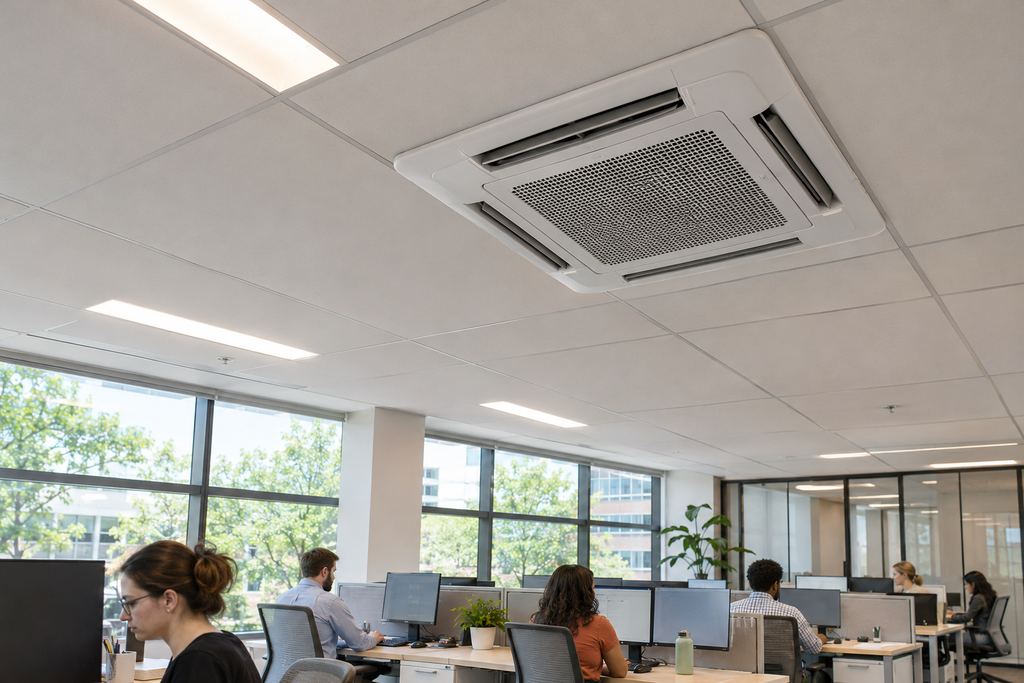
VRF Air Conditioning for Buildings and Large Homes
VRF air conditioning (variable refrigerant flow) connects one or more inverter outdoor units to many indoor units across a building through a single refrigerant piping network. Each indoor unit meters exactly the refrigerant its zone needs, so offices, hotels, schools and some large homes can control dozens of rooms separately without big air ducts.
Think of VRF as a mini split scaled up to building size. The outdoor units vary compressor speed to match total demand, and electronic valves at every indoor unit control the flow to that zone. Heat pump VRF cools or heats the whole system at one time; heat recovery VRF can cool some zones while heating others.
How the refrigerant loop works
A conventional central system cools air in one place and pushes it through ducts. VRF moves refrigerant instead. Copper pipes run from the outdoor units to branch fittings or controller boxes on each floor, then on to wall, ceiling cassette or ducted indoor units. Each indoor unit has its own electronic expansion valve and fan, and talks to the outdoor unit over a control network.
When only a few rooms call for cooling, the compressors slow down and the valves in idle zones close. When the whole building warms up, the compressors speed up. That ability to run at partial output for most of the day is the main reason VRF systems use less energy at part load than single-speed equipment. Because the pipes are small compared with ducts, VRF suits renovations of older buildings where ceiling space is tight.
VRF system types
VRF compared with other options
| VRF | Multi-zone mini split | Rooftop or chiller system | |
|---|---|---|---|
| Typical size | Floors to whole buildings | Two to several rooms | Whole buildings |
| Air distribution | Refrigerant to each zone | Refrigerant to each head | Ducts or chilled water |
| Zone control | Dozens of zones | One per head | Limited without added zoning |
| Simultaneous heat and cool | With heat recovery | No | Depends on design |
| Design work | Engineer or factory-trained designer | Installer | Engineer |
Design limits, codes and refrigerant
Because a single VRF circuit can hold a large refrigerant charge that could leak into one small room, designers check each occupied space against ASHRAE Standard 15, which limits how much refrigerant can collect in an occupied space. Small rooms on big systems sometimes need leak detection or a different layout. Local mechanical codes adopt these rules in their own way.
The EPA's AIM Act technology transitions rule is moving new equipment toward lower global warming potential refrigerants, and EPA has revisited some deadlines since the rule was issued. Ask any designer which refrigerant the proposed system uses and how that affects future service. All refrigerant handling on a VRF system requires EPA Section 608 certification, and most manufacturers also want installers and service techs trained on their product line.
Signs a VRF system needs service
Facility staff can watch for these and report them with the indoor unit address or room number.
- Error codes: Note the code and unit number from the wall controller or central controller.
- One zone warm or cold: Often a valve, sensor or indoor fan problem limited to that unit.
- Whole system down: Points to the outdoor unit, power or the communication network.
- Water from ceiling units: Clogged condensate drain or failed drain pump in a cassette or ducted unit.
- Hissing or oily spots on piping: Possible refrigerant leak. Keep people out of small enclosed rooms and call a technician.
- Rising energy bills: Dirty coils, filters or control changes can push consumption up without obvious comfort complaints.
How a VRF service visit usually goes
- Read the history
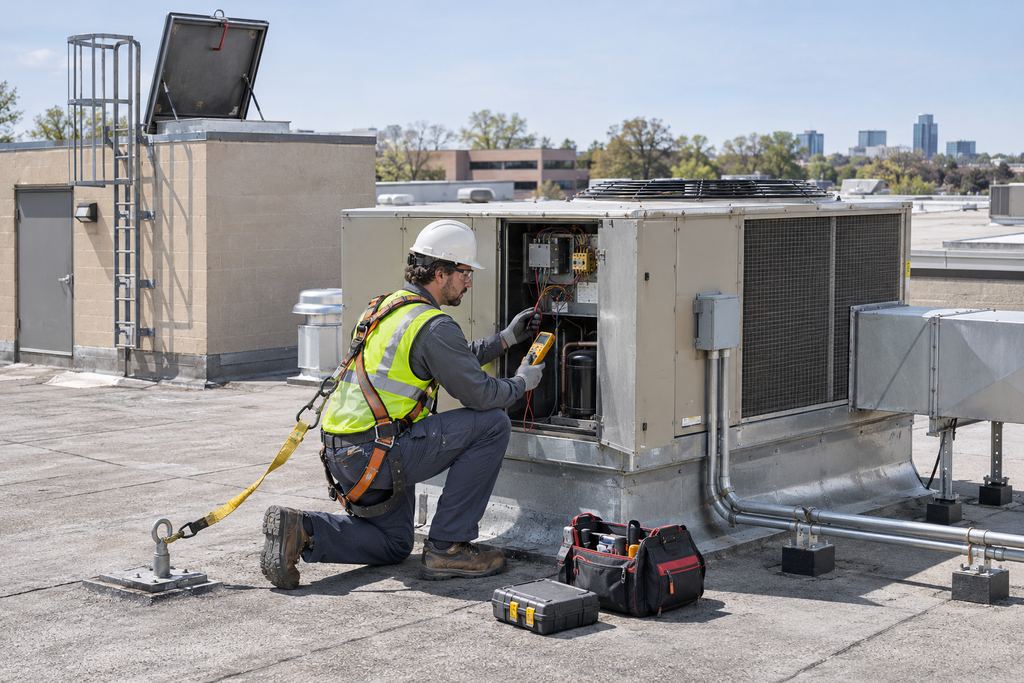
The technician downloads fault logs from the controller or connects a service tool to the outdoor unit.
- Check the network
Communication faults between units are common and often trace to wiring or addressing.
- Inspect affected units
Filters, drains, fans, sensors and expansion valves at the zones that complain.
- Check the outdoor side
Coil condition, compressor data, pressures and inverter readings.
- Report and quote
Get a written description of what was found and the parts needed, especially for compressor or board work.
Is VRF right for your building?
VRF tends to fit buildings with many rooms and different schedules, limited ceiling space and a goal of individual room control: hotels, medical offices, schools, mixed-use and multifamily buildings. It is less common in smaller houses, where a ductless mini split or a conventional system is usually simpler and cheaper to service. Some owners wonder whether VRF will replace other systems. It is one strong option among several; chilled water, rooftop units and splits each still win on certain buildings.
VRV is the trademarked name Daikin uses for its version, so the two terms usually describe the same idea. The VRV air conditioning guide covers that brand naming. For existing systems, a contractor offering commercial AC repair or commercial AC replacement can check whether they work on your manufacturer's equipment.
Frequently asked questions
What does VRF mean in air conditioning?
Variable refrigerant flow. The system changes how much refrigerant reaches each indoor unit, and how fast the compressors run, to match each zone's load.
Is VRF better than split AC?
For buildings with many zones it often is, thanks to zoning and part-load efficiency. For one or two rooms, a standard split or mini split is simpler and costs less to buy and repair.
Is a VRF system good for a house?
It can be for large homes with many rooms. Mini VRF products exist for that. In most houses a multi-zone mini split or ducted heat pump covers the need for less.
Is VRF the future of HVAC?
It is a well-established option for multi-zone buildings, but no single system type suits every project. Chilled water plants, rooftop units and split systems each still fit particular buildings.
Who can service a VRF system?
A commercial HVAC technician with EPA Section 608 certification and, ideally, training from the system's manufacturer. Ask contractors which brands they support.
Related guides and services
Find VRF service help
Share the building type, the system brand and any error codes. HVAC Service Near Me sends the request to an independent commercial contractor where one serves your area.
Tell us the building type, the system brand if known, and what is happening.
Please keep this page open.
- We pair the request with an independent contractor or partner network that works in your ZIP code.
- The contractor gets in touch to go over the details and agree on a visit.
- After checking the system they quote the job, and you choose whether to proceed.
Read how requests are handled.
Online requests are not connected to a contractor network yet. Nothing you typed was sent or saved. Please phone us instead, or try again later.
Call (888) 555-0199