Home AC Refrigerant Recharge: How Charging Is Done
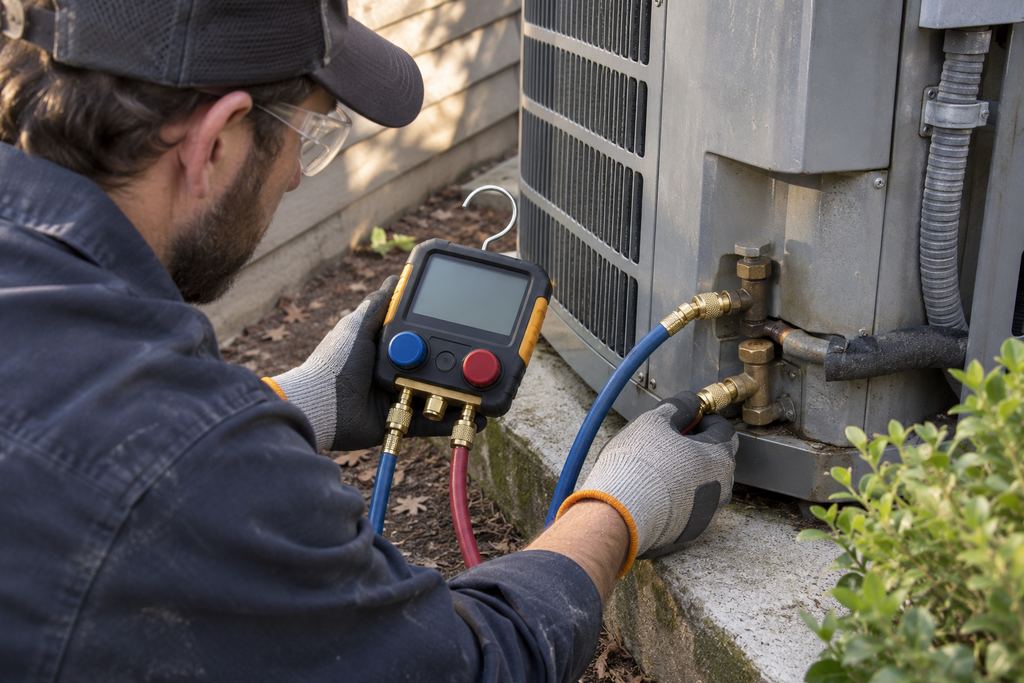
An AC refrigerant recharge restores the amount of refrigerant your system was designed to carry. On a home central air system that should only be needed after a leak repair, after a part replacement that opened the circuit, or when a system was undercharged from day one. A technician sets the charge using the manufacturer's method, not by guesswork or a gauge on a can.
- Low charge has a cause, usually a leak, and the cause comes first
- The right charge is the one on the manufacturer's spec, no more and no less
- Refrigerant handling is limited to holders of EPA Section 608 certification
Tell us what the AC is doing. A local contractor checks the charge and looks for a leak before quoting.
Please keep this page open.
- We pair the request with an independent contractor or partner network that works in your ZIP code.
- The contractor gets in touch to go over the details and agree on a visit.
- After checking the system they quote the job, and you choose whether to proceed.
Read how requests are handled.
Online requests are not connected to a contractor network yet. Nothing you typed was sent or saved. Please phone us instead, or try again later.
Call (888) 555-0199Why the exact charge matters
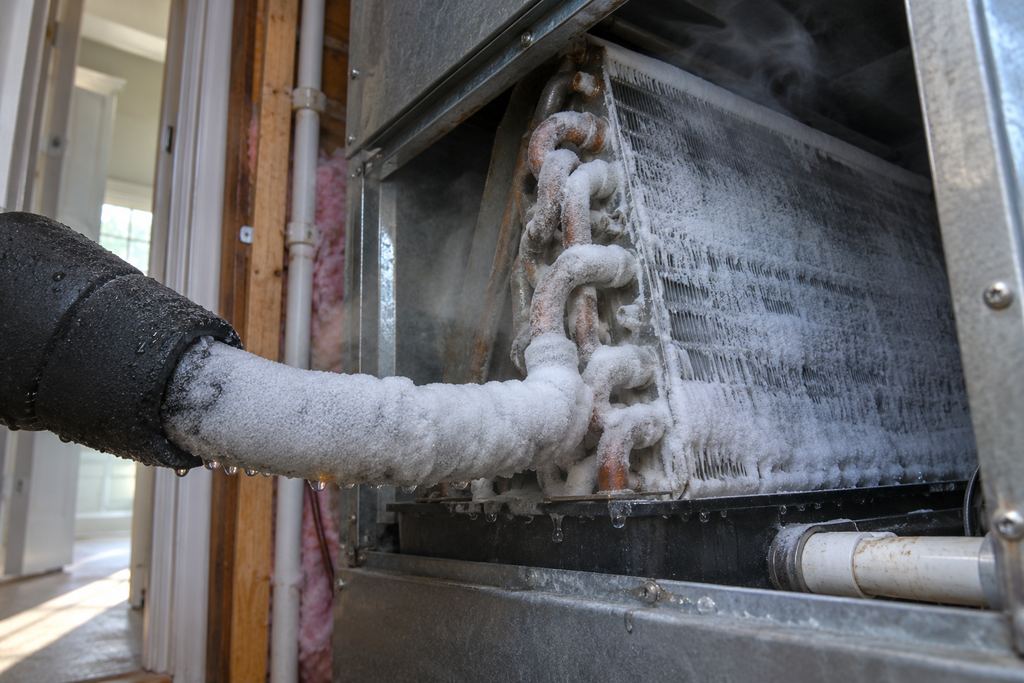
According to the Department of Energy, an air conditioner delivers its rated capacity and efficiency when its refrigerant charge matches the manufacturer's specification. Too little refrigerant starves the coil, so the system runs longer, removes less humidity and can freeze. Too much floods the compressor with liquid and raises pressures. Either way, the electric bill rises and the compressor wears faster.
Because the circuit is sealed, a short charge means refrigerant escaped or was never fully added at installation. The DOE advises that a technician fix the leak, test the repair and then charge the correct amount. If you have been recharged before, read refrigerant leak repair before paying for another round.
Signs the charge may be off
- Air from the registers feels cool, not cold: See AC blowing warm air for other causes.
- Frost on the larger copper line: Switch to fan-only and let it melt before the visit.
- System seldom shuts off: Long cycles on mild days are a warning.
- Humidity stays high: A starved coil wrings less moisture out of the air.
- Compressor trips off on hot days: High pressures from overcharge, or overheating from undercharge, can trigger safeties.
- Cooling dropped after recent work: A charge that was not weighed in after a repair.
How a technician charges the system
- Read the data plate
Refrigerant type, factory charge and the charging method the maker lists.
- Check airflow first
Filter, blower and coil condition affect readings, so they are checked before refrigerant.
- Measure
Pressures and line temperatures give superheat and subcooling.
- Use the right method
Fixed-orifice systems are commonly charged by superheat and expansion-valve systems by subcooling, per the maker's instructions.
- Weigh in after a repair
When the circuit was opened, the system is evacuated and the full charge is added by weight with a scale.
- Record it
Type, pounds added and final readings go on the invoice.
Refrigerants found in home systems
| Refrigerant | Where you see it | What it means for a recharge |
|---|---|---|
| R-22 | Older systems, roughly pre-2010 installs | Supply is limited to recovered and reclaimed stock since 2020 production ended |
| R-410A | Systems from about 2010 into the mid-2020s | Widely serviced; cannot be mixed with R-22 |
| R-454B, R-32 | New split systems from 2025 under the EPA AIM Act transition | Mildly flammable A2L refrigerants; technicians need matching training and tools |
Homeowner prep and technician tasks
Safe checks you can do
No tools beyond a flashlight. Turn the system off at the thermostat before opening any filter or access door.
- Swap the filter and open closed registers
- Clear plants and debris from around the condenser
- Find the refrigerant type on the outdoor data plate
- Write down when cooling dropped and any earlier recharges
Leave these to a licensed technician
These involve high voltage, refrigerant or sealed components. Refrigerant work requires EPA Section 608 certification.
- Verifying the charge with superheat or subcooling
- Leak detection and repair
- Recovery, evacuation and weighing in refrigerant
- Checking compressor and fan operation after charging
Refrigerant recharge cost
A recharge bill is mostly the visit, the labor to test and charge, and the refrigerant itself, billed by the pound. This Old House's refrigerant cost guide (April 2026) puts a home AC recharge at $200 to $640, around $400 on average, and lists R-410A at $50 to $80 per pound installed, with a typical service-call fee of $50 to $130 and hourly labor on top. These are national estimates, not HVAC Service Near Me prices, so compare itemized written quotes from local contractors.
The refrigerant type matters most. R-22 costs the most because only recovered and reclaimed stock remains, while R-410A and the newer A2L refrigerants are priced differently. Because a system that needs refrigerant has a leak or was undercharged at installation, the recharge price is rarely the whole job. Finding and fixing the leak is separate work and often costs more than the refrigerant; see refrigerant leak repair cost.
What moves the recharge total
The technician measures pressures and temperatures to confirm the system is actually low. Many no-cool calls turn out to be airflow or electrical problems instead.
The biggest variable. Price per pound depends on the type and local supply.
A small top-off costs far less than recharging a system that lost most of its charge or was evacuated for a repair.
When the circuit has been opened, the technician pulls a vacuum and weighs in the full charge, which takes longer than a top-off.
Peak summer, nights and weekends often cost more.
Red flags on a recharge offer
- A price quoted before anyone measured: Nobody can know how many pounds are missing without readings at the unit.
- "You just need Freon every year": Annual top-offs describe a leak that nobody wants to chase, and the bill repeats each summer.
- No refrigerant type or weight on the invoice: Without both you cannot check what was added or compare with the next contractor.
- Sealant added without asking: Leak sealers can clog valves and metering devices, and some contractors refuse to service systems that contain them.
- Pressure to replace on the spot: An old system may well be due, but a fair contractor gives you time to price both the repair and a new matched system.
Ask these before work starts
- What readings show the system is low?
Superheat or subcooling against the maker's target. - Will you search for the leak?
Charging without a search leaves the cause in place. - How many pounds will you add, and of what?
It belongs on the invoice. - Are you certified for this refrigerant?
Section 608 for all, plus A2L training for newer systems. - Can I verify your license?
Use your state or local contractor licensing board.
How a service request works
HVAC Service Near Me is a referral service. We don't send our own technicians. We connect you with independent local contractors.
- Describe the job
Type your ZIP code, pick a service and add a line or two about the problem or project.
- We pass it on
An independent HVAC contractor or partner network that works in your area and does that kind of job receives it.
- You hear back
The contractor gets in touch to check the details and set a time to come out.
- The choice is yours
After a diagnosis the contractor gives you a quote. Price, timing and warranty are agreed directly between the two of you.
Frequently asked questions
Is recharging a home AC worth it?
Yes, when the leak is repaired or the system was undercharged at installation. A recharge alone on a leaking system buys only temporary cooling and repeats the cost.
Why do recharge quotes vary so much?
Refrigerant type, pounds needed, whether the circuit was opened and the local labor rate all change the total. Ask for the price per pound and the pounds added so you can compare fairly.
How do I recharge my home AC refrigerant?
You do not. Home refrigerant work requires an EPA Section 608 certified technician, who confirms the charge is low, fixes the leak and charges to the maker's specification.
Will an auto parts store refill Freon for my house?
No. They sell car AC products. Home systems need a certified HVAC technician and the correct refrigerant.
What is the 3-minute rule for an air conditioner?
Give the compressor about three minutes after it stops before restarting, so pressures can balance. Most modern thermostats and control boards add that delay automatically.
Which AC brand lasts the longest?
Installation quality, a correct charge and regular maintenance tend to matter more than the brand. A poorly charged unit of any brand wears faster.
How often does a home AC need a recharge?
Ideally never. A sealed system with no leak keeps its charge for its working life.
Can too much refrigerant hurt the system?
Yes. Overcharging raises pressures, can send liquid to the compressor and lowers efficiency. That is why the charge is measured, not guessed.
Related guides and services
Request refrigerant service
Tell us what the AC is doing and whether it was recharged before. A local contractor can follow up to check the charge, look for the leak and quote the work.
Tell us what the AC is doing. A local contractor checks the charge and looks for a leak before quoting.
Please keep this page open.
- We pair the request with an independent contractor or partner network that works in your ZIP code.
- The contractor gets in touch to go over the details and agree on a visit.
- After checking the system they quote the job, and you choose whether to proceed.
Read how requests are handled.
Online requests are not connected to a contractor network yet. Nothing you typed was sent or saved. Please phone us instead, or try again later.
Call (888) 555-0199