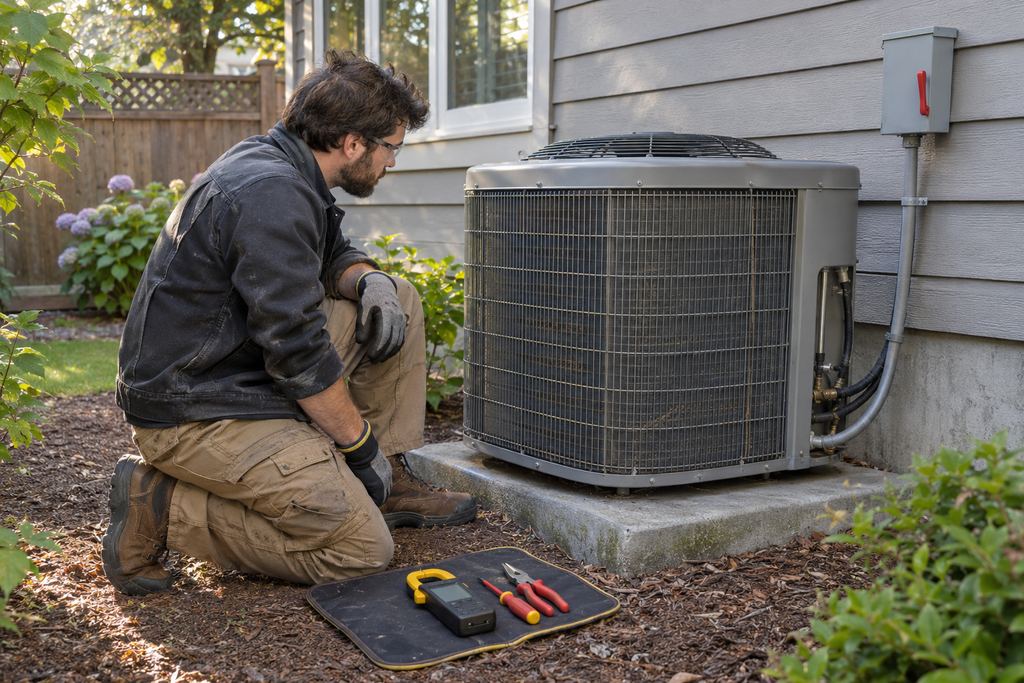
HVAC Service: Repair Help From Independent Local Contractors
Describe the problem once and HVAC Service Near Me passes your request to an independent heating and cooling contractor that works in your ZIP code. That company schedules the visit, diagnoses the system and gives you its own price before any repair starts.
- Central air, heat pumps, furnaces, mini-splits and packaged units
- The contractor diagnoses first and prices the fix in writing
- Openings vary with your ZIP code and the time of year
A short description and your ZIP code are enough. A local contractor follows up to set a time.
Please keep this page open.
- We pair the request with an independent contractor or partner network that works in your ZIP code.
- The contractor gets in touch to go over the details and agree on a visit.
- After checking the system they quote the job, and you choose whether to proceed.
Read how requests are handled.
Online requests are not connected to a contractor network yet. Nothing you typed was sent or saved. Please phone us instead, or try again later.
Call (888) 555-0199What people mean by HVAC service
HVAC stands for heating, ventilation and air conditioning. A service call can be a repair, a seasonal checkup or a look at a system that simply feels wrong: weak airflow, a strange smell, a thermostat that ignores you. The first part is almost always the same. A technician confirms the symptom, tests the electrical and airflow side, checks refrigerant readings on cooling equipment and then tells you what failed and what it costs to fix.
HVAC Service Near Me only routes requests; nobody on the visit works for us and we have no say over pricing. Each request goes to an independent HVAC company or partner network that covers your area, and that company is the one you hire. If the job turns out to be a full system swap rather than a repair, the HVAC replacement page explains how those quotes work.
Equipment a local HVAC contractor usually works on
HVAC repair cost: small fixes and big ones
Three things decide most of an HVAC repair bill: the component that quit, the labor needed to reach and replace it, and the hour you call. A loose wire and a seized compressor look the same from the thermostat, yet one bill is small next to the other. For cooling repairs, This Old House's AC repair cost guide (March 2026) puts repairs at $100 to $1,000, with most homeowners paying $150 to $650 for common fixes. Trane's May 2026 article uses $100 to $5,000 or more because it includes compressor and coil replacement, and gives a service call average of $50 to $200 plus labor at about $75 to $150 or more per hour. Furnace and heat pump repairs fall outside these AC figures, and none of them is a price from HVAC Service Near Me.
Plan on a trip or diagnostic charge first, then a repair quote once the fault is found. Approve a written number before the technician starts.
HVAC repair tiers, from minor to major
Relative scope only, not prices.
| Tier | Typical repairs | Why it costs what it does |
|---|---|---|
| Minor | Capacitor, contactor, fuse, thermostat, flame sensor cleaning, clogged drain | Inexpensive part, short labor time |
| Moderate | Blower or condenser fan motor, igniter, pressure switch, control board, small refrigerant leak | Pricier part or more diagnostic time |
| Major | Compressor, evaporator or condenser coil, heat exchanger, reversing valve | Expensive component plus refrigerant recovery and recharge |
How the repair bill gets built
Every contractor sets its own rates. These are the parts that make one invoice larger than another.
Plenty of companies charge a set amount just to show up and pinpoint the fault. Find out if that amount comes off the bill once you say yes to the repair.
Swapping a run capacitor is a short job with an inexpensive part. Replacing a compressor or an indoor coil takes hours and costs far more in parts.
Nights, Sundays and holidays usually cost extra. Confirm the after-hours rate before you lock in the time.
R-22 has not been manufactured since 2020, so a system that still runs on it is expensive to charge. Either way, a leak needs to be located and fixed.
An air handler in a 130-degree attic or a unit on a commercial roof means more labor hours than a closet furnace.
If the equipment was registered, the manufacturer may pay for the part and you pay labor. Snap a photo of the data plate so the tech can check.
Heat pumps, high-efficiency furnaces and variable-speed equipment use more specialized parts and take longer to diagnose.
What a typical service visit covers
- Confirm the complaint: The tech runs the equipment and sees or hears what you described.
- Meter the electrical side: Capacitors, contactor, fuses and wire connections get tested with the power isolated.
- Trace the airflow: Filter, blower wheel, coil faces and return grilles are looked over for restrictions.
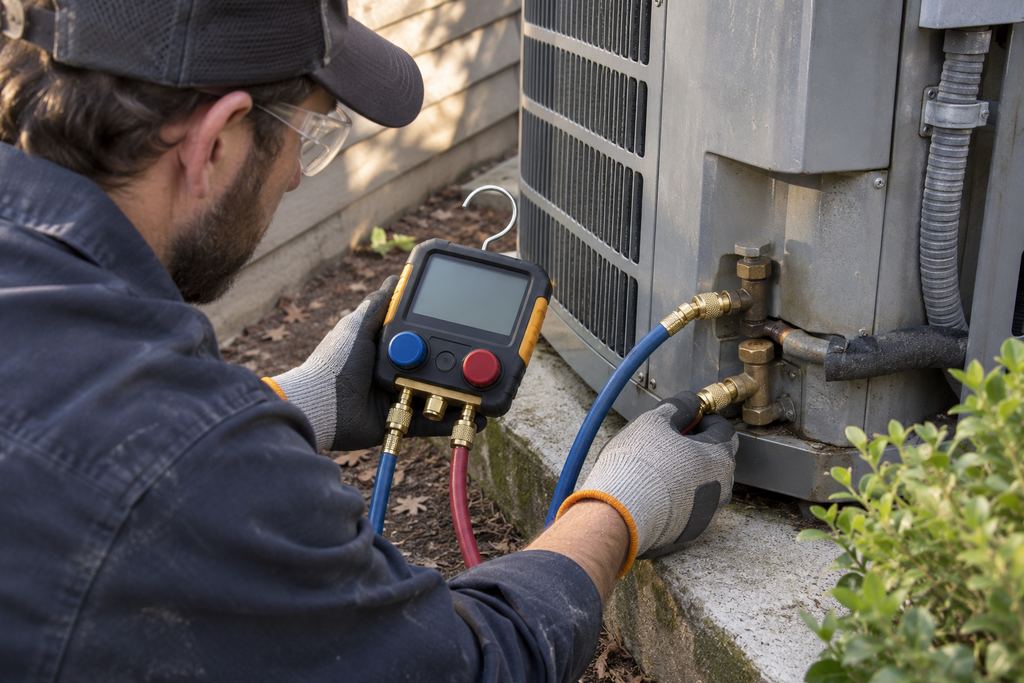
- Read the refrigerant circuit: Gauges and temperature probes on cooling equipment, handled by someone holding EPA Section 608 certification.
- Look at drains and cutoffs: Condensate piping, the pan and the float switch that shuts things down on a backup.
- Explain before fixing: You hear what broke, how it gets fixed and the price, and you decide.
How a service request works
HVAC Service Near Me is a referral service. We don't send our own technicians. We connect you with independent local contractors.
- Describe the job
Type your ZIP code, pick a service and add a line or two about the problem or project.
- We pass it on
An independent HVAC contractor or partner network that works in your area and does that kind of job receives it.
- You hear back
The contractor gets in touch to check the details and set a time to come out.
- The choice is yours
After a diagnosis the contractor gives you a quote. Price, timing and warranty are agreed directly between the two of you.
Five questions to put to any HVAC company
- What is your license number, and which board issued it?
Search it on the state or city licensing site. A real number takes a minute to confirm. - Do you carry liability and workers' comp insurance?
Those policies matter if a ladder slips or a ceiling gets damaged during the job. - Is there a charge just to diagnose?
Settle this on the phone, so the first surprise is not on the invoice. - Can you put the repair price on paper?
The quote should spell out the part, the labor and how long the work itself is covered. - Who opens the refrigerant lines?
That work is restricted to people with EPA Section 608 certification.
A hot electrical odor, smoke or sparking at the equipment means the system goes off at the thermostat now, and a technician comes out before anyone turns it back on. The same goes for a breaker that drops a second time. Flames or a smoke-filled room: get everyone outdoors and phone 911. In a heat wave, someone who is confused, faints or has hot, dry skin needs 911 before anyone worries about the equipment. Urgent cooling failures are covered on our emergency HVAC repair page.
Owner checks versus technician work
Safe checks you can do
No tools beyond a flashlight. Turn the system off at the thermostat before opening any filter or access door.
- Look at the thermostat mode and put in new batteries if the screen is faint
- Slide in a new filter that matches the size printed on the old frame
- Flip a tripped breaker back on once, and leave it off if it drops again
- Pull weeds, leaves and stored items away from the condenser so it can breathe
- Frost on the copper lines? Run the blower by itself until the ice melts
Leave these to a licensed technician
These involve high voltage, refrigerant or sealed components. Refrigerant work requires EPA Section 608 certification.
- Meter tests and swaps of capacitors, contactors and fan motors
- Anything behind the electrical panel door or the unit's service cover
- Leak searches and refrigerant charging
- Burners, gas valves and heat exchanger inspections
- Any situation where a safety cutoff keeps tripping
Repair it or plan for a new system
A figure that comes up in many kitchens is the $5,000 rule. Take the system's age in years, multiply it by the quoted repair, and if you land above 5,000, price a new system before you sign. It is a trade shortcut, not a standard, yet it frames the decision well. This is an informal screen, and no federal agency or trade body stands behind it; check warranty coverage first, then get the fault diagnosed and compare real quotes for the repair and for a new system. A 14-year-old condenser that needs a compressor is a very different case from a 5-year-old one that needs a capacitor.
Also think about how many breakdowns the last few summers brought, whether the unit still uses R-22, and whether some rooms have never felt right. A yearly checkup through HVAC maintenance catches worn parts early. If replacing comes out ahead, line up two or more HVAC installation bids that name the exact equipment models.
Frequently asked questions
How much is the average HVAC service call?
Each contractor sets its own rates, and they shift with region and hour. Trane's 2026 article puts the average service call at $50 to $200, before the repair itself. Get the fee over the phone and the repair figure on paper.
What is the $5,000 rule in HVAC?
Multiply the unit's age by the repair quote. Above 5,000, a lot of technicians would price a new system before fixing the old one. Use it to open the discussion, then weigh comfort, reliability and refrigerant type.
What does an HVAC service include?
Confirming the problem, electrical tests, airflow checks, refrigerant readings on cooling equipment and a look at drains and safety cutoffs. The repair is priced after that.
Is the diagnostic fee worth paying?
You are paying for someone to find the real fault instead of guessing with parts. Ask up front whether the fee is credited when you approve the repair, and do not authorize work until you have the repair price.
How expensive is it to run AC all day?
Multiply the unit's kilowatt draw by the hours it runs and your electric rate. As an illustration, 3 kW for 10 hours at 15 cents per kWh is about 4.50 dollars. A dirty coil or low refrigerant raises the draw, so check your own unit and bill for real numbers.
How often should an HVAC system be serviced?
Plan on one visit a year, ideally just before the season you rely on most. Heat pumps that work year round often get a spring visit and a fall visit.
Can I send a request for a store or office?
Yes. Requests for light commercial buildings are routed to contractors who work on rooftop and packaged equipment. The commercial AC repair page explains what those calls look like.
Related guides and services
Get a local HVAC company on the way
Tell us what the system is doing and where it is. A contractor that works your area gets in touch to confirm the details and pick a time.
A short description and your ZIP code are enough. A local contractor follows up to set a time.
Please keep this page open.
- We pair the request with an independent contractor or partner network that works in your ZIP code.
- The contractor gets in touch to go over the details and agree on a visit.
- After checking the system they quote the job, and you choose whether to proceed.
Read how requests are handled.
Online requests are not connected to a contractor network yet. Nothing you typed was sent or saved. Please phone us instead, or try again later.
Call (888) 555-0199