AC Short Cycling Explained: Causes, Checks and Repairs
Short cycling is when an air conditioner starts, runs for only a few minutes, shuts off and then starts again soon after. It wastes energy, leaves rooms clammy and puts extra wear on the compressor, which takes the most stress at every startup.
The most common reasons are a clogged filter or frozen coil, a thermostat placed in a bad spot, a full condensate pan tripping the float switch, an electrical part such as a failing capacitor, low refrigerant, or equipment that is too large for the house. Start with the filter, the thermostat and the drain. Anything involving refrigerant, wiring or the outdoor electrical compartment belongs to a technician.
How to tell short cycling from a normal cycle
There is no single correct cycle length, because it depends on weather, insulation and the equipment. As a practical test, time a few cycles on a warm afternoon with a phone stopwatch. A single-stage system that runs only a handful of minutes, stops, and restarts within a few more minutes while the house still feels warm or sticky is short cycling. Inverter and variable-speed units behave differently: they slow down rather than stop, so a running indoor fan at low speed is not a fault.
Write down the on time, the off time and the indoor temperature. That record is the first thing a technician will want.
Common causes, from simple to serious
Safe homeowner checks and technician work
Safe checks you can do
No tools beyond a flashlight. Turn the system off at the thermostat before opening any filter or access door.
- Replace the filter with the size and type the equipment manual calls for.
- Move furniture, rugs and boxes away from return grilles.
- Replace thermostat batteries and confirm the mode is COOL with the fan on AUTO.
- Look for water in the drain pan or a wet area near the indoor unit. Clear the drain line only if your manual describes how.
- If you see ice on the indoor coil or the copper line, switch to fan only and let it thaw before running cooling again.
Leave these to a licensed technician
These involve high voltage, refrigerant or sealed components. Refrigerant work requires EPA Section 608 certification.
- Testing capacitors, contactors and control wiring.
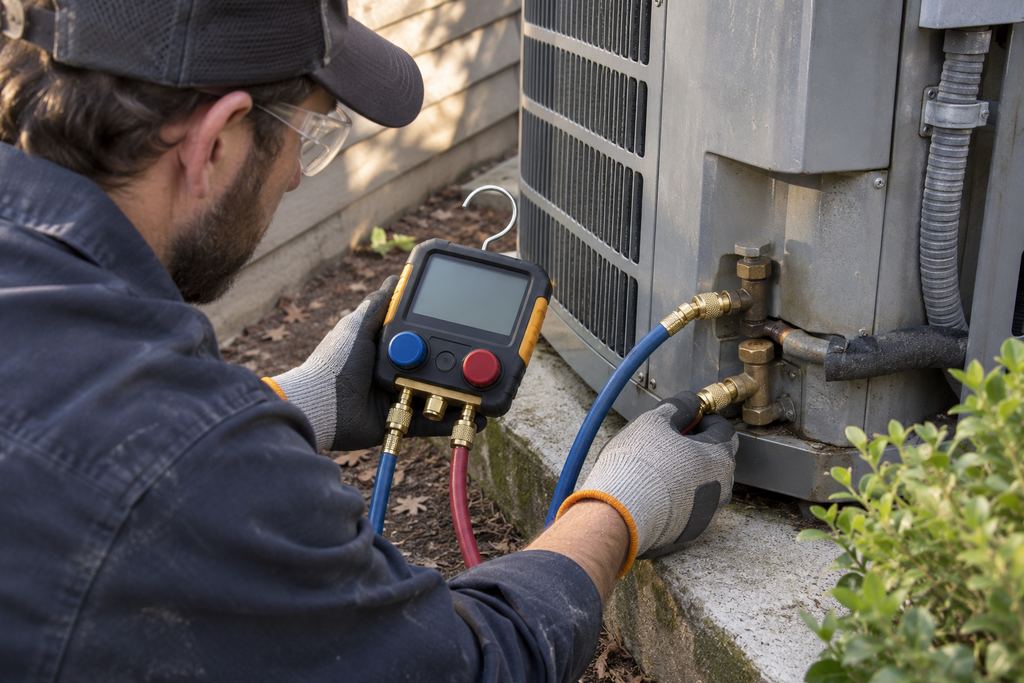
- Measuring refrigerant pressures, finding leaks and recharging.
- Checking pressure switches and the float switch circuit without bypassing them.
- Relocating a thermostat or changing control settings on the equipment board.
- Running a load calculation to confirm the system is the right size.
When the real problem is size
An oversized air conditioner tends to run short cycles and remove less moisture, because humidity removal happens later in a cycle once the coil is cold and wet. Homes in humid climates notice this as a cool but damp feel. Fixing it is not a part swap. A contractor should run a Manual J load calculation, which looks at insulation, windows, orientation and air leakage, and compare the result with the installed equipment. If the unit is far too large, options include changing blower settings, adding a dehumidifier or, at replacement time, choosing a smaller or variable-capacity system.
The AC diagnostics page explains how a full diagnostic visit is structured.
How a short cycling visit usually goes
- You describe the pattern
Share your cycle times, when it started and any recent work such as a new thermostat or filter change.
- Airflow and coil check
The technician looks at the filter, blower, evaporator coil and return path.
- Controls and electrical
Thermostat wiring, capacitor, contactor and safety switches are tested.
- Refrigerant readings
Pressures and temperatures show whether the charge is right or a leak is likely.
- Written options
You get the cause and a written price for each repair before work begins.
Related symptoms
A system that shuts down and stays off is covered under AC keeps shutting off. The opposite pattern, a unit that runs for hours, is on AC running constantly. If cooling has dropped off along with the cycling, compare with AC not cooling.
Frequently asked questions
Can a thermostat cause short cycling?
Yes. A thermostat with weak batteries, loose wiring, a poor location or an aggressive cycle setting can end cycles too soon. Try fresh batteries and check for heat sources nearby. Wiring and setup changes are a job for a technician.
What does the 3 minute rule mean for an air conditioner?
Many thermostats and outdoor units hold the compressor off for a few minutes after it stops, to protect it from restarting against high pressure. If your system restarts faster than that, or repeats the pattern all day, mention it during service.
How often should an AC compressor turn on and off?
It varies with weather and equipment. Several longer cycles per hour on a mild day are typical for a single-stage system. Many very short cycles in a row while the house stays warm point to a fault.
Is short cycling an emergency?
Usually not, but leaving it alone shortens compressor life and raises energy use. If you also notice a burning smell or a tripping breaker, turn the system off and call a professional.
Will a bigger AC fix comfort problems?
Often it makes them worse, because an oversized unit short cycles and leaves humidity behind. Ask for a load calculation before changing equipment size.
Related guides and services
Get short cycling diagnosed
Tell the contractor how long each cycle lasts and what you have already checked. An independent local contractor can follow up with scheduling options.
Note how many minutes each cycle lasts. Your request goes to an independent local contractor.
Please keep this page open.
- We pair the request with an independent contractor or partner network that works in your ZIP code.
- The contractor gets in touch to go over the details and agree on a visit.
- After checking the system they quote the job, and you choose whether to proceed.
Read how requests are handled.
Online requests are not connected to a contractor network yet. Nothing you typed was sent or saved. Please phone us instead, or try again later.
Call (888) 555-0199