HVAC Duct Sealing for Leaky Ductwork
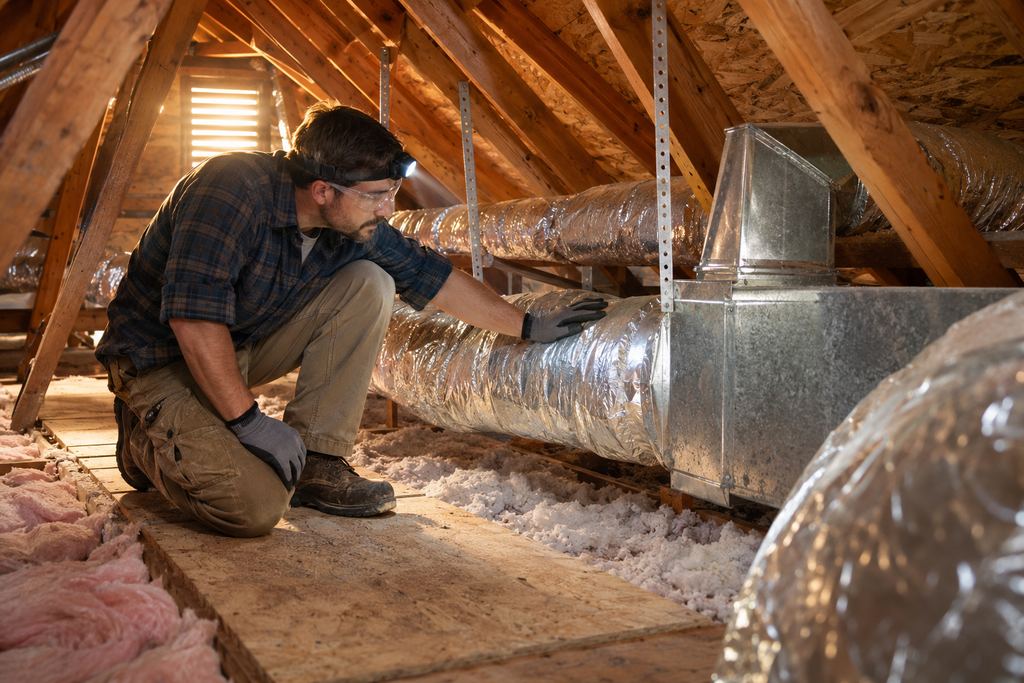
Air that escapes a supply duct in the attic is cooling you paid for that never reaches a room. Air sucked into a leaky return drags attic dust and heat back through the system. ENERGY STAR puts typical losses at roughly 20 to 30 percent of the air a home's ducts carry, through leaks, holes and loose connections. Sealing closes those gaps.
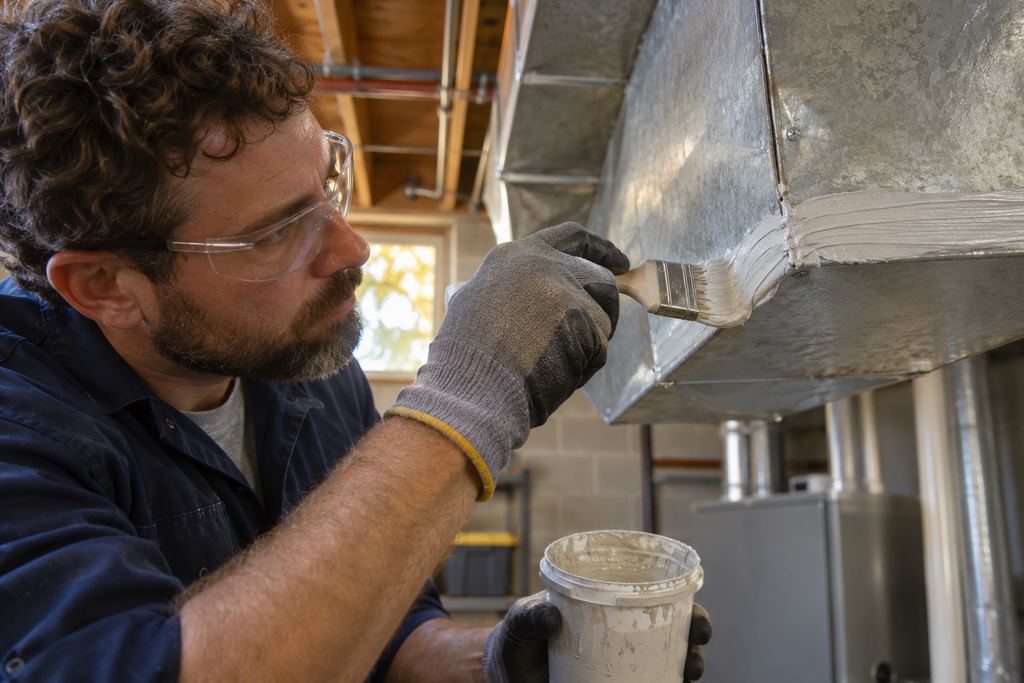
- Hand sealing with mastic or foil tape at reachable joints
- Aerosol sealing from the inside for hidden leaks
- Test before and after to see the difference
Tell us where the ducts run and which rooms struggle. A contractor nearby follows up.
Please keep this page open.
- We pair the request with an independent contractor or partner network that works in your ZIP code.
- The contractor gets in touch to go over the details and agree on a visit.
- After checking the system they quote the job, and you choose whether to proceed.
Read how requests are handled.
Online requests are not connected to a contractor network yet. Nothing you typed was sent or saved. Please phone us instead, or try again later.
Call (888) 555-0199Sealing methods compared
| Method | How it works | Good for | Limits |
|---|---|---|---|
| Mastic | A paste brushed over joints and seams, sometimes with mesh tape on larger gaps | Accessible metal joints, boots and plenums | Only reaches what a person can reach |
| Foil tape (UL-listed) | Metal-backed tape with long-lasting adhesive | Clean, dry seams and flex duct collars | Surface must be clean; cloth duct tape is not a substitute |
| Aerosol sealing | Ducts are pressurized and a sealant mist is blown through; particles collect and build up at leaks | Leaks inside walls, chases and ceilings | Not for disconnected or crushed ducts; registers are blocked during the process |
Where duct leaks usually hide
Technicians check these spots first because joints leak far more often than straight runs.
- Plenum to equipment joint: The box on top of the furnace or air handler is often screwed on and never sealed.
- Boots behind registers: The gap between the duct boot and the drywall or floor opens straight into the attic or wall.
- Flex duct collars: Where a branch slides onto a metal takeoff, a single loose strap leaves a ring-shaped gap.
- Panned returns: Some older homes use the space between joists as a return; those cavities leak at every edge.
- Filter slot: A missing cover or an oversized slot pulls unfiltered air in right before the blower.
- Longitudinal seams: Seams along sheet metal trunks loosen over decades of expansion and contraction.
How a duct sealing job runs
- Baseline test
A duct leakage test measures how much air the system loses before any work.
- Repairs first
Disconnected, torn or crushed sections are fixed. Sealing cannot close a duct that is lying on the attic floor; that is duct repair.
- Seal
Mastic or foil tape at accessible joints, aerosol sealing for hidden leaks, or both.
- Insulate where needed
Ducts in unconditioned space get insulation after sealing. See duct insulation.
- Retest
A second test shows the reduction in leakage.
Is duct sealing worth it?
It is worth the most when the ducts run through an attic, crawl space or garage, because air leaking there is lost to the outdoors. Signs that point to leaks include rooms far from the equipment staying warm, dust building up quickly, and a system that runs long without reaching the set temperature. When ducts sit entirely inside the conditioned space, leaked air still ends up in the house, so the benefit is smaller, though balancing between rooms may still improve.
Energy codes generally require new ducts to be sealed, and some utilities offer rebates for duct sealing. Check the ENERGY STAR rebate finder for programs in your area.
How a service request works
HVAC Service Near Me is a referral service. We don't send our own technicians. We connect you with independent local contractors.
- Describe the job
Type your ZIP code, pick a service and add a line or two about the problem or project.
- We pass it on
An independent HVAC contractor or partner network that works in your area and does that kind of job receives it.
- You hear back
The contractor gets in touch to check the details and set a time to come out.
- The choice is yours
After a diagnosis the contractor gives you a quote. Price, timing and warranty are agreed directly between the two of you.
Frequently asked questions
Which materials do technicians seal ducts with?
Mostly a brush-on, water-based mastic and metal-backed foil tape carrying a UL listing for joints within reach, plus aerosol sealant rigs for gaps buried in walls and ceilings.
What does professional duct sealing cost?
Quotes swing with how much ductwork a person can physically reach, which method is used and whether before and after testing is part of the price. Contractors set the number after seeing the system; HVAC Service Near Me sets none.
Do exposed ducts in a basement or garage need sealing?
Seams on exposed ducts in unconditioned space should be sealed. Exposed ducts inside the living space leak into the house, so sealing matters less for energy, but it can still help balance airflow.
Can I seal my own ducts?
Reachable joints in a basement can be sealed with mastic or foil tape by a careful homeowner. Testing, aerosol sealing and work in tight attics are jobs for a contractor.
Related guides and services
Request duct sealing
Mention where the ducts run and which rooms lag behind. HVAC Service Near Me forwards it to an independent contractor working in your area.
Tell us where the ducts run and which rooms struggle. A contractor nearby follows up.
Please keep this page open.
- We pair the request with an independent contractor or partner network that works in your ZIP code.
- The contractor gets in touch to go over the details and agree on a visit.
- After checking the system they quote the job, and you choose whether to proceed.
Read how requests are handled.
Online requests are not connected to a contractor network yet. Nothing you typed was sent or saved. Please phone us instead, or try again later.
Call (888) 555-0199