Why Your AC Is Blowing Hot Air Instead of Cold
When the AC is blowing hot air, the indoor fan is usually doing its job and the part that removes heat is not. Most cases come down to four things: thermostat settings, power to the outdoor unit, restricted airflow, or a refrigerant problem.
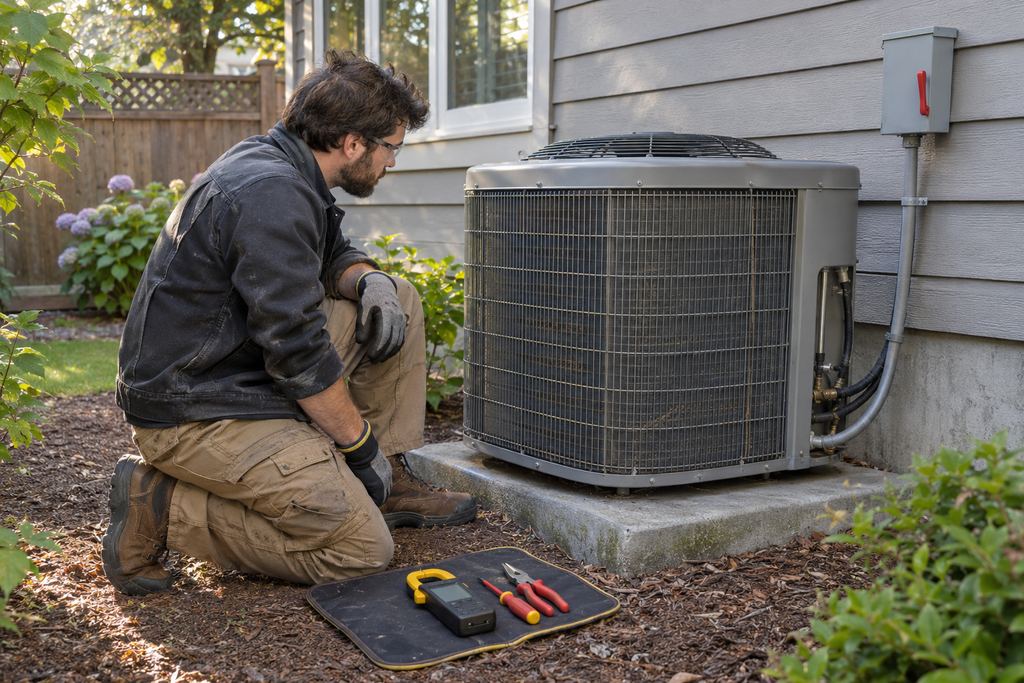
Confirm the thermostat is set to Cool with the setpoint below room temperature, then walk outside. A quiet condenser while the indoor blower runs points to power, a tripped breaker, or a failed start component. A humming condenser with a still fan suggests a capacitor or motor fault for a technician. Ice on the copper lines means airflow or refrigerant trouble.
Symptoms that tell you where to look
Stand at a supply register and then at the condenser. What you notice in each spot narrows the list fast.
- Air is room temperature, not hot: The blower is moving indoor air but the compressor is not running. Start with settings and the outdoor unit.
- Air starts cool, then turns warm: Often a compressor tripping on its overload, a dirty condenser coil, or a system low on charge.
- Outdoor unit silent: No power reaching it, a tripped breaker or disconnect, a failed contactor, or a safety switch holding it off.
- Outdoor unit hums, fan does not spin: A classic sign of a weak capacitor or seized fan motor. Switch the system off so the compressor does not overheat.
- Frost on the larger copper line: The indoor coil is too cold, usually from a clogged filter, blocked returns or low refrigerant. See AC freezing up.
- Water around the indoor unit: Melting ice or a backed up drain. A full drain pan can trip a float switch that stops cooling, covered on the leaking water page.
How the cause differs by system type
What you can check and what stays with a technician
Safe checks you can do
No tools beyond a flashlight. Turn the system off at the thermostat before opening any filter or access door.
- Set the thermostat to Cool and the fan to Auto, then drop the setpoint about three degrees below the room reading.
- Replace dead thermostat batteries if the display is blank or dim.
- Pull the filter and hold it to a light. If you cannot see through it, install a new one.
- Find the breaker labeled for the condenser. A tripped handle gets one reset; a second trip means stop and call.
- Rake away cottonwood fluff, mulch and stacked patio gear so the outdoor coil can breathe on all sides.
- Frosted lines? Run fan only, cooling off, and give the ice an afternoon to melt before you try Cool again.
Leave these to a licensed technician
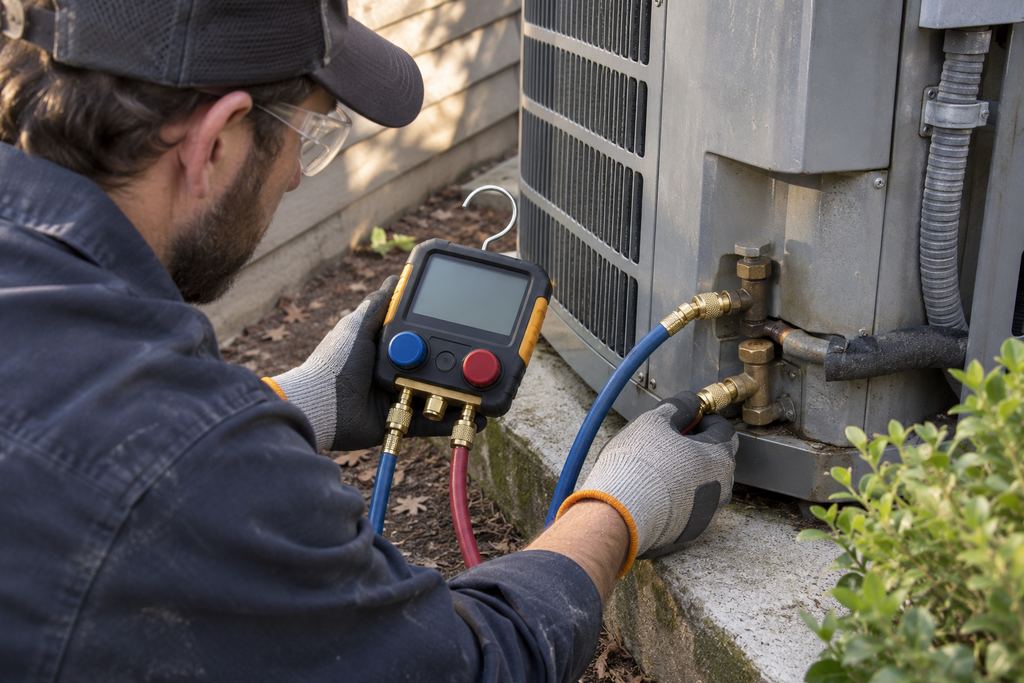
These involve high voltage, refrigerant or sealed components. Refrigerant work requires EPA Section 608 certification.
- Meter work on capacitors, contactors and high voltage wiring behind the service panel.
- Gauging pressures, tracing leaks and adding charge. Federal rules limit refrigerant handling to EPA Section 608 certified people.
- Diagnosing a reversing valve or a heat pump defrost control.
- Cleaning a dirty indoor coil or straightening a badly damaged outdoor coil.
- Checking a compressor that trips its overload or will not start.
Why the air turns warm: the usual causes
An air conditioner cools by moving heat from the indoor coil to the outdoor coil through refrigerant. If any link in that loop breaks, the blower keeps pushing air across a coil that is no longer cold, and you feel lukewarm or warm air.
Settings and controls
A thermostat left on Heat, Auto changeover set too wide, or a fan set to On rather than Auto will circulate uncooled air between cycles.
Power to the condenser
The outdoor unit has its own breaker and a disconnect box near the unit. Either one can be off while the indoor blower still runs on a separate circuit. Inside the condenser, a pitted contactor or a failed run capacitor can stop the compressor or fan from starting. Those parts hold voltage even with the power off, so they are a job for the technician. Background on the part is on the capacitor replacement page.
Airflow problems
A choked filter, closed registers or a dirty evaporator coil starve the system of airflow. The coil can then freeze, and once it is coated in ice almost no heat transfers, so the air feels warm even though the compressor runs.
Refrigerant
Refrigerant is the fluid that carries heat outside. A system does not use it up, so a low charge means a leak. Older units built for R-22 are harder to service because that refrigerant is no longer produced; newer systems run on R-410A or A2L refrigerants such as R-454B or R-32.
What shapes the repair bill
No two quotes look alike because region, season and equipment differ. Expect a written figure once the fault is found; these items push it up or down.
Swapping a capacitor or contactor is quick. Replacing a compressor or coil is a large job.
Hunting a leak, brazing it and recharging is hours of labor, and scarce older refrigerant adds to that.
After-hours and heat-wave calls often cost more per hour. Confirm the rate when booking.
With a big failure on an aging unit, weigh the repair against a new system. Typical figures are in the AC repair cost section.
Frequently asked questions
What job does the refrigerant do?
Evaporating inside the indoor coil, it soaks up heat from your rooms; condensing outside, it dumps that heat into the yard. Short on charge, the indoor coil stays too warm to cool anything and the registers feel lukewarm.
Why does my AC wait a few minutes before the outdoor unit kicks on?
That pause is deliberate. Lots of thermostats and condenser controls lock the compressor out for roughly three to five minutes after it stops so high and low side pressures can settle. Changed a setting a moment ago? Wait out the delay before judging.
The fan runs, so why is the house still warm?
Running usually means the indoor blower is on. If the outdoor unit is off, humming or iced, the cooling side has stopped. The AC not cooling guide walks through the broader case where air is cool but the house never reaches the setpoint.
Is it safe to keep running an AC that blows hot air?
Not for long. A compressor that cannot start or a coil coated in ice can damage itself. Turn cooling off and leave the fan on if there is ice, and book a diagnosis if the cause is not a setting or the filter.
My outside AC unit will not start at all. Is that the same problem?
It is one of the main causes. Check the breaker and disconnect, then see AC not turning on for the next steps.
Related guides and services
Send the warm air problem to a local pro
Jot down the thermostat reading and whether the condenser fan turns, then submit the form. An independent HVAC company nearby may reach out to arrange a visit; openings vary by ZIP code and time of year.
Describe what the indoor and outdoor units are doing. Your request goes to an independent local contractor who can schedule a diagnosis.
Please keep this page open.
- We pair the request with an independent contractor or partner network that works in your ZIP code.
- The contractor gets in touch to go over the details and agree on a visit.
- After checking the system they quote the job, and you choose whether to proceed.
Read how requests are handled.
Online requests are not connected to a contractor network yet. Nothing you typed was sent or saved. Please phone us instead, or try again later.
Call (888) 555-0199