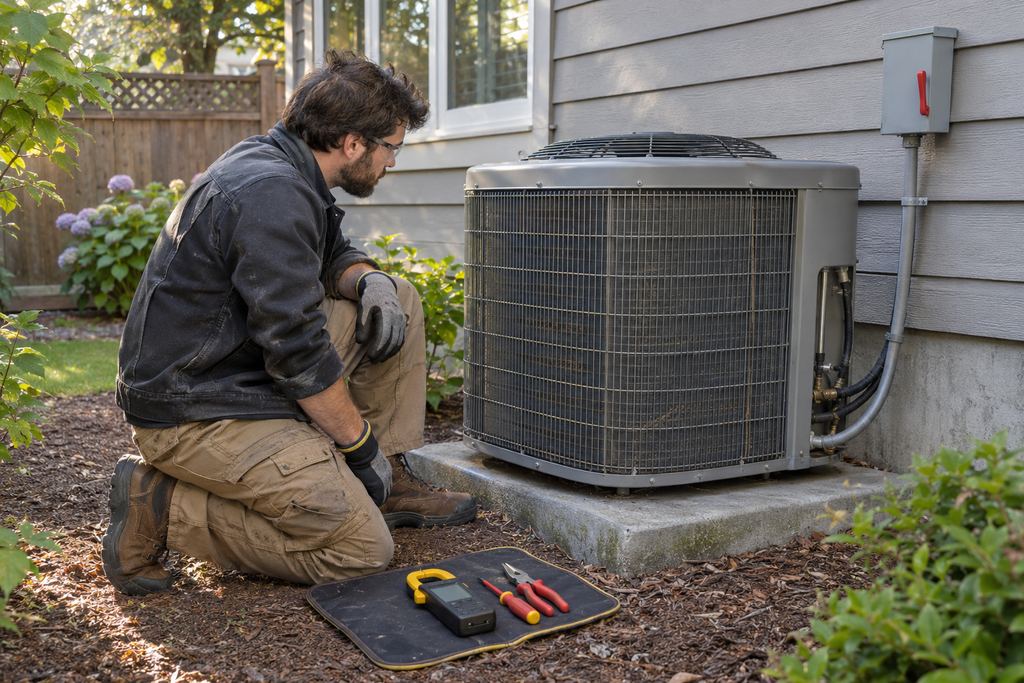
Burning Smell From Your AC: What It Means and What to Do
Treat an AC burning smell as electrical until a technician says otherwise. Switch the system off at the thermostat, and if you see smoke or flame, get everyone outside and dial 911.
A faint dusty whiff that fades within minutes, right after the first run of the season or after electric heat comes on, is often dust burning off a heating element. A sharp electrical, plastic or rubber odor that lingers is different: motors, capacitors and loose wire connections can overheat. Turn the system off, leave it off, and have a technician inspect it before the next run.
Do not investigate. Leave the house with everyone, then call 911 from outside. Do not open the air handler, the condenser panel or the breaker box to look for the source.
Match the smell to a likely source
Odors are clues, not a diagnosis. Use this to describe the problem when you request service.
| What you smell | Possible source | What to do |
|---|---|---|
| Dusty, toasty, gone in a few minutes | Dust on electric heat strips or a furnace burner after months idle | Watch it. If it persists past 30 minutes, shut off and book an inspection. |
| Hot metal or electrical, like an overheated appliance | Blower or condenser fan motor running hot, failing capacitor | Turn the system off and keep it off until inspected. |
| Melting plastic or scorched wire insulation | Loose or arcing connection, damaged wiring, control board | Turn it off. If the smell is strong or you see smoke, leave and call 911. |
| Burning rubber | A slipping or worn belt on older blower setups, or a seizing motor | Turn the system off and schedule a repair. |
| Burning from a window or portable unit | Overloaded cord, damaged plug, failing internal motor | Unplug it if the plug is cool to touch. Do not use an extension cord. |
Signs that come with the smell
Tell the contractor about any of these. They help separate a dusty startup from a fault.
- Breaker trips when the AC starts: Repeated trips point to an electrical fault. Do not keep resetting. The tripping breaker page explains why.
- Humming or buzzing with no airflow: A motor trying to start against a failed capacitor heats up quickly.
- Weak or warm air: An overheating motor may be slowing down. Warm air alone has other causes, covered under AC blowing warm air.
- Discolored vent or outlet: Brown marks near a wall unit outlet or register mean heat. Stop using the unit.
Where the smell starts in different systems
What a technician inspects on a burning smell call
- Visual and nose check
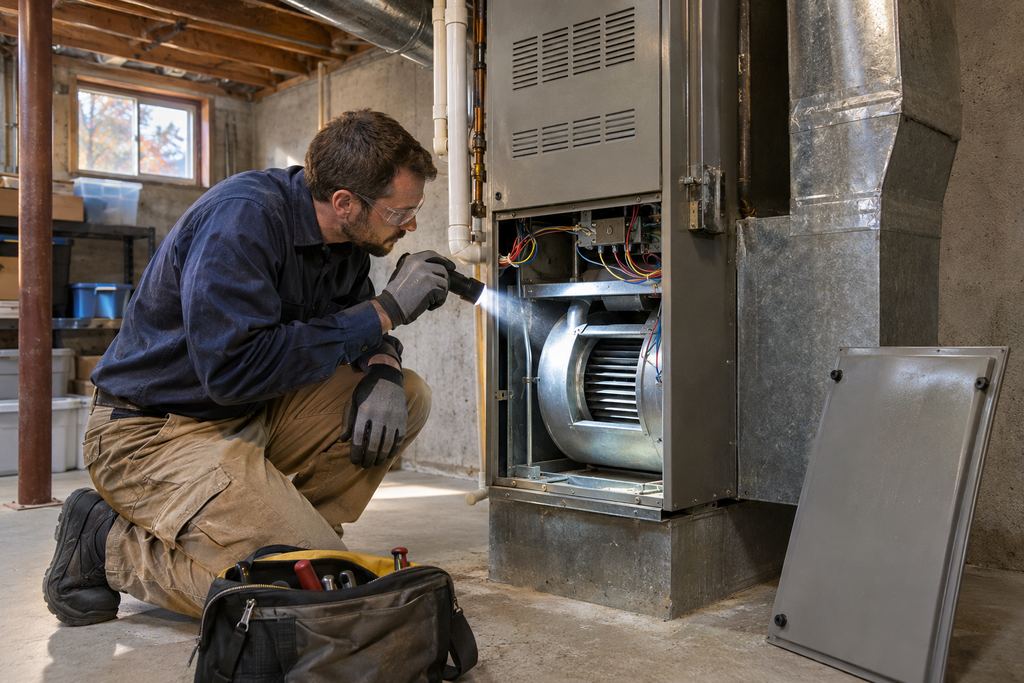
Opening panels with power off and tracing scorch marks, melted insulation or soot.
- Electrical tests
Capacitor readings, motor amp draw, contactor condition, and tightness of every terminal.
- Motor and bearings
Spinning blower and fan wheels by hand to feel for drag, and checking for overheating.
- Airflow and filter
A blocked filter makes the blower work harder and run hotter.
- Written findings
What failed, what it costs to fix, and whether the system is safe to run in the meantime.
Choosing who comes out
A burning smell call is electrical diagnostic work, so the person who shows up should be a licensed HVAC contractor. Before the visit, look up the license number on your state board's website and ask whether the company carries liability insurance. Ask for the diagnostic fee up front and a written quote before any part is replaced. If the smell came with smoke or a tripped breaker in the evening, ask whether the company takes after-hours calls, or see the emergency AC repair page.
HVAC Service Near Me does not send its own crews. Your request goes to an independent local contractor who handles the inspection and any repair. Part details for the usual culprits are on the blower motor replacement and capacitor replacement pages.
Lowering the odds of it happening again
- Replace the filter on the schedule printed on its frame, and sooner in pollen season or with pets.
- Before the first hot week, run the system once while you are home and awake, so you notice odors right away.
- Keep the air handler closet free of boxes, paint cans and laundry.
- Book a yearly tune-up where the technician tightens connections and tests capacitors and motors.
Frequently asked questions
Can I smell burning when nothing is on fire?
Yes. Dust burning off a heating element smells like toast for a few minutes and fades. A motor or wire overheating can also smell before any flame exists, which is exactly why you shut the system off early.
How can I tell if my AC is about to fail badly?
Warning signs include a burning or electrical odor, loud buzzing at the outdoor unit, breakers that trip on startup, and scorch marks. Any of these is a reason to stop running it and call for service.
Why does the AC wait a few minutes before restarting?
Many thermostats and outdoor controls delay compressor restart by roughly three to five minutes so pressures can equalize. A delay is normal. A burning smell when it does restart is not.
How long does a window air conditioner usually last?
It depends on use, climate and care, and makers do not publish one figure. If an older window unit smells of burning, replacing it is usually more sensible than repairing it. Never run one on an extension cord.
Is a burning smell normal the first time the heat runs?
A short dusty smell is common on the first heating day. If it lasts longer than half an hour, gets stronger, or smells like plastic, turn it off and have it checked.
Related guides and services
Have the burning smell inspected
Turn the system off, then tell us what the odor is like and when it started. An independent HVAC contractor in your area can contact you about an inspection. Availability varies by ZIP code and season.
Turn the system off first. Then describe the smell and where it seems strongest, and a local contractor can follow up.
Please keep this page open.
- We pair the request with an independent contractor or partner network that works in your ZIP code.
- The contractor gets in touch to go over the details and agree on a visit.
- After checking the system they quote the job, and you choose whether to proceed.
Read how requests are handled.
Online requests are not connected to a contractor network yet. Nothing you typed was sent or saved. Please phone us instead, or try again later.
Call (888) 555-0199