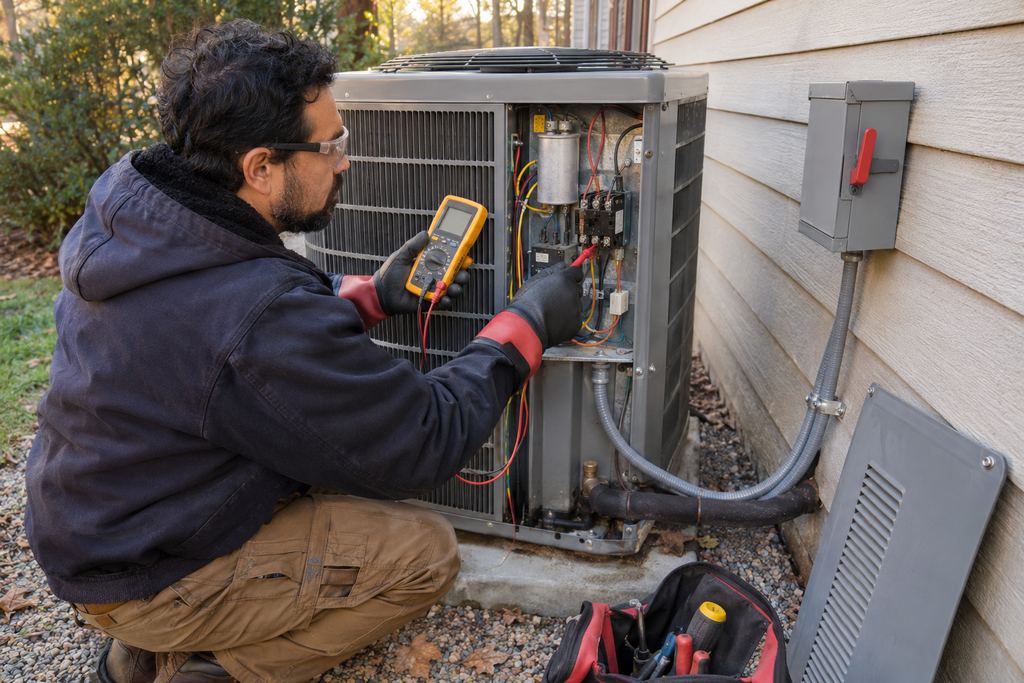
Air Conditioner Keeps Tripping the Breaker
A breaker trips to protect the wiring when current runs too high. If your AC tripping the breaker happens once on a very hot day, a single reset may be fine. If it trips again, the system or the circuit has a problem that needs a professional.
Reset the breaker one time, after the AC has been off for several minutes. If it trips again, leave it off. Repeat trips usually come from a failing capacitor or compressor, a shorted fan motor, loose or damaged wiring, a dirty coil that makes the compressor work harder, or a breaker that has worn out. None of these are safe homeowner repairs.
The one reset worth trying
- Turn the thermostat off
Stopping the call for cooling keeps the system from starting the instant power returns.
- Find the right breaker
Central systems often have two: a large double breaker for the outdoor unit and another for the indoor air handler or furnace. Check the panel labels.
- Reset it once
Push the handle firmly to OFF, then back to ON. Do not remove the panel cover.
- Wait before cooling
Give it several minutes, then set the thermostat to COOL. Many systems also delay the compressor start on their own.
- Stop if it trips again
A second trip means a fault. Leave the breaker off and request service.
A burning or hot plastic smell, buzzing from the panel, scorch marks, a breaker that is hot to the touch, or sparks at the outdoor unit are reasons to keep power off and call a licensed electrician or HVAC technician. Smoke or flames mean everyone goes outside and someone calls 911.
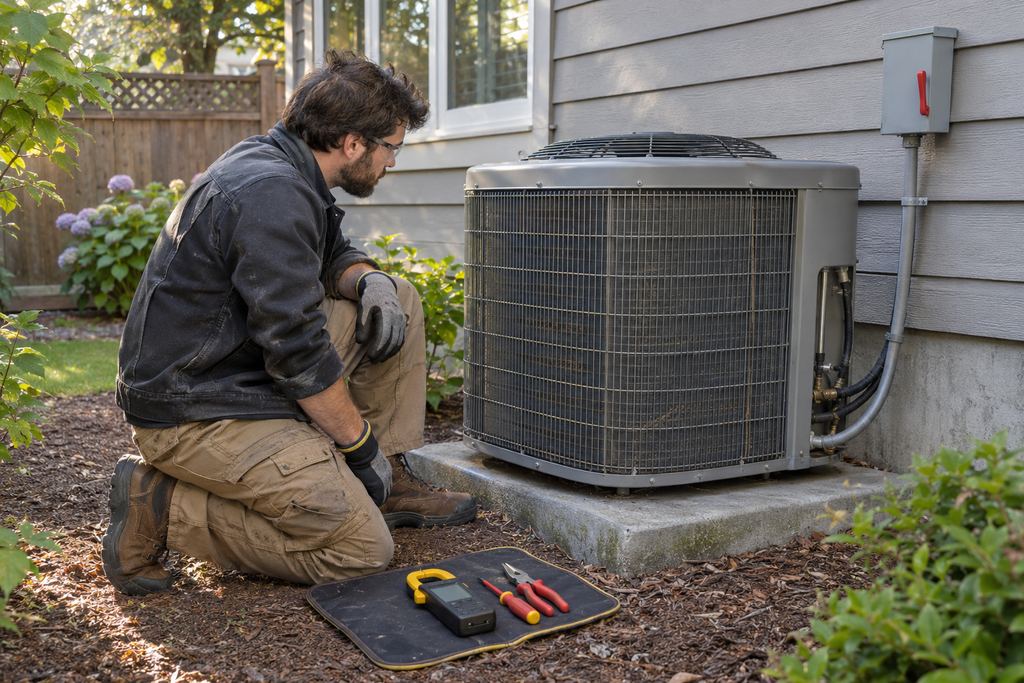
What usually makes an AC trip its breaker
Sometimes the panel is the weak link
Not every trip starts in the air conditioner. An old breaker can trip below its rating, and a breaker that does not match the equipment can trip whenever the compressor starts. The outdoor unit's data plate lists the minimum circuit ampacity and the maximum breaker size. A technician or electrician compares those numbers with the breaker and the wire. If the panel is the problem, the repair is electrical work rather than HVAC work, and many areas require a licensed electrician for it.
If you also hear clicking from the outdoor unit or notice the system will not turn on after a reset, mention it in your request.
What you can do and what you should not
Safe checks you can do
No tools beyond a flashlight. Turn the system off at the thermostat before opening any filter or access door.
- Reset the breaker once with the thermostat off.
- Replace a dirty filter so the system is not fighting restricted airflow.
- Clear plants, leaves and debris from around the outdoor coil.
- Note the time of day, the outdoor temperature and how long the AC ran before the trip.
Leave these to a licensed technician
These involve high voltage, refrigerant or sealed components. Refrigerant work requires EPA Section 608 certification.
- Removing the electrical panel cover or the outdoor unit's service panel.
- Testing or replacing capacitors, contactors and motors.
- Measuring compressor current draw and winding resistance.
- Checking or repairing refrigerant, which requires EPA Section 608 certification.
- Replacing the breaker or upgrading the circuit.
Maintenance that lowers the chance of trips
Electrical faults often build slowly. A yearly check lets a technician tighten connections, test the capacitor and measure current draw before something fails on the hottest day of the year. Keep up with filter changes between visits, and keep the outdoor coil clean so the compressor is not working against high head pressure. The AC maintenance page lists what a seasonal visit includes.
Frequently asked questions
Why does a circuit breaker trip on an air conditioner?
The breaker senses more current than the circuit is rated for and opens to protect the wiring. On an AC, that extra current usually comes from a motor or compressor struggling to start, a short, or a loose connection heating up.
How long should I wait after a trip before turning the AC back on?
Wait several minutes with the thermostat off. Many systems hold the compressor off for a few minutes after power returns. If it trips a second time, leave it off and call for service.
How much does it cost to replace an AC breaker?
Price depends on the breaker type, panel brand and local labor rates, and whether an electrician also needs to correct the wiring. Ask for a written quote that names the breaker and the reason it failed.
Does a breaker need replacing if it keeps tripping?
Not always. Most repeat trips are caused by a fault in the AC, and a new breaker would trip too. A technician should test the equipment first, then the breaker.
Can I just use a bigger breaker?
No. The breaker must match the wire size and the equipment data plate. A larger breaker can let wiring overheat, which is a fire risk.
Related guides and services
Request help with breaker trips
Share how often it trips and what the system was doing at the time. An independent local contractor can follow up about a visit.
Tell us when it trips and how many times. An independent local contractor can follow up.
Please keep this page open.
- We pair the request with an independent contractor or partner network that works in your ZIP code.
- The contractor gets in touch to go over the details and agree on a visit.
- After checking the system they quote the job, and you choose whether to proceed.
Read how requests are handled.
Online requests are not connected to a contractor network yet. Nothing you typed was sent or saved. Please phone us instead, or try again later.
Call (888) 555-0199