AC Drain Line Cleaning for a Clogged Condensate Line
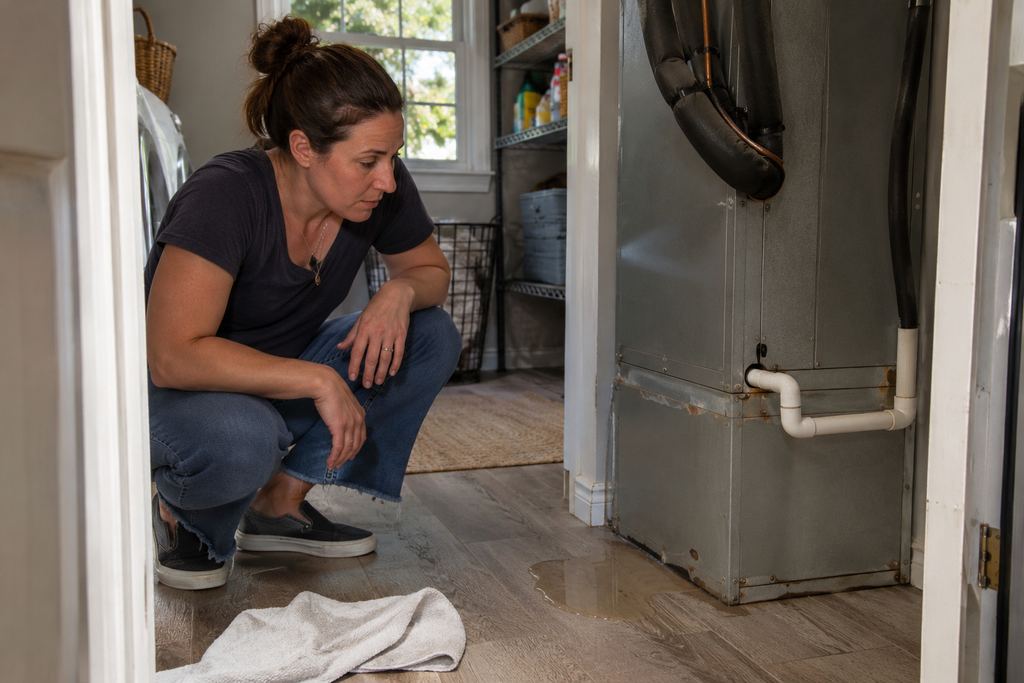
Your air conditioner pulls water out of the air and sends it down a small pipe called the condensate drain line. Algae, dust and sludge narrow that pipe until water backs up into the pan, trips a safety switch or spills onto the floor. AC drain line cleaning clears the pipe and checks that the water has a free path out.
- Standing water in the pan or a wet ceiling are early warnings
- Owners can flush the line only in the way the manual describes
- A technician clears stubborn clogs and checks the pan, trap and float switch
Tell us where the water is showing up. A local contractor follows up to schedule a visit.
Please keep this page open.
- We pair the request with an independent contractor or partner network that works in your ZIP code.
- The contractor gets in touch to go over the details and agree on a visit.
- After checking the system they quote the job, and you choose whether to proceed.
Read how requests are handled.
Online requests are not connected to a contractor network yet. Nothing you typed was sent or saved. Please phone us instead, or try again later.
Call (888) 555-0199Clues that the line is plugged
- Water around the indoor unit: Puddles near the furnace, air handler or attic platform. More on that in AC leaking water.
- AC shuts off and will not restart: A float or overflow switch cut power because the pan filled.
- Full drain pan: Water sits in the pan instead of draining between cycles.
- Musty or swampy odor: Slime growing in a slow line can carry a smell into the supply air.
- Ceiling stain under an attic unit: A sign the secondary pan overflowed or the unit has no backup pan.
- Dry outdoor drain end on a humid day: Where the line exits outside, nothing drips while the AC runs.
Why condensate lines clog
The water that drips off the evaporator coil is cool, slow and full of whatever got past the filter. That makes the line a good home for algae and bacterial slime. Add dust from a loose filter, insulation fibers or debris from attic work and the pipe narrows quickly. Lines with a sag or too little slope hold water and clog faster. Traps that dry out in the off season can also let air pull back through and stop flow.
Humid regions produce more condensate, so the line works harder there. Systems in attics are the riskiest because an overflow lands on drywall. See clogged AC drain for a symptom-first walkthrough.
A safe owner flush, only if your manual allows it
Read the instructions for your indoor unit first. If they say nothing about flushing, call a technician instead.
- Turn the system off
Set the thermostat to off and switch off the indoor unit's power at its service switch or breaker.
- Find the access point
Many lines have a capped vent or a T fitting near the indoor unit. Remove only the cap, nothing else.
- Pour slowly
Use plain water or the cleaner your manual names, usually a small amount of distilled white vinegar. Watch for it to exit outside or at the drain.
- Check the outlet
Steady flow at the exit means the line is open. Backing up means a deeper clog.
- Restore and watch
Replace the cap, turn power back on and check the pan after the next long cooling cycle.
Who handles what
Safe checks you can do
No tools beyond a flashlight. Turn the system off at the thermostat before opening any filter or access door.
- Change the air filter on schedule to keep dust off the coil
- Flush the line through the access cap as the manual describes
- Look in the pan for standing water during a hot spell
- Keep the outdoor drain end clear of mulch and soil
Leave these to a licensed technician
These involve high voltage, refrigerant or sealed components. Refrigerant work requires EPA Section 608 certification.
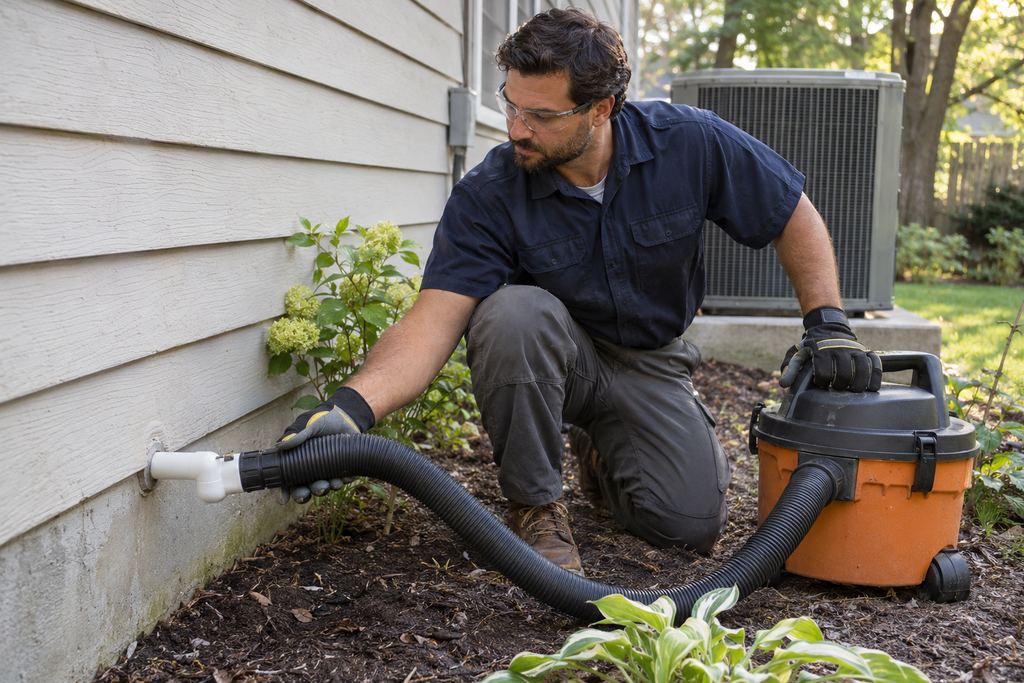
- Vacuuming the line from the outside end with a wet vacuum or pump
- Clearing the trap and checking slope and supports
- Testing the float or overflow switch so it shuts the unit down when it should
- Cleaning or replacing a cracked pan; see drain pan replacement
- Servicing a condensate pump where water must be lifted
Drain setups a technician may find
What affects the price of drain line cleaning
We do not set prices. Ask for a written quote and check whether it is a standalone visit or part of a tune-up.
A soft algae plug clears quickly. A line packed solid or crushed may need cutting and new pipe.
Attic and crawlspace units take longer to reach than a basement or closet unit.
A new float switch, trap, cleanout tee or pump adds to the bill.
Many contractors include a drain check in a seasonal AC maintenance visit.
Keeping the line clear between visits
A clean filter is the cheapest protection, because less dust reaches the coil and the pan. In a humid climate, look at the pan or the outdoor drip once a month during summer. Ask the technician to add a cleanout tee if your line lacks one, so future flushing is easy and done at the right point. If you keep getting clogs, ask whether the line slope, the trap or the filter rack needs fixing rather than more cleaning.
How a service request works
HVAC Service Near Me is a referral service. We don't send our own technicians. We connect you with independent local contractors.
- Describe the job
Type your ZIP code, pick a service and add a line or two about the problem or project.
- We pass it on
An independent HVAC contractor or partner network that works in your area and does that kind of job receives it.
- You hear back
The contractor gets in touch to check the details and set a time to come out.
- The choice is yours
After a diagnosis the contractor gives you a quote. Price, timing and warranty are agreed directly between the two of you.
Frequently asked questions
Should I use vinegar or bleach in the drain line?
Follow your equipment manual. Many manuals and technicians suggest a small amount of distilled vinegar because it is mild. Some manuals warn against bleach, which can be hard on certain pans and fittings. Never combine the two.
Can I pour Drano or a similar drain opener into the AC line?
No. Those products are made for household plumbing, not for the pan, trap and plastic fittings in an air conditioner. A wet vacuum from the outdoor end or a technician visit is the safer route.
What can I pour into the line to unclog it?
Plain water or the cleaner your manual names. If water backs up instead of flowing, stop pouring. The clog needs to be pulled out, not pushed with more liquid.
How do I know the condensate line is clogged?
Water standing in the pan, a puddle near the indoor unit, an AC that shut itself off with a full pan, or no drip at the outdoor end on a humid day are the usual signs.
How often should the drain line be cleaned?
Many owners do it at the start of the cooling season and again mid-summer in humid areas. A technician usually checks it during annual maintenance.
Related guides and services
Book drain line cleaning
Tell us where the water is showing up and whether the AC has shut off. A local contractor can follow up to clear the line and check the pan and safety switch.
Tell us where the water is showing up. A local contractor follows up to schedule a visit.
Please keep this page open.
- We pair the request with an independent contractor or partner network that works in your ZIP code.
- The contractor gets in touch to go over the details and agree on a visit.
- After checking the system they quote the job, and you choose whether to proceed.
Read how requests are handled.
Online requests are not connected to a contractor network yet. Nothing you typed was sent or saved. Please phone us instead, or try again later.
Call (888) 555-0199