Ductless Mini Split Systems: A Practical Buyer's Guide
A ductless mini split cools, and in heat pump versions also heats, one room or zone at a time without any ductwork. An outdoor unit connects to one or more indoor heads through a bundle of tubing and wire that passes through a hole about three inches wide.
A mini split is worth it when you need to condition rooms that ducts do not reach, an addition, a garage conversion or an older house that never had ducts. It costs more than a window unit, runs quieter and more efficiently, and needs a contractor for most installs. It is less attractive when good ducts already serve the whole house.
What you are buying
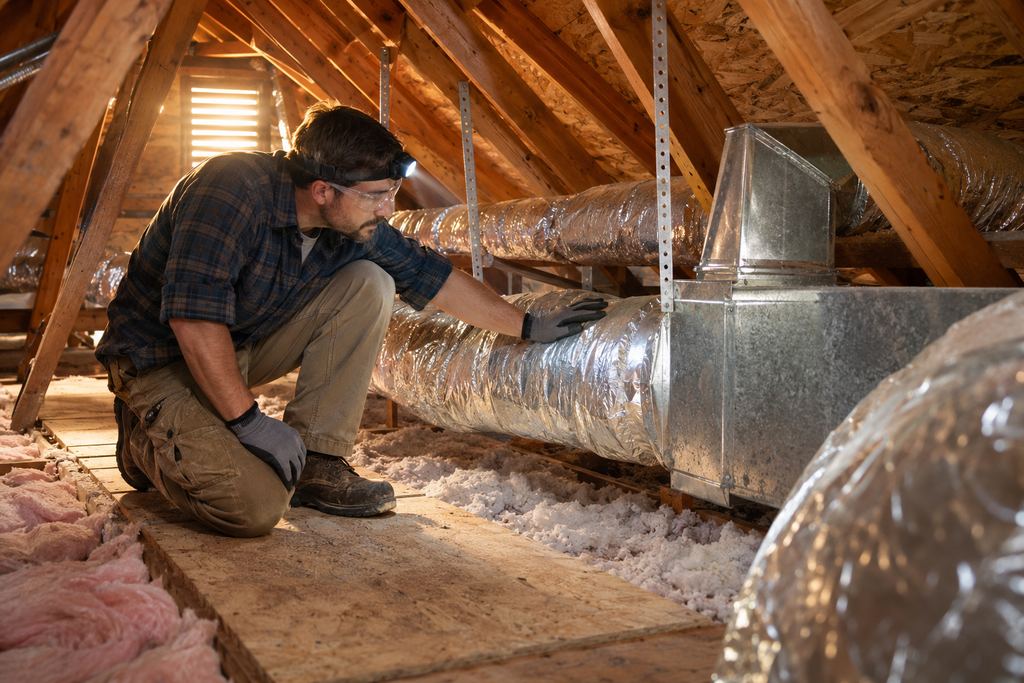
Every system has two halves. The outdoor unit holds the compressor and a coil that releases heat. The indoor head holds a second coil and a quiet fan. Between them runs a line set: two insulated copper tubes for refrigerant, a power and control cable, and a condensate drain. Because no ducts are involved, none of the cooling is lost to leaks in attic or crawlspace ductwork, which in some homes accounts for more than 30 percent of the energy used for heating and cooling.
Most units sold today are heat pumps, so the same equipment reverses in winter. Cooling-only models exist but are less common.
Head styles and where each fits
Single-zone or multi-zone
| Single-zone | Multi-zone | |
|---|---|---|
| Setup | One outdoor unit, one head | One outdoor unit, two or more heads |
| Good for | One problem room or an addition | Several rooms with limited space outside |
| Tradeoff | More outdoor units if you add rooms later | All heads share one mode; one failure affects every room |
| Read more | Single-zone guide | Multi-zone guide |
Sizing a head for the room
Indoor heads commonly come in capacities from 6,000 to 24,000 Btu per hour. For a single room, the ENERGY STAR room air conditioner chart is a reasonable starting point: about 9,000 Btu for 350 to 400 square feet and about 12,000 Btu for 450 to 550 square feet. Add roughly 10 percent for a very sunny room and take off 10 percent for a heavily shaded one.
Bigger is not safer. An oversized head reaches the set temperature quickly, slows to a crawl or cycles, and leaves the room clammy because it never runs long enough to pull moisture out. For whole-floor or whole-house designs, ask the contractor for a load calculation instead of a chart.
Reading the efficiency label
Cooling efficiency is rated in SEER2 and heating efficiency in HSPF2. Both apply to a matched outdoor unit and head, so a brochure figure may not match the combination you are quoted. Ask for the AHRI certificate for your exact pairing. Cold-climate models hold more of their heating output at low outdoor temperatures; if you plan to heat with the system, compare the published capacity at 5 degrees Fahrenheit, not just the rating.
Federal, state and utility incentives change. Check current offers with the ENERGY STAR rebate finder before you budget around one.
Why some owners see high electric bills
A mini split should cost less to run than resistance heat or a window unit for the same room. When bills climb, one of these is usually involved.
Output and efficiency drop as outdoor temperatures fall, and some models switch on backup heat.
Undersized heads run flat out; oversized ones short cycle and waste energy.
Clogged mesh filters and grimy coils force longer run times.
A head sized for one room cannot cool the hallway and the rest of the house too.
Large swings make the compressor ramp hard. Steady settings suit inverter equipment.
DIY kit or contractor install
The answer depends on the kind of equipment you buy.
- Pre-charged DIY kits: Some kits ship with quick-connect line sets that hold refrigerant, so the owner never opens the circuit. Line lengths are fixed, which limits where the units can go.
- Standard systems: These need flaring or brazing, a nitrogen pressure test and a deep vacuum. Opening the refrigerant circuit requires EPA Section 608 certification.
- Wiring: A new circuit and outdoor disconnect usually call for a licensed electrician and a permit, whichever kit you choose.
- Warranty terms: Some manufacturers tie coverage to professional installation. Read the terms before you buy.
Common drawbacks to weigh
- Visible hardware: Wall heads are noticeable. Concealed styles cost more.
- Cleaning: Heads collect dust and mold on coils and blower wheels if filters are neglected.
- Line set routing: Exterior covers keep tubing neat, but interior walls far from the outside take more work.
- Upfront price: Several heads can approach the price of a ducted system.
Other single-room options
If you rent, need a seasonal fix or have a tight budget, a window air conditioner or a portable unit cools one room without permanent work. Hotels and apartments often use a PTAC unit through a wall sleeve instead.
Frequently asked questions
Is a ductless mini split worth the money?
Usually, for rooms that ducts cannot serve well, for homes without ducts and for owners who want efficient heat as well as cooling. It is harder to justify where a sound ducted system already covers the house.
How much does a ductless mini split cost to install?
The number of heads, the head style, line set length and electrical work drive the price more than the brand. Get itemized quotes; the installation cost section lists the variables.
What are the main disadvantages?
Visible indoor units, regular filter cleaning, a higher upfront price per room than window units and, for multi-zone systems, one outdoor unit that every room depends on.
Which brands make ductless systems?
Mitsubishi, Daikin, Fujitsu, LG, Carrier, Trane and many others sell them, along with budget and DIY brands. Compare warranty terms, local parts support and the installer's familiarity with the line.
Can a mini split heat a house in winter?
Heat pump models heat, and cold-climate versions keep working well below freezing. Ask the installer how the system's output at your area's low temperatures compares with the heat loss of the rooms. Details on the visit are on the mini-split installation page.
Related guides and services
Plan a mini split with a local contractor
List the rooms you want to cool or heat and say whether the house has ducts. A contractor in your area can follow up to measure and quote.
List the rooms you want to cool or heat and whether the house has ducts. Availability varies by ZIP code.
Please keep this page open.
- We pair the request with an independent contractor or partner network that works in your ZIP code.
- The contractor gets in touch to go over the details and agree on a visit.
- After checking the system they quote the job, and you choose whether to proceed.
Read how requests are handled.
Online requests are not connected to a contractor network yet. Nothing you typed was sent or saved. Please phone us instead, or try again later.
Call (888) 555-0199