What to Know Before Choosing a Ceiling Cassette Air Conditioner
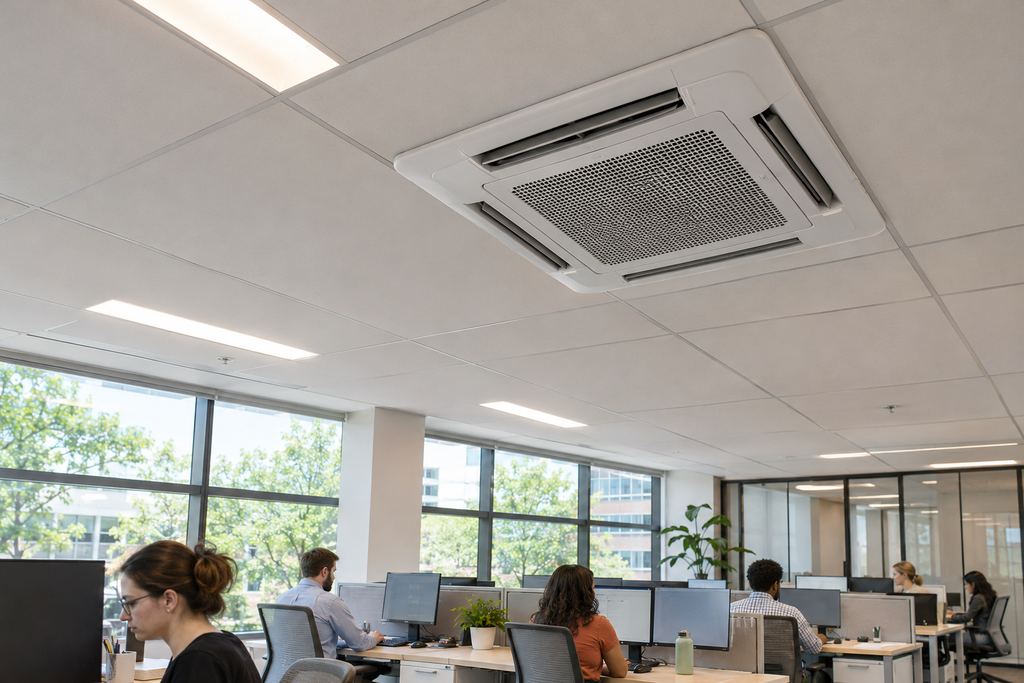
A ceiling cassette air conditioner is the indoor half of a ductless split system, mounted inside the ceiling so only a square grille shows. It suits rooms where wall space is scarce or a wall head would spoil the look, as long as there is room above the drywall.
Yes, a cassette can be a good choice for open living areas, finished basements, shops and offices. You pay more than for a wall unit because the ceiling has to be opened, framed and patched, and the drain usually needs a pump. We found no published national price for ceiling cassette systems from a manufacturer or cost publisher, so ask for a quote per zone.
What published estimates say
None of the cost publishers we checked list a national range for ceiling cassettes. The nearest published figures are for ductless systems in general: Bryant's 2026 guide budgets about $2,000 to $7,000 per zone installed. A cassette usually adds ceiling framing and condensate work on top of a wall-mounted head, so use that figure only as a floor for a quote request.
We do not set prices; contractors do.
How the unit moves heat
The square panel you see is a fan coil. Room air is pulled up through the center grille and a filter, passes across a cold evaporator coil, and is pushed back out through louvers along the edges. The heat it picked up travels through copper refrigerant lines to an outdoor condenser, which rejects it outside. A control cable runs alongside those lines.
Because the head connects to its outdoor unit by tubing instead of sheet-metal ducts, a cassette belongs to the same family as the ductless mini split on a wall. With a heat pump outdoor unit, the same cassette also heats.
Discharge patterns you will see in catalogs
The number of edges that blow air decides where the unit can hang.
Cassette compared with other room-by-room options
| Question | Ceiling cassette | Wall-mounted head | Window or portable unit |
|---|---|---|---|
| Visible hardware | Flush grille in the ceiling | Long box high on a wall | Box in a window or on the floor |
| Ceiling work | Opening, framing and patching | None | None |
| Condensate | Often lifted by a built-in pump | Usually drains by gravity | Tank, drip tray or exhaust |
Why the quote is higher than a wall unit
The panel costs more, but labor and finish work make up most of the gap. The installer must locate joists, cut a clean opening, add support framing or hanger rods, run refrigerant tubing, wiring and a drain through the ceiling, and leave an access path for later service. A built-in lift pump, common on cassettes, is one more part to wire and test.
Ask that the quote separate equipment, line set length, ceiling repair and electrical work so you can compare bids fairly. Our mini-split installation cost section lists the other factors that move the total.
Questions to settle before you buy
- Cavity depth: Measure from the drywall to the floor or roof deck above. The spec sheet lists the body height plus clearance.
- Joist direction: Trusses or joists may need a header so the unit can sit between them without cutting structure.
- Drain route: Find where condensate can go once a pump lifts it. A secondary pan or overflow switch is worth asking about.
- Matched rating: Efficiency figures apply to a specific indoor and outdoor pair. Check the combination in the AHRI directory.
Filters, drains and other upkeep
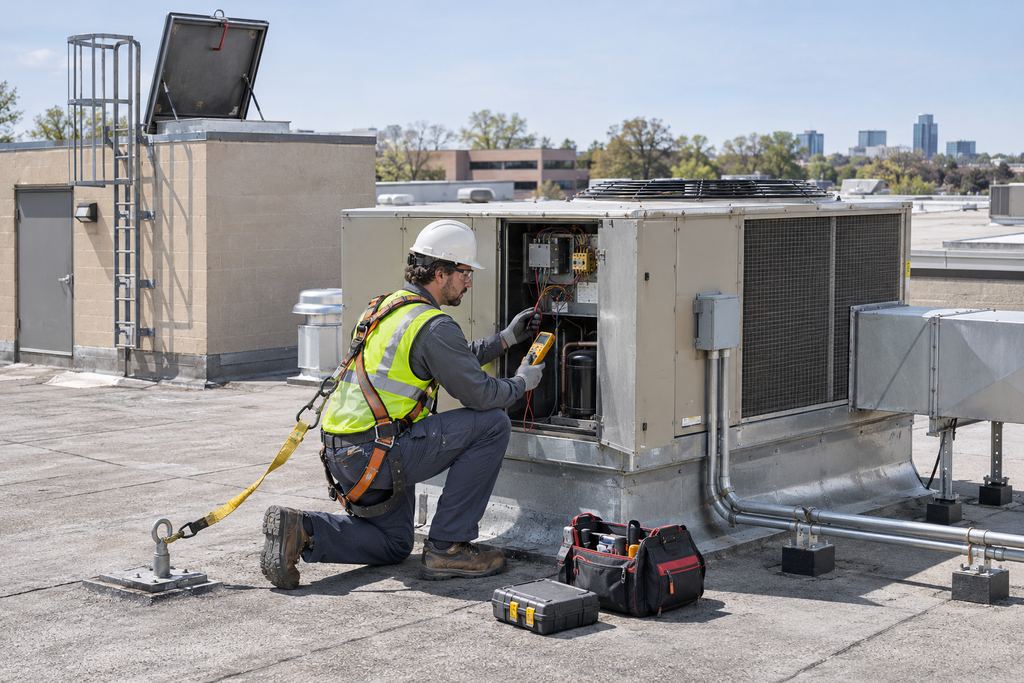
Owners can usually drop the grille and rinse the filter as the manual describes. Coil cleaning, pump testing and any refrigerant work belong to a technician; opening the refrigerant circuit requires EPA Section 608 certification. If you want something you can carry in from the store this weekend, a window air conditioner or a portable air conditioner needs no ceiling work at all, though each cools one room and runs louder.
Frequently asked questions
Is a cassette AC a good choice for a house?
It works well in large open rooms, basements with drop ceilings and bonus rooms where you would rather not see a wall unit. Skip it under a shallow roof deck or where no drain path exists.
Why do ceiling cassettes cost so much?
Cutting, framing and finishing the ceiling and routing lines through tight spaces take hours that outweigh the higher equipment price.
How far below the ceiling should a wall-mounted mini split sit?
Each manufacturer prints a minimum gap above the head in the installation manual, often a few inches, so air can return to the top intake. A cassette avoids the question because it sits inside the ceiling.
Can one outdoor unit run a cassette and wall heads together?
Many multi-zone systems allow mixed head styles on one condenser, within the combinations the manufacturer lists.
Related guides and services
Talk to an installer about a cassette
Describe the room, the ceiling and what is above it. A local contractor can check the cavity and quote the job. Note whether there is an attic, a drop ceiling or a floor above.
Tell us the room size, the ceiling type and whether there is attic or plenum space above it.
Please keep this page open.
- We pair the request with an independent contractor or partner network that works in your ZIP code.
- The contractor gets in touch to go over the details and agree on a visit.
- After checking the system they quote the job, and you choose whether to proceed.
Read how requests are handled.
Online requests are not connected to a contractor network yet. Nothing you typed was sent or saved. Please phone us instead, or try again later.
Call (888) 555-0199