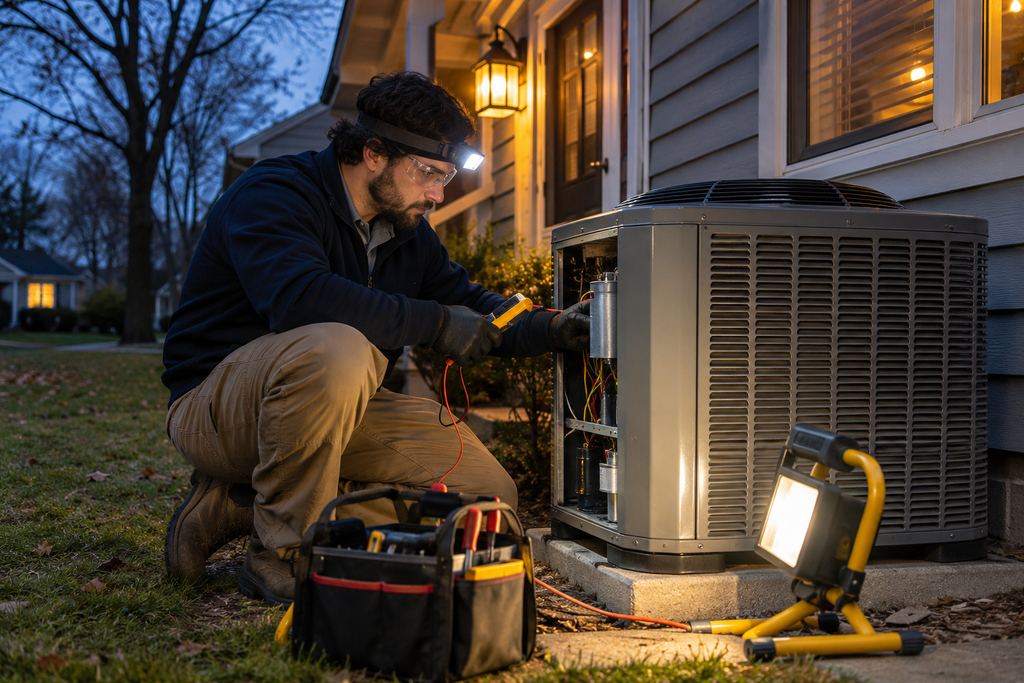
HVAC Emergency Repair: No Heat, No Cooling, Act Fast
HVAC emergency repair covers the failures that cannot wait for a weekday slot: a dead furnace when temperatures drop below freezing, an AC failure in dangerous heat, or a system that smells of gas or burning. Send a request and it goes to independent local HVAC contractors. Who can come after hours depends on your area and the season.
- Gas smell or CO alarm: get out first, call from outside
- Note the indoor temperature and anyone at risk
- Confirm the after-hours rate on the callback
Say whether you have no heat or no cooling, the outdoor temperature, and anyone at risk.
Please keep this page open.
- We pair the request with an independent contractor or partner network that works in your ZIP code.
- The contractor gets in touch to go over the details and agree on a visit.
- After checking the system they quote the job, and you choose whether to proceed.
Read how requests are handled.
Online requests are not connected to a contractor network yet. Nothing you typed was sent or saved. Please phone us instead, or try again later.
Call (888) 555-0199If you smell gas or a carbon monoxide alarm goes off, do not touch switches or try to find the source. Get everyone outside, then call 911 or your gas utility from a safe distance. For signs of heat stroke such as confusion or collapse, call 911. Smoke or flames from any equipment also means leaving and calling 911.
Is it an emergency or can it wait until morning?
| Situation | Usually urgent? | Why |
|---|---|---|
| No heat with freezing temperatures outside | Yes | Indoor temperatures fall quickly and water pipes can freeze |
| No cooling during extreme heat with vulnerable people at home | Yes | Heat illness risk for infants, older adults and people with health conditions |
| Burning smell, smoke or repeated breaker trips | Yes | Electrical fault; turn the system off |
| Water pouring from the indoor unit | Often | Ceiling and floor damage spreads fast |
| System works but makes a new noise | Usually not | Shut it off if it grinds or screeches, then book a regular visit |
| Mild weather, system down | Usually not | A next-day visit often costs less than an after-hours call |
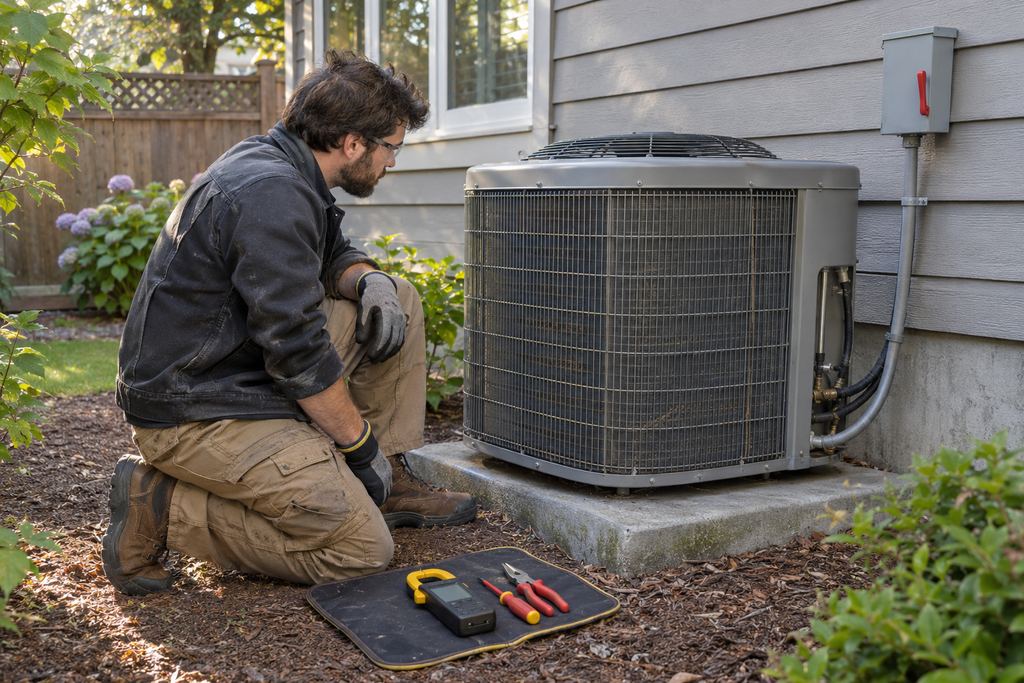
Quick checks that are safe to try
Safe checks you can do
No tools beyond a flashlight. Turn the system off at the thermostat before opening any filter or access door.
- Check the thermostat mode, setpoint and batteries
- Make sure the furnace or air handler switch is on and its panel door is closed
- Change a clogged filter, which can shut down a furnace or freeze an AC coil
- Reset a tripped HVAC breaker one time
- Clear snow, ice or debris from outdoor units and any vent pipes you can see from outside
Leave these to a licensed technician
These involve high voltage, refrigerant or sealed components. Refrigerant work requires EPA Section 608 certification.
- Gas valves, burners, igniters and flame sensors
- Capacitors, contactors, motors and control boards
- Refrigerant leaks and recharging
- Anything inside the furnace burner area or the condenser electrical panel
Failures urgent calls usually involve
Why an emergency bill costs more
Night, weekend and holiday visits often add a premium or trip charge.
An igniter or capacitor is a modest repair. A heat exchanger, compressor or coil is a major one.
An uncommon part may not be available until supply houses open.
A cold snap or heat wave fills schedules across a whole region.
Vet the contractor on the callback
- What will the visit cost before any repair?
Ask for the trip or diagnostic charge and the after-hours rate. - Are you licensed and insured here?
Most states and many cities let you check a contractor license online. - Do you work on my equipment type?
Gas furnace, heat pump, boiler or packaged unit. - Will I approve the price first?
Ask for the repair price before the technician starts.
Fix it now, plan the rest later
A night call is about restoring heat or cooling safely. It is not the time to sign for a new system. If the technician says the equipment is near the end of its life, ask for a written explanation and get replacement quotes during normal hours. A common rule of thumb, sometimes called the $5,000 rule, multiplies the system's age by the repair cost; above 5,000, many owners lean toward replacing. It is a starting point, not a standard. This is an informal screen, and no federal agency or trade body stands behind it; ask whether a warranty applies, get the diagnosis on paper and compare a net repair quote against a full replacement quote before you choose either path. The HVAC repair and HVAC replacement pages explain both paths.
Prevent the next breakdown
Many emergency failures start as small problems: a weak igniter, a dirty flame sensor, a fading capacitor or a slow drain. A yearly checkup for each system before its peak season, usually the furnace in fall and the AC in spring, catches many of them. See HVAC maintenance for what a visit covers.
How a service request works
HVAC Service Near Me is a referral service. We don't send our own technicians. We connect you with independent local contractors.
- Describe the job
Type your ZIP code, pick a service and add a line or two about the problem or project.
- We pass it on
An independent HVAC contractor or partner network that works in your area and does that kind of job receives it.
- You hear back
The contractor gets in touch to check the details and set a time to come out.
- The choice is yours
After a diagnosis the contractor gives you a quote. Price, timing and warranty are agreed directly between the two of you.
Frequently asked questions
Can I get same-day or 24 hour HVAC repair?
Some local contractors answer at night and on weekends; others do not. It depends on the company, your ZIP code and how busy the season is. HVAC Service Near Me cannot promise an arrival time. Ask the contractor when they call back.
What should I do if my furnace stops in freezing weather?
Check the thermostat, the furnace switch, the filter and the breaker. If it still will not run, request service, keep interior doors open, use safe space heaters away from anything flammable, and let faucets drip if pipes are at risk. Never use an oven or grill for heat.
How often should a home HVAC system be serviced?
Once a year per system is the common advice, with heating checked before winter and cooling before summer. Heat pumps that run in both seasons are often checked twice.
What is the $5,000 rule?
Contractor shorthand for repair-or-replace. Twelve years old times a 500 dollar repair gives 6,000, which tips the scale toward replacement under this rule. Real decisions should also weigh fuel, efficiency, refrigerant and the condition of the ducts.
Is a carbon monoxide alarm an HVAC emergency?
Yes. Leave the house with everyone, call 911 or the gas utility from outside and do not go back in until responders say it is safe. Have the furnace inspected before using it again.
Related guides and services
Request emergency HVAC repair
Say whether you have no heat or no cooling, the outdoor temperature and who in the home is at risk. Independent local contractors can call you back. Arrival times are set by the contractor.
Say whether you have no heat or no cooling, the outdoor temperature, and anyone at risk.
Please keep this page open.
- We pair the request with an independent contractor or partner network that works in your ZIP code.
- The contractor gets in touch to go over the details and agree on a visit.
- After checking the system they quote the job, and you choose whether to proceed.
Read how requests are handled.
Online requests are not connected to a contractor network yet. Nothing you typed was sent or saved. Please phone us instead, or try again later.
Call (888) 555-0199