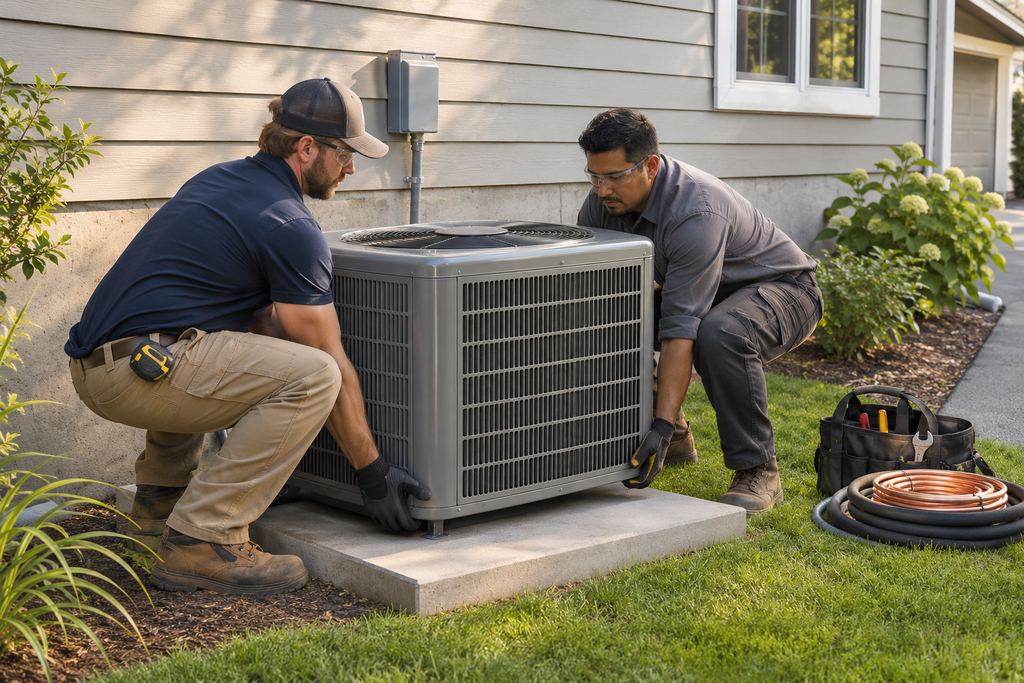
HVAC Installation: Planning a New Heating and Cooling System
HVAC installation is the point where most long-term comfort and efficiency problems are either prevented or built in. The equipment matters, but the sizing, duct work, refrigerant handling and startup checks matter just as much. Describe your building and the request goes to independent local contractors who install heating and cooling systems.
- Sizing should come from a load calculation
- Ducts, electrical and venting are part of the job
- Get model numbers and scope in writing
Tell us the building type, square footage, current system and what you want installed.
Please keep this page open.
- We pair the request with an independent contractor or partner network that works in your ZIP code.
- The contractor gets in touch to go over the details and agree on a visit.
- After checking the system they quote the job, and you choose whether to proceed.
Read how requests are handled.
Online requests are not connected to a contractor network yet. Nothing you typed was sent or saved. Please phone us instead, or try again later.
Call (888) 555-0199Systems a contractor may recommend
The right choice depends on climate, fuel prices, existing ducts and how the building is used.
Getting the size right
The industry method for working out how much heating and cooling a house needs is ACCA Manual J. It weighs wall and attic insulation, glass area, which way the house faces, how leaky it is and the design temperatures for your town. Manual D then sizes the ducts to deliver that air. An installer who sizes by square footage or by copying the old unit can easily oversize, which leads to short cycling, uneven rooms and humidity problems, or undersize, which leaves the system running flat out on peak days.
For commercial buildings, sizing also considers occupancy, equipment heat, ventilation requirements and operating hours, which is why commercial HVAC installation is usually designed or reviewed by an engineer on larger jobs.
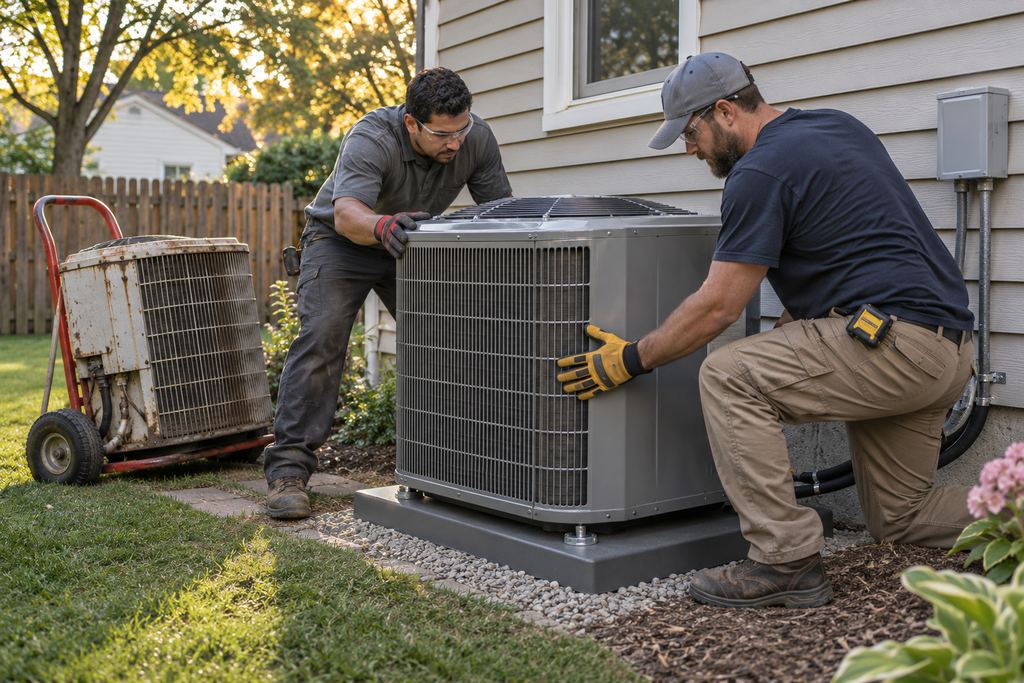
What a typical residential install looks like
Swapping like for like in an existing house is commonly a one or two day job. Expect more time for new duct runs, moving equipment to a new spot or drilling a ground loop.
- Survey and load calculation
The contractor measures, inspects ducts, checks electrical capacity and venting.
- Proposal
Equipment, model numbers, scope, permit and price in writing.
- Permit
Most jurisdictions require a mechanical permit and sometimes an inspection.
- Removal
Old equipment is disconnected and refrigerant is recovered by a technician certified under EPA Section 608.
- Set and connect
New units are placed, lines and ducts connected, drains and venting installed, wiring completed.
- Evacuate and charge
Refrigerant lines are pressure tested, evacuated and charged to the manufacturer's spec.
- Startup and walkthrough
Airflow, temperatures and safety controls are checked, the thermostat is set and you are shown filters and controls.
HVAC installation cost
Carrier's HVAC replacement cost guide (September 2026) lists, with equipment and standard installation included, central AC at $3,000 to $15,000, a gas furnace at $3,800 to $12,000, a heat pump at $6,000 to $25,000 and a ductless mini-split at $2,000 to $10,500. The guide gives no combined price for an AC and furnace together and treats duct, insulation and thermostat work as home-specific extras. HVAC Service Near Me does not set prices, so a written local quote replaces these numbers.
A like-for-like swap of an AC and furnace on good ducts sits at the lower end. Heat pumps with backup heat, variable-speed equipment, duct replacement, new circuits or a first system where none existed push the total up. A complete quote lists model numbers, how the size was chosen, duct, electrical and venting work, the thermostat, the permit, removal with refrigerant recovery, parts and labor warranty terms, and the deposit and payment schedule.
Relative cost by system type
| System | Usual scope | Relative cost |
|---|---|---|
| AC plus gas furnace replacement | Swap both units on existing ducts | Moderate |
| AC only, keep furnace | New condenser and matched indoor coil | Lower |
| Air-source heat pump with air handler | Outdoor unit, air handler, backup heat strips | Moderate to high |
| Dual fuel (heat pump plus furnace) | Heat pump outdoor unit with gas furnace | Moderate to high |
| Ductless mini-split | One or more indoor heads, no ducts | Varies with the number of zones |
| New system with new ductwork | Equipment, full duct design and install | Highest |
| Geothermal heat pump | Ground loop drilling or trenching plus equipment | Highest |
What moves an installation quote
More cooling tonnage and furnace output cost more, which is one more reason to size from a load calculation.
Two-stage and variable-speed equipment with higher SEER2 and AFUE ratings costs more up front.
Leaky, undersized or damaged ducts may need sealing, repair or replacement before new equipment can perform.
A heat pump or larger unit may need a new circuit, disconnect or more panel capacity.
High-efficiency furnaces need PVC venting and a condensate drain. Moving a furnace means new gas and vent runs.
Attic, crawl space and rooftop installs take more labor than a basement swap, and peak-season weeks leave less room to schedule.
How to vet an installer
- Are you licensed for HVAC or mechanical work here?
Search the company on the licensing board for your state, county or city. Anyone opening the refrigerant circuit also needs an EPA Section 608 card. - Do you carry liability and workers' comp insurance?
Ask for a certificate of insurance. - Will you do a load calculation?
And will you share the results? - Who pulls the permit?
The installing contractor normally does. - What warranty applies?
Manufacturer parts coverage often depends on registration. Ask about the installer's labor warranty separately.
Your part and the installer's part
Safe checks you can do
No tools beyond a flashlight. Turn the system off at the thermostat before opening any filter or access door.
- Gather utility bills and notes on hot or cold rooms
- Clear access to the attic, basement, closet and outdoor pad
- Check incentives on the ENERGY STAR rebate finder
- Register the equipment after installation if the contractor does not
Leave these to a licensed technician
These involve high voltage, refrigerant or sealed components. Refrigerant work requires EPA Section 608 certification.
- Load calculation and equipment selection
- Refrigerant recovery, brazing, evacuation and charging
- Gas piping, venting and electrical connections
- Permits, inspections and startup testing
Commercial and industrial installs
Small offices, shops and restaurants often use rooftop or split systems similar to residential ones, scaled up. Larger buildings may need chillers, VRF systems or custom air handling, with engineering, coordination with other trades and phased work around business hours. If you manage a commercial property, the commercial HVAC section covers repair and replacement options.
Before and after the new system
If the existing system may still be repairable, compare that path on the HVAC repair page, or read HVAC replacement when swapping old equipment for new. For budgeting, the installation cost section above shows what changes a quote. After the install, a yearly HVAC maintenance visit keeps warranty conditions and performance on track.
How a service request works
HVAC Service Near Me is a referral service. We don't send our own technicians. We connect you with independent local contractors.
- Describe the job
Type your ZIP code, pick a service and add a line or two about the problem or project.
- We pass it on
An independent HVAC contractor or partner network that works in your area and does that kind of job receives it.
- You hear back
The contractor gets in touch to check the details and set a time to come out.
- The choice is yours
After a diagnosis the contractor gives you a quote. Price, timing and warranty are agreed directly between the two of you.
Frequently asked questions
How much does it cost to install a new HVAC system?
Carrier's September 2026 guide lists central AC at $3,000 to $15,000, a gas furnace at $3,800 to $12,000 and a heat pump at $6,000 to $25,000, each with standard installation. System type, size, efficiency, duct condition, electrical and venting needs, permits and access set where your job falls. HVAC Service Near Me does not set prices, so ask local contractors for itemized written quotes.
What does a new HVAC system cost for a 2,000 sq ft home?
Two houses of that size can need very different equipment. A tight, well-insulated house in a mild climate may need far less capacity than a drafty one in Texas, and duct work can add or subtract a large share. The useful number is an itemized quote built from a load calculation on your home.
How long does HVAC installation take?
A straightforward replacement often takes one to two days. New ducts, relocated equipment, commercial systems or geothermal loops take longer.
Which HVAC brand lasts the longest?
Installation quality and maintenance usually affect lifespan more than the brand. Choose a contractor who sizes the system properly and follows the manufacturer's installation instructions.
What qualifications does an HVAC installer need?
Anyone handling refrigerant must hold EPA Section 608 certification. Contractor licensing is set by states and sometimes cities, so check the license with your local licensing board.
How often should a new system be serviced?
Once a year per system is the usual advice, before the cooling or heating season. Heat pumps are often checked twice a year since they run in both seasons.
When is the cheapest time of year to install a new HVAC system?
Shoulder seasons, roughly March to May and September to November in much of the country, tend to be calmer for installers. You get more scheduling choice and time to compare bids. Whether the price itself is lower is up to each contractor.
Related guides and services
Request HVAC installation quotes
Say what kind of building it is, roughly how big, what heats and cools it today and what you have in mind. Independent local contractors can respond. Availability varies by ZIP code and season.
Tell us the building type, square footage, current system and what you want installed.
Please keep this page open.
- We pair the request with an independent contractor or partner network that works in your ZIP code.
- The contractor gets in touch to go over the details and agree on a visit.
- After checking the system they quote the job, and you choose whether to proceed.
Read how requests are handled.
Online requests are not connected to a contractor network yet. Nothing you typed was sent or saved. Please phone us instead, or try again later.
Call (888) 555-0199