Choosing a Wall Mounted Air Conditioner for One Room
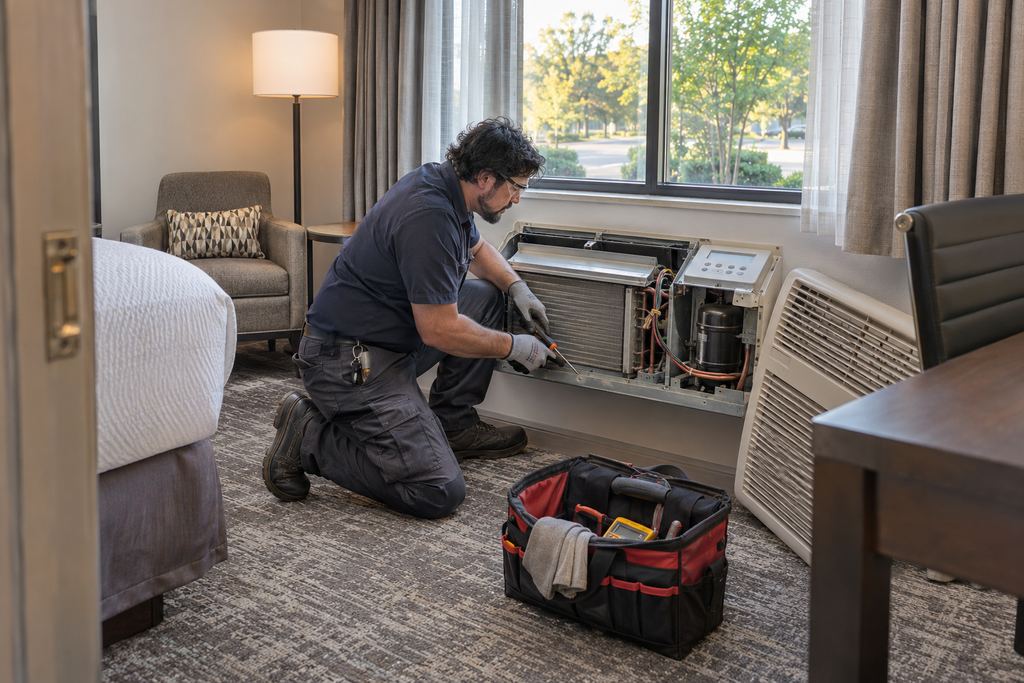
A wall mounted air conditioner can mean three different products: the slim indoor head of a ductless mini split, a boxy unit that sits in a sleeve through the wall, or an all-in-one model that hangs inside and breathes through two small holes. They differ a lot in noise, efficiency, installation and price, so it pays to know which one you are shopping for.
For quiet, efficient cooling and heating, a ductless mini split head is the usual pick, but it needs an outdoor unit and a professional install. A through-the-wall unit is cheaper and simpler when a sleeve already exists. All-in-one units avoid an outdoor cabinet for buildings that forbid one. Size any of them by room area with adjustments, and have a contractor confirm the load for ductless systems.
The three kinds of wall AC
How the options compare
| Ductless head | Through-the-wall | All-in-one | |
|---|---|---|---|
| Outdoor unit | Yes | No; back of unit faces outside | No |
| Wall opening | About a 3-inch hole | Large sleeve opening | Two smaller round holes |
| Indoor noise | Lowest | Highest | Moderate to high |
| Heating | Usually heat pump | Some models | Some models |
| Install | Professional, refrigerant work | Owner or contractor if sleeve exists | Contractor for core drilling |
| Typical use | Bedrooms, additions, offices | Apartments, older homes | Rentals, condos with exterior rules |
Does a wall AC need to be vented?
Every air conditioner has to send the heat it removes somewhere outside. A ductless head sends it through the refrigerant lines to the outdoor unit, so the indoor head itself needs no vent. A through-the-wall unit rejects heat through its rear grille, which has to sit fully outdoors. All-in-one units pull outdoor air in through one hole and push hot air out the other. A unit labeled portable or ventless that sits in a closed room without any exhaust only moves heat around; it cannot cool the space.
Starting sizes for a single room
ENERGY STAR room air conditioner chart, 8-foot ceiling.
| Room size (sq ft) | Btu/h |
|---|---|
| 150 to 250 | 6,000 |
| 250 to 300 | 7,000 |
| 350 to 400 | 9,000 |
| 450 to 550 | 12,000 |
| 700 to 1,000 | 18,000 |
Adjusting the size
Add roughly 10 percent for a room in strong sun; subtract 10 percent for heavy shade.
Add about 600 Btu/h for each regular occupant past two.
Add 4,000 Btu/h when the unit cools a kitchen.
If a ductless head will heat the room in winter, the heating load may set the size. ENERGY STAR recommends a contractor confirm ductless sizing with a Manual J calculation.
What affects the price
Quotes for the same room can differ a lot, and these items are usually why. Get them in writing, itemized.
Ductless systems cost more than sleeve units but run quieter and more efficiently. All-in-one models sit in between in many cases.
Wood frame is quick to drill. Brick, block and concrete need core drilling or masonry work.
For ductless heads, the distance and path to the outdoor unit affect labor and materials.
A dedicated circuit, outdoor disconnect or panel upgrade can add a significant amount.
If the drain cannot run downhill outside, a small pump may be needed.
Permits may apply. Check the ENERGY STAR rebate finder for local utility or state programs.
Troubleshooting: owner checks and pro work
Safe checks you can do
No tools beyond a flashlight. Turn the system off at the thermostat before opening any filter or access door.
- Confirm the mode (cool, not fan or dry) and setpoint on the remote or panel.
- Replace remote batteries.
- Clean washable filters as the manual describes.
- Check the breaker once.
- Clear plants and debris around any outdoor unit.
- If a head is icing, switch to fan only to thaw and call for service if it returns.
Leave these to a licensed technician
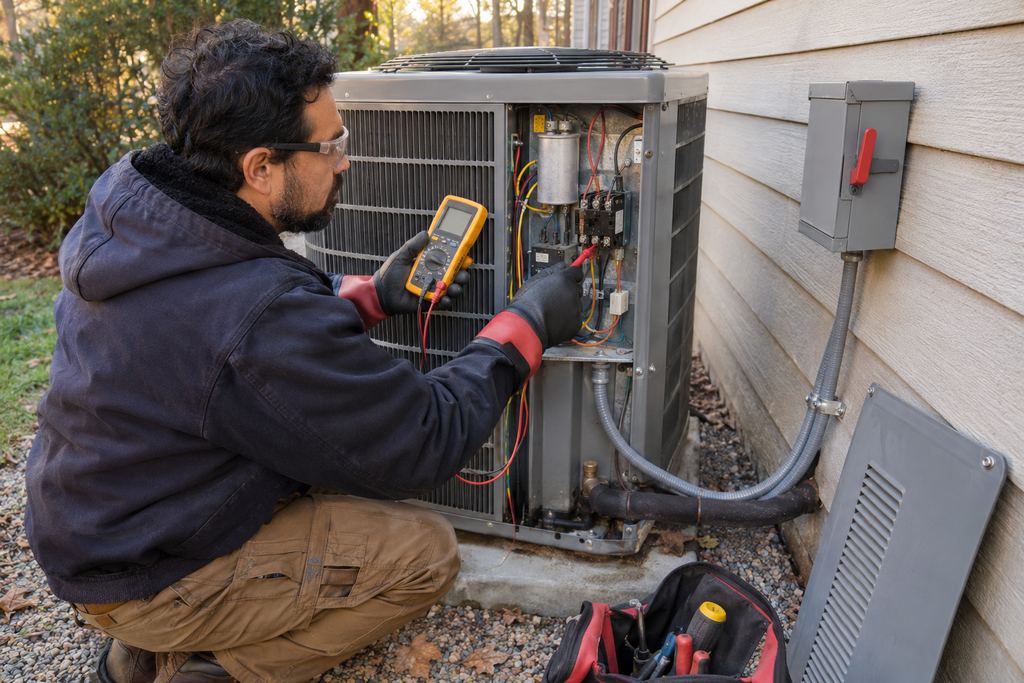
These involve high voltage, refrigerant or sealed components. Refrigerant work requires EPA Section 608 certification.
- Water dripping from a ductless head or the wall, which often means a blocked drain or poor slope.
- Any refrigerant leak or recharge, which requires EPA Section 608 certification.
- Error codes that return after a power reset.
- Deep cleaning of the blower wheel and coil inside a ductless head.
- Electrical faults, burning smells or repeated breaker trips.
How to vet a contractor for a wall AC
- Do you hold the license my state or city requires?
Verify the number on your state board's lookup page rather than trusting a sticker. - Are you insured?
Request a certificate showing liability coverage, plus workers' compensation if they have staff. - Will you pull the permit?
If one applies, the contractor should handle it. - Who registers the warranty?
Manufacturer warranties often require registration and may require professional installation. - Can I have the quote itemized?
Equipment, line set, electrical, wall work and haul-away listed separately.
Are wall AC units any good, and when to replace one
A well-sized, well-installed wall unit cools a room effectively. Ductless heads are the most comfortable and efficient of the group. Sleeve units trade some noise and efficiency for a lower price and simple replacement. When an older unit fails, the informal $5,000 rule (age times repair cost, above 5,000 lean to replacement) is a quick screen, not a standard. Use it only as an informal screen; it is not a DOE rule or an industry standard; confirm the warranty status, ask for a written diagnosis and compare the repair price after any coverage with a replacement bid before deciding. For full installs, see mini split installation or through-the-wall AC installation.
Frequently asked questions
Are wall mounted AC units any good?
Yes, if they are sized and installed correctly. Ductless heads are quiet and efficient. Through-the-wall units cost less but are louder. Choose based on noise tolerance, budget and whether you need heat.
What is the $5,000 rule for AC units?
Take the unit's age in years and multiply by the repair price. A result past 5,000 is a cue to price a new unit as well. Treat it as shop-floor shorthand rather than a formal standard. Think of it as an informal screen that no DOE or industry standard sets; check warranty coverage first, then get the fault diagnosed and compare real quotes for the repair and for a new system.
Do wall AC units need to be vented?
Yes, in some form. Ductless heads send heat to an outdoor unit through refrigerant lines; sleeve units vent through the back; all-in-one units vent through two wall holes.
How much does it cost to put in a wall AC unit?
Type of unit, what the wall is made of, any new circuit and tubing length drive it. Line-item written bids from a few contractors are the reliable way to find out.
Can a wall AC heat as well?
Most ductless heads are heat pumps and heat well. Some sleeve and all-in-one units include heat strips or heat pump modes. Check the spec sheet.
Related guides and services
Get help choosing a wall AC
Tell us the room size, the wall material and whether you want heat. HVAC Service Near Me forwards the details to an independent local contractor where one serves your ZIP code.
Tell us the room size, the wall type and whether you want heating too.
Please keep this page open.
- We pair the request with an independent contractor or partner network that works in your ZIP code.
- The contractor gets in touch to go over the details and agree on a visit.
- After checking the system they quote the job, and you choose whether to proceed.
Read how requests are handled.
Online requests are not connected to a contractor network yet. Nothing you typed was sent or saved. Please phone us instead, or try again later.
Call (888) 555-0199