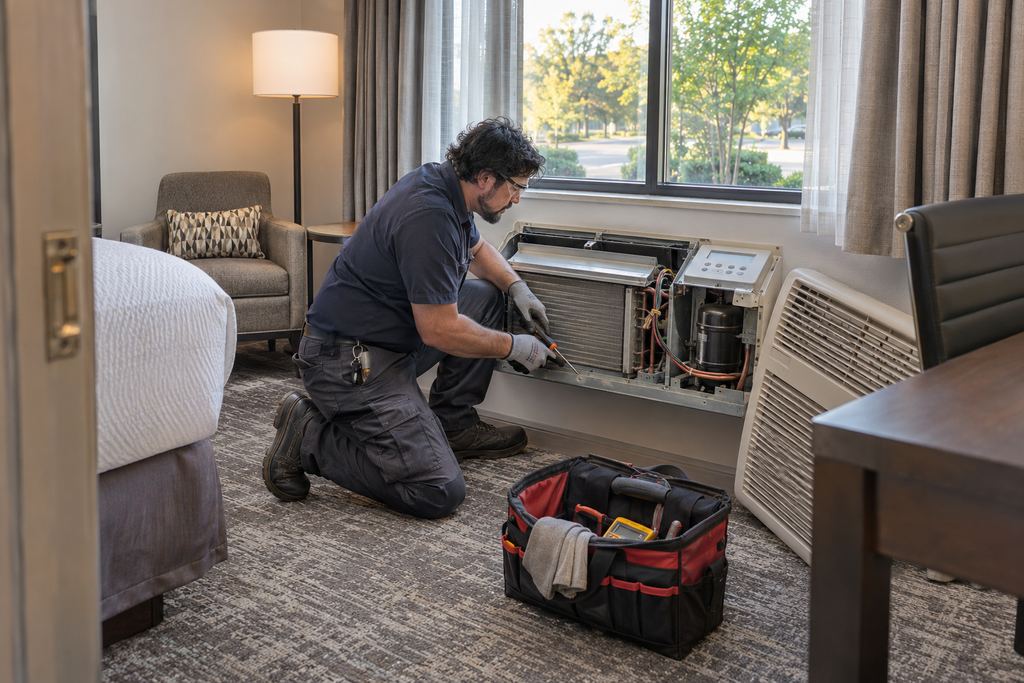
Installing a Through-the-Wall Air Conditioner
Through the wall air conditioner installation sets a room AC into a metal sleeve that passes through an exterior wall, so the window stays free. Replacing a unit in an existing sleeve is a modest job. Cutting a new opening means framing, weatherproofing and often electrical work, which is where a contractor found through HVAC Service Near Me can help.
- Wall units need a sleeve that matches the chassis
- Window units with side vents do not belong in a sleeve
- Larger units need a 230V dedicated circuit
Tell us if there is an existing sleeve, the wall material and the size of the room. A local contractor may follow up.
Please keep this page open.
- We pair the request with an independent contractor or partner network that works in your ZIP code.
- The contractor gets in touch to go over the details and agree on a visit.
- After checking the system they quote the job, and you choose whether to proceed.
Read how requests are handled.
Online requests are not connected to a contractor network yet. Nothing you typed was sent or saved. Please phone us instead, or try again later.
Call (888) 555-0199What a through-wall unit is
A through-the-wall air conditioner is a room unit built to vent only out of its back. It slides into a sleeve, a metal box that lines the wall opening and supports the unit, and the outdoor air passes through a rear grille. Many models also offer electric heat or a heat pump mode, which is why some owners call them wall heaters too.
A window AC looks similar but is designed differently: most draw outdoor air through louvers on their sides. Slide one into a wall sleeve and those louvers are buried in the wall, so the condenser overheats and the unit can fail early. Use a unit sold as through-the-wall, or a window unit that the manufacturer specifically approves for sleeve use. For in-window installs, see window AC installation.
Sizing by room area
ENERGY STAR publishes room AC sizing guidance by square footage. Adjust up for sunny rooms and kitchens, down for heavily shaded rooms.
| Room area | Typical capacity range |
|---|---|
| 150 to 350 sq ft | 5,000 to 8,000 Btu/h |
| 350 to 550 sq ft | 9,000 to 12,000 Btu/h |
| 550 to 1,000 sq ft | 14,000 to 18,000 Btu/h |
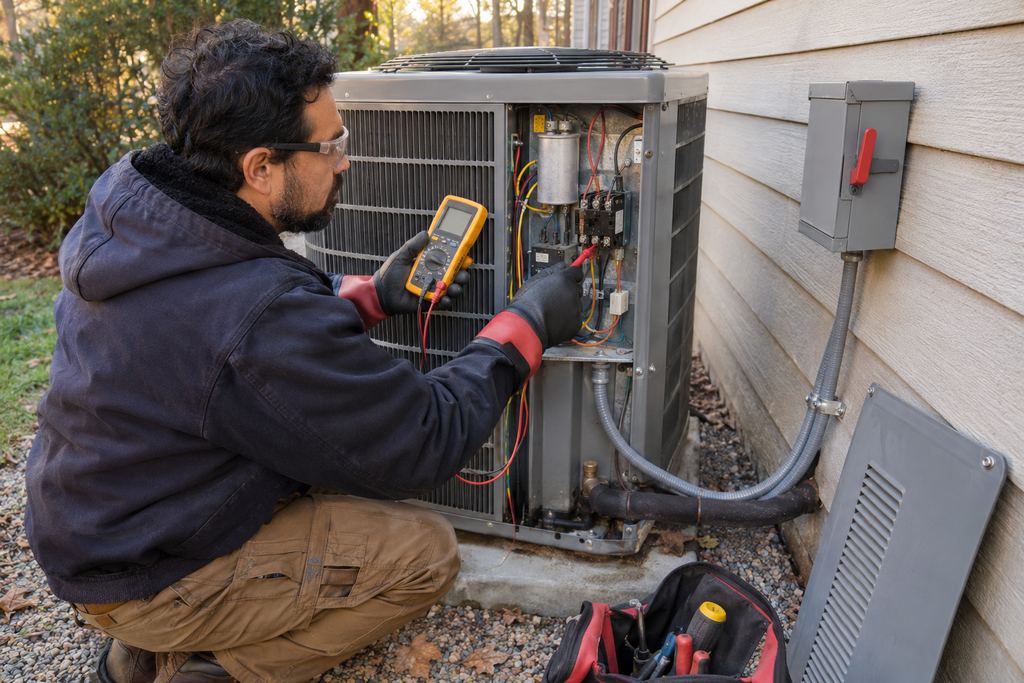
Installing in a new opening
- Choose the unit first
Buy the AC before cutting the wall. The sleeve dimensions and clearances come from its installation manual.
- Check the wall
Find studs, wiring and plumbing. On a load-bearing wall, the opening needs a header sized for the span.
- Cut and frame
Cut the opening slightly larger than the sleeve and frame it on all four sides.
- Set the sleeve
Slide in the sleeve, level it side to side with a slight tilt to the outside for drainage, and fasten it to the framing.
- Seal and finish
Flash and caulk the exterior, trim the interior, and insulate gaps around the sleeve.
- Install the chassis
Slide the AC into the sleeve, secure it and fit the grille and front panel.
When to hire it out
Swapping a unit into a sleeve that already fits is often a two-person lift, not a contractor job. Hire help for brick or block walls, load-bearing walls, upper floors, and anything that needs a new circuit. In apartments and condos, check the building rules first, because exterior walls are often common property.
If you are cooling several rooms, a ductless system may be quieter and more efficient than multiple wall units; see mini split installation. Buildings with PTACs, which use a larger standard sleeve, are covered on PTAC installation. The through-the-wall AC guide and the wall AC section have buying background.
How a service request works
HVAC Service Near Me is a referral service. We don't send our own technicians. We connect you with independent local contractors.
- Describe the job
Type your ZIP code, pick a service and add a line or two about the problem or project.
- We pass it on
An independent HVAC contractor or partner network that works in your area and does that kind of job receives it.
- You hear back
The contractor gets in touch to check the details and set a time to come out.
- The choice is yours
After a diagnosis the contractor gives you a quote. Price, timing and warranty are agreed directly between the two of you.
Frequently asked questions
Can I put a window AC in a wall sleeve?
Only if the manufacturer approves it. Most window units pull air through side louvers that a sleeve would block, so they overheat.
How do I turn on the heat on a wall AC?
If your model has heat, select the Heat mode on the control panel or remote and set the temperature. Cooling-only models have no heat mode, so check the manual or model number.
What is the $5000 rule for AC units?
It is an informal rule: multiply the unit's age by the repair cost. Above 5,000, replacement is usually the better choice. With wall units, replacement is often cheaper than major repairs anyway.
Do I need a permit to install a through-wall AC?
Cutting a new opening or adding a circuit commonly needs a building or electrical permit. Rules differ by city, so check with your local building department.
Related guides and services
Need help with a wall AC?
Share the room size and whether a sleeve is in place. A local contractor can follow up about the installation.
Tell us if there is an existing sleeve, the wall material and the size of the room. A local contractor may follow up.
Please keep this page open.
- We pair the request with an independent contractor or partner network that works in your ZIP code.
- The contractor gets in touch to go over the details and agree on a visit.
- After checking the system they quote the job, and you choose whether to proceed.
Read how requests are handled.
Online requests are not connected to a contractor network yet. Nothing you typed was sent or saved. Please phone us instead, or try again later.
Call (888) 555-0199