PTAC Replacement Units and What to Match
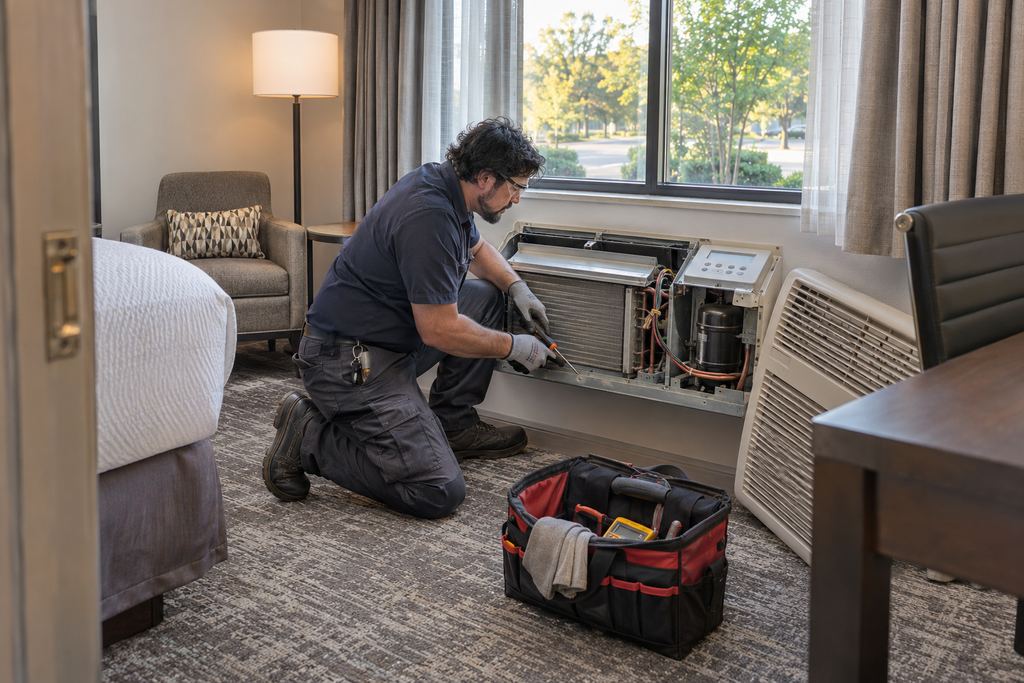
Most PTAC replacement jobs keep the wall sleeve and swap only the chassis, which keeps the work short and avoids opening the wall. The trick is matching the new unit to that sleeve, to the room's voltage and to the way the room is heated. An independent contractor found through HVAC Service Near Me can check the fit and quote the swap.
- Many brands fit a standard 42 by 16 inch sleeve
- Match voltage, amperage and plug type to the circuit
- Old units need refrigerant recovery before disposal
Share the model number from the old unit's label and how many rooms need new units. A local contractor can follow up.
Please keep this page open.
- We pair the request with an independent contractor or partner network that works in your ZIP code.
- The contractor gets in touch to go over the details and agree on a visit.
- After checking the system they quote the job, and you choose whether to proceed.
Read how requests are handled.
Online requests are not connected to a contractor network yet. Nothing you typed was sent or saved. Please phone us instead, or try again later.
Call (888) 555-0199Signs the old chassis has had its run
- Compressor or sealed-system failure: Leak repairs and compressors on aging units often cost a large share of a new chassis.
- Repeat repairs: The same room keeps generating service tickets for different parts.
- Rust and corrosion: Coastal air and years of condensate eat at the base pan and outdoor coil.
- Noise complaints: Older units are often louder than current models, which matters in bedrooms and hotel rooms.
- High electric bills: Units that heat with resistance strips all winter cost more to run than a heat pump version.
What the new unit has to match
| Item | Why it matters | Where to find it |
|---|---|---|
| Sleeve size and depth | Many brands use a 42 by 16 inch sleeve, but depth and approved sleeves vary | Installation manual of the new unit |
| Exterior grille | Some grilles affect airflow and approval for a given chassis | Manual and grille label |
| Voltage | 208/230V and 265V units are not interchangeable | Old unit nameplate |
| Amperage and plug | Cord plugs are keyed to circuit size | Nameplate and receptacle |
| Heat type | Electric heat only (PTAC) or heat pump with backup strips (PTHP) | Model number or spec sheet |
| Controls | Front panel, wall thermostat or building management system | Existing wiring and controls |
PTAC versus PTHP when you replace
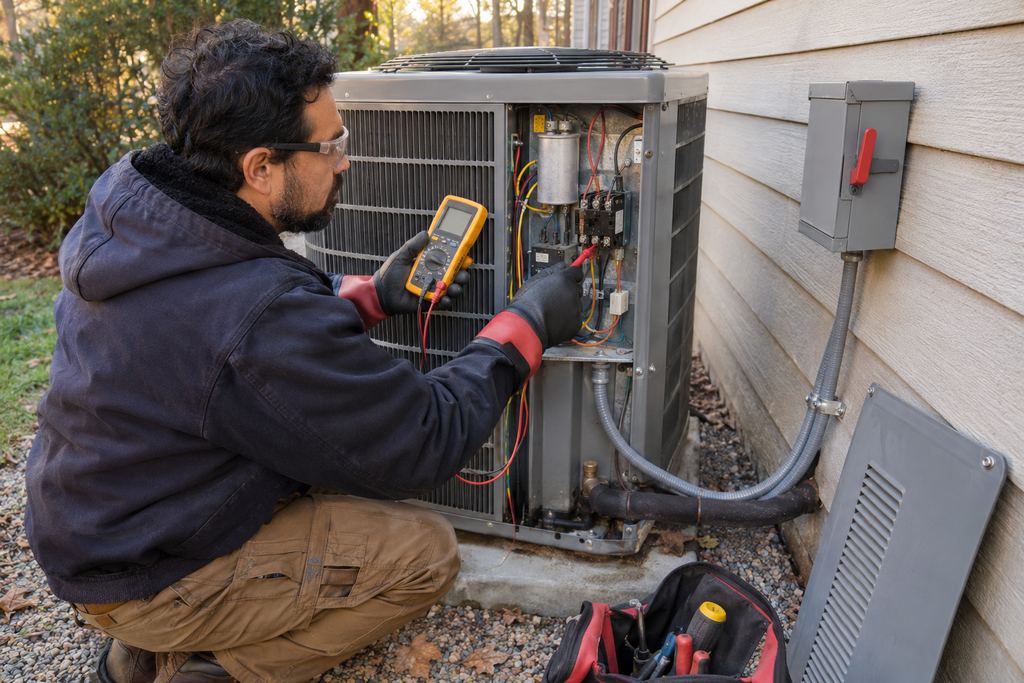
A replacement is a good moment to reconsider how the room is heated. A cooling unit with electric strips is simple and inexpensive to buy. A heat pump model, often labeled PTHP, uses the refrigerant circuit to heat in mild weather and switches to strips when it gets cold, which usually lowers winter electric use. In a building that runs units through the winter, the difference adds up. The U.S. Department of Energy sets and periodically updates minimum efficiency standards for both types, so a new unit will meet the current federal level.
Check current state and utility incentives for efficient equipment with the ENERGY STAR rebate finder. Programs differ by location.
A typical chassis swap
- Confirm the fit
The contractor reads the old nameplate and checks the sleeve against the new unit's manual.
- Recover and remove
The old chassis is unplugged or disconnected and pulled. Refrigerant is recovered before disposal by a technician with Section 608 certification.
- Inspect the sleeve
With the chassis out, the sleeve is checked for rust, gaskets and outward pitch.
- Install the new chassis
It slides in, is secured, and the front panel and any drain kit go on.
- Test
Cooling and heating are run and controls are set.
When the sleeve has to go too
If the sleeve is badly rusted, the wrong size for any current unit, or the wall around it leaks, a new sleeve goes in, and the job looks more like a fresh install with wall and grille work. PTAC installation covers that scope. For a broader look at these systems, see the PTAC unit guide or the PTAC section.
How a service request works
HVAC Service Near Me is a referral service. We don't send our own technicians. We connect you with independent local contractors.
- Describe the job
Type your ZIP code, pick a service and add a line or two about the problem or project.
- We pass it on
An independent HVAC contractor or partner network that works in your area and does that kind of job receives it.
- You hear back
The contractor gets in touch to check the details and set a time to come out.
- The choice is yours
After a diagnosis the contractor gives you a quote. Price, timing and warranty are agreed directly between the two of you.
Frequently asked questions
How many years should a PTAC last?
Service life varies a lot with use, maintenance and climate. Units in busy hotel rooms or coastal buildings tend to wear out sooner than lightly used ones. Repair history is a better guide than age alone.
Are PTAC and HVAC the same?
A PTAC is one type of HVAC equipment. It is a self-contained heating and cooling unit for a single room, mounted through the wall.
Can I put a different brand in my old sleeve?
Often, because many brands use the standard 42 by 16 inch sleeve. The new unit's installation manual lists which sleeves and grilles are approved, so check before ordering.
What does it cost to replace a PTAC compressor?
Compressor work involves recovering refrigerant, brazing and recharging, and the cost often approaches the price of a new chassis. Ask for both numbers in writing before you decide.
Related guides and services
Plan your PTAC replacement
Send the old unit's model number and the number of rooms. A contractor who replaces packaged terminal units can follow up with options.
Share the model number from the old unit's label and how many rooms need new units. A local contractor can follow up.
Please keep this page open.
- We pair the request with an independent contractor or partner network that works in your ZIP code.
- The contractor gets in touch to go over the details and agree on a visit.
- After checking the system they quote the job, and you choose whether to proceed.
Read how requests are handled.
Online requests are not connected to a contractor network yet. Nothing you typed was sent or saved. Please phone us instead, or try again later.
Call (888) 555-0199