HVAC Duct Insulation for Attics, Crawl Spaces and Garages
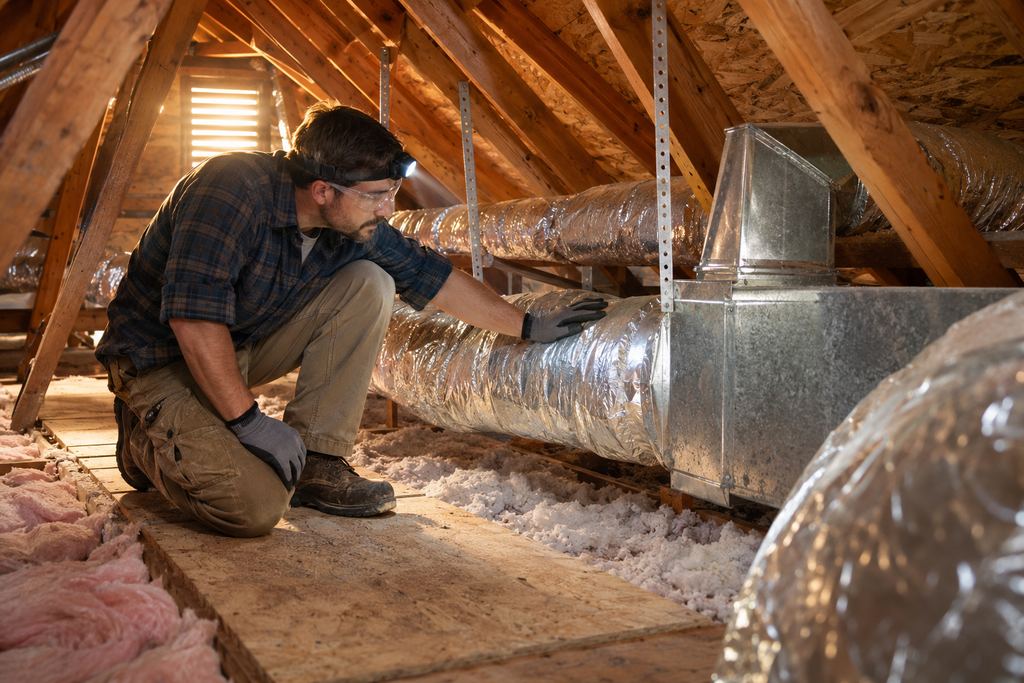
Cold supply air running through a 130 degree attic picks up heat on the way to your rooms, and in humid weather the outside of an uninsulated duct can sweat enough to stain a ceiling. Insulating ducts that run through unconditioned space fixes both problems, but only after the ducts are sealed.
- Seal first, insulate second
- Unconditioned spaces only: attics, crawl spaces, garages
- R-values set by your local energy code
Tell us where the ducts run and what you have noticed. A contractor in your area follows up.
Please keep this page open.
- We pair the request with an independent contractor or partner network that works in your ZIP code.
- The contractor gets in touch to go over the details and agree on a visit.
- After checking the system they quote the job, and you choose whether to proceed.
Read how requests are handled.
Online requests are not connected to a contractor network yet. Nothing you typed was sent or saved. Please phone us instead, or try again later.
Call (888) 555-0199Why AC ducts sweat
Condensation forms when humid air touches a surface colder than its dew point. On a summer afternoon, a metal supply duct carrying air in the 50s sits in an attic or crawl space full of warm, moist air. Water beads on the metal, drips onto drywall or insulation, and over time feeds mold or rot. Insulation with an intact vapor barrier keeps that humid air away from the cold metal. If the jacket is torn or the seams are open, moisture reaches the duct anyway.
Sweating can also signal a different problem: very low supply temperatures from low airflow, or a coil that is starting to freeze. If insulated ducts suddenly sweat, have the system checked.
Which ducts need insulation
| Location | Insulate? | Notes |
|---|---|---|
| Vented attic | Yes | Highest heat load. Recent IECC editions call for R-8 on supply ducts 3 inches and larger here; local adoption varies. |
| Crawl space or unconditioned basement | Usually | Code levels are typically lower than attics. Humidity control in the crawl space matters too. |
| Garage | Yes | Treat as unconditioned space. |
| Inside conditioned living space | Usually not | Insulation can still help where ducts run in exterior walls or cause condensation in closets. |
What you can do and what to hire out
Safe checks you can do
No tools beyond a flashlight. Turn the system off at the thermostat before opening any filter or access door.
- Look at exposed attic or crawl space ducts with a flashlight for torn jackets, gaps and water stains.
- Note any ceiling stains below duct runs and when they appear.
- Wear a mask, long sleeves and gloves around fiberglass, and do not disturb old wrap you cannot identify.
- Replace a disconnected or torn flex duct jacket only if the repair is simple and you can reach it safely.
Leave these to a licensed technician
These involve high voltage, refrigerant or sealed components. Refrigerant work requires EPA Section 608 certification.
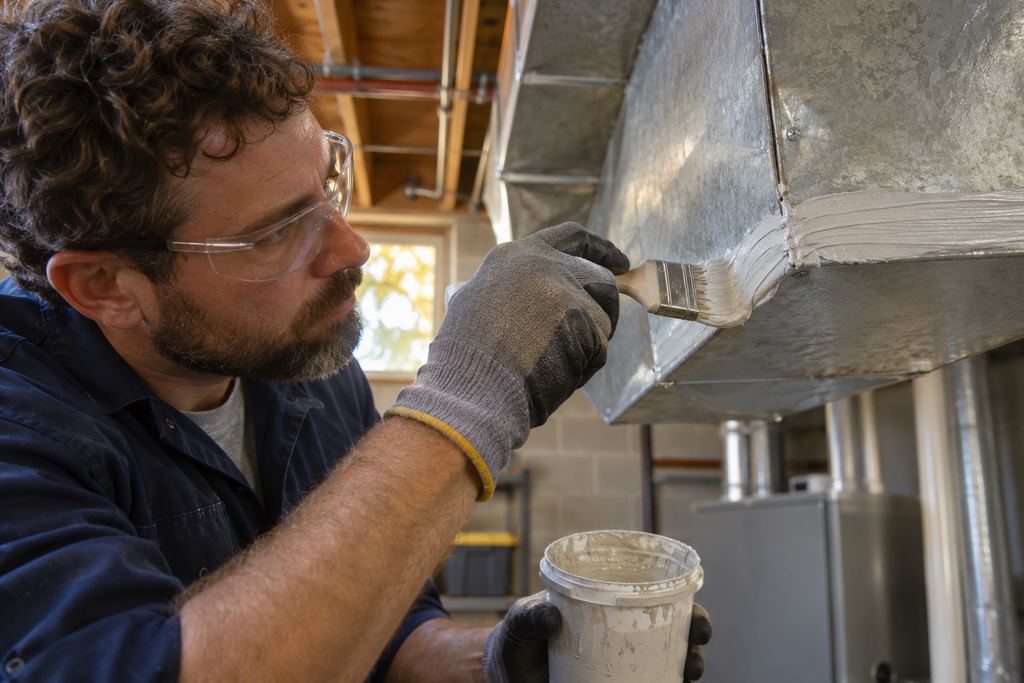
- Sealing joints with mastic or foil tape before insulation goes on.
- Wrapping trunks and fittings to code with a continuous vapor barrier.
- Testing whether the ducts leak, since insulation does not stop leaks.
- Handling old wrap, tape or duct board that may contain asbestos; testing comes first.
Insulation types used on ducts
Fiberglass duct wrap with a foil or vinyl facing is the most common retrofit product. Flexible duct is sold with insulation built in at a stated R-value. Duct board is itself insulated. Rigid foam boards and spray foam are used in some installations, mostly where ducts are buried or encapsulated. Interior duct liners, glued inside sheet metal, reduce noise as well as heat gain but are hard to clean. Whatever the material, seams must be taped so the vapor barrier stays continuous. For leaks under the insulation, see duct sealing and duct repair.
How a service request works
HVAC Service Near Me is a referral service. We don't send our own technicians. We connect you with independent local contractors.
- Describe the job
Type your ZIP code, pick a service and add a line or two about the problem or project.
- We pass it on
An independent HVAC contractor or partner network that works in your area and does that kind of job receives it.
- You hear back
The contractor gets in touch to check the details and set a time to come out.
- The choice is yours
After a diagnosis the contractor gives you a quote. Price, timing and warranty are agreed directly between the two of you.
Frequently asked questions
Can attic insulation touch ductwork?
Yes. Burying insulated ducts in loose-fill attic insulation is a recognized strategy in some climates, but in humid areas the ducts need enough insulation of their own to prevent condensation. Ask a contractor familiar with your local code.
How thick is R-8 insulation?
R-8 is a measure of thermal resistance, not thickness. The thickness depends on the material; fiberglass duct wrap rated R-8 is usually a couple of inches when installed. The product label lists the installed thickness for its rating.
What material is used to insulate ducts?
Mostly fiberglass wrap with a facing, factory-insulated flex duct, and duct board. Foam is used in some designs.
Does insulating ducts fix leaks?
No. Air escapes through gaps under the insulation. Seal first, then insulate. A duct leakage test shows how much air is lost.
Related guides and services
Ask about duct insulation
Tell us where the ducts run and what you have seen: stains, drips, hot rooms. HVAC Service Near Me sends it to an independent contractor near you.
Tell us where the ducts run and what you have noticed. A contractor in your area follows up.
Please keep this page open.
- We pair the request with an independent contractor or partner network that works in your ZIP code.
- The contractor gets in touch to go over the details and agree on a visit.
- After checking the system they quote the job, and you choose whether to proceed.
Read how requests are handled.
Online requests are not connected to a contractor network yet. Nothing you typed was sent or saved. Please phone us instead, or try again later.
Call (888) 555-0199