AC Drain Pan Replacement: Which Pan and Who Fixes It
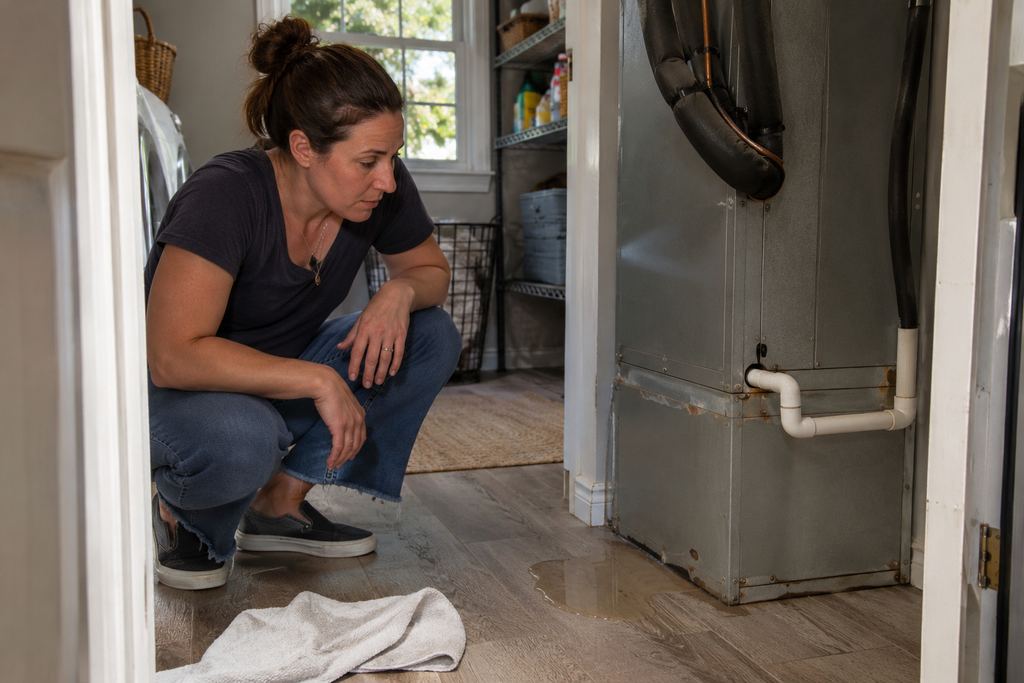
Most central air systems have two drain pans. The primary pan sits right under the evaporator coil and catches every drop. The secondary pan, often a flat metal or plastic tray, sits under the whole unit as a backup. AC drain pan replacement is simple for the outer tray and far more involved for the inner one, because that pan is often built into the coil.
- Rust holes, cracks and a pan that never dries are the usual triggers
- A secondary tray under the unit can often be swapped in one visit
- A primary pan built into the coil may require refrigerant work to reach
Tell us where the water is and what the pan looks like. A local contractor follows up to inspect it.
Please keep this page open.
- We pair the request with an independent contractor or partner network that works in your ZIP code.
- The contractor gets in touch to go over the details and agree on a visit.
- After checking the system they quote the job, and you choose whether to proceed.
Read how requests are handled.
Online requests are not connected to a contractor network yet. Nothing you typed was sent or saved. Please phone us instead, or try again later.
Call (888) 555-0199Two pans, two very different jobs
| Primary pan | Secondary pan | |
|---|---|---|
| Where it is | Inside the cabinet, directly under the evaporator coil | Under the furnace or air handler, outside the cabinet |
| Its job | Gathers the water off the coil and sends it to the drain pipe | Holds water only when the inner pan or its pipe has failed |
| Typical material | Plastic or coated metal, often molded into the coil assembly | Galvanized steel, aluminum or plastic |
| Replacement scope | May mean pulling the coil, which opens the refrigerant circuit | Lift or support the unit and slide in a new tray |
| Who does it | HVAC technician with EPA Section 608 certification if refrigerant is involved | HVAC contractor; handy owners sometimes buy trays, but the unit has to be supported safely |
How pans fail
Metal pans corrode where water sits. Pinholes start along seams and corners and grow until the pan leaks onto the furnace or the floor. Plastic pans crack from heat, age or a coil that was set down hard during installation. Both kinds also suffer when a clogged line keeps them full for weeks. If the pan keeps filling, the root cause is often the line, not the pan; drain line cleaning may be all you need.
A full secondary tray is a warning, not a normal state. It means the primary system already failed once. Water there should send you looking for the reason.
Owner tasks and contractor tasks
Safe checks you can do
No tools beyond a flashlight. Turn the system off at the thermostat before opening any filter or access door.
- Look into the secondary tray with a flashlight during the cooling season
- Take a photo of any rust, cracks or water and note when you saw it
- Keep the air filter fresh to cut down sludge in the pan
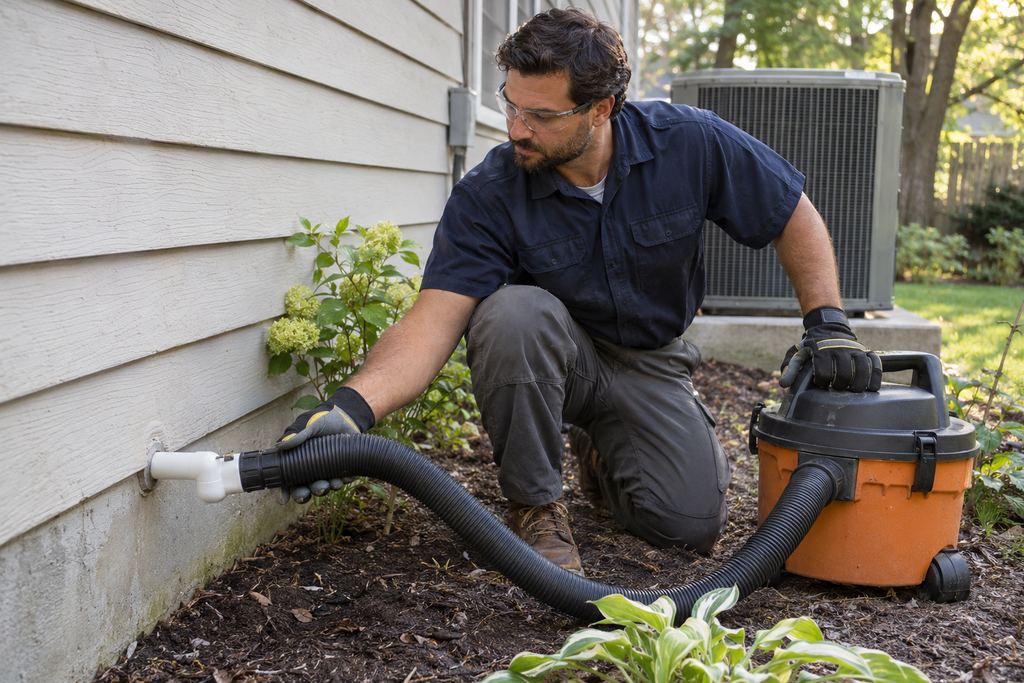
- Flush the drain line through its access cap if your manual allows
Leave these to a licensed technician
These involve high voltage, refrigerant or sealed components. Refrigerant work requires EPA Section 608 certification.
- Supporting the furnace or air handler while the tray is changed
- Removing the coil to reach an integral primary pan
- Recovering and recharging refrigerant if the coil comes out
- Installing or testing a float switch on the pan
- Confirming that the pan setup meets local code for the space
What a replacement visit should cover
- Cause found: Clogged line, missing trap, sagging pipe or a coil that sweats outside the pan.
- Correct pan: Sized to the unit footprint with the outlet in the right place.
- Overflow protection: Many local mechanical codes require a secondary pan or an overflow switch where a leak could damage the building.
- Drain tested: Water poured into the pan should leave quickly and exit where it is supposed to.
- Water damage noted: Wet insulation, drywall or subfloor flagged for separate repair.
What changes the price
Ask for a written quote. Costs depend on the scope below, the region and the time of year.
A secondary tray is a modest job. An integral primary pan can make it a coil job; compare with the evaporator coil cost guide.
Tight attics and crawlspaces add labor and sometimes a second technician.
A new float switch, trap or drain line raises the total.
If the coil must be removed, recovery, a vacuum and a recharge are part of the scope.
How a service request works
HVAC Service Near Me is a referral service. We don't send our own technicians. We connect you with independent local contractors.
- Describe the job
Type your ZIP code, pick a service and add a line or two about the problem or project.
- We pass it on
An independent HVAC contractor or partner network that works in your area and does that kind of job receives it.
- You hear back
The contractor gets in touch to check the details and set a time to come out.
- The choice is yours
After a diagnosis the contractor gives you a quote. Price, timing and warranty are agreed directly between the two of you.
Frequently asked questions
Can I put a new drip tray under my unit myself?
Only if the unit can be supported without straining ducts, gas piping or refrigerant lines and the tray fits the footprint and drain. If you are unsure, have a contractor do it; a dropped furnace or a bent line costs more than the visit.
Why is my secondary pan full of water?
Because the primary pan or main drain line is not doing its job. Common causes are a clogged line or a cracked primary pan. See AC leaking water for the full list.
Can the primary pan be replaced without replacing the coil?
Sometimes. On some coils the pan is a separate part the technician can change. On others it is molded into the coil housing, and the fix is a new coil or a pan treatment the maker allows.
Do I need a float switch?
A float or overflow switch shuts the system down before water overflows. Many local codes call for one or a secondary pan where a leak would cause damage. A contractor can tell you what applies to your home.
Related guides and services
Request drain pan repair
Tell us which pan is leaking or rusted and where the unit sits. A local contractor can follow up, find the cause and quote the right pan.
Tell us where the water is and what the pan looks like. A local contractor follows up to inspect it.
Please keep this page open.
- We pair the request with an independent contractor or partner network that works in your ZIP code.
- The contractor gets in touch to go over the details and agree on a visit.
- After checking the system they quote the job, and you choose whether to proceed.
Read how requests are handled.
Online requests are not connected to a contractor network yet. Nothing you typed was sent or saved. Please phone us instead, or try again later.
Call (888) 555-0199