Clogged AC Drain Line: Signs, Safe Clearing and Prevention
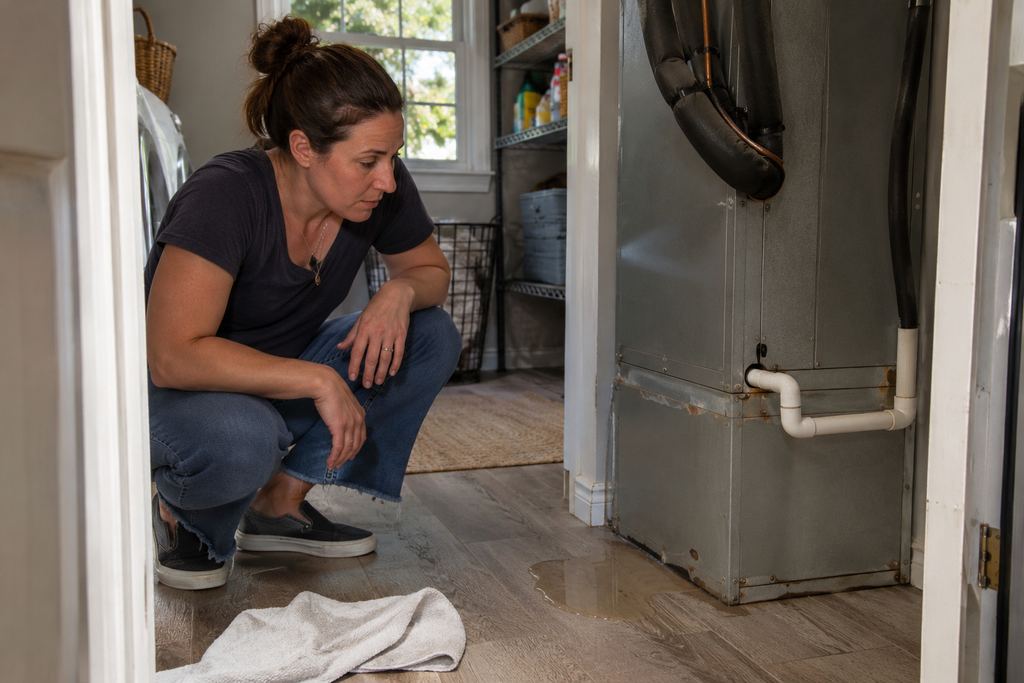
An AC drain line clogged with algae, sludge or debris has nowhere to send the water the coil pulls out of the air. That water fills the drain pan, and the result is either a system that shuts itself off or a leak.
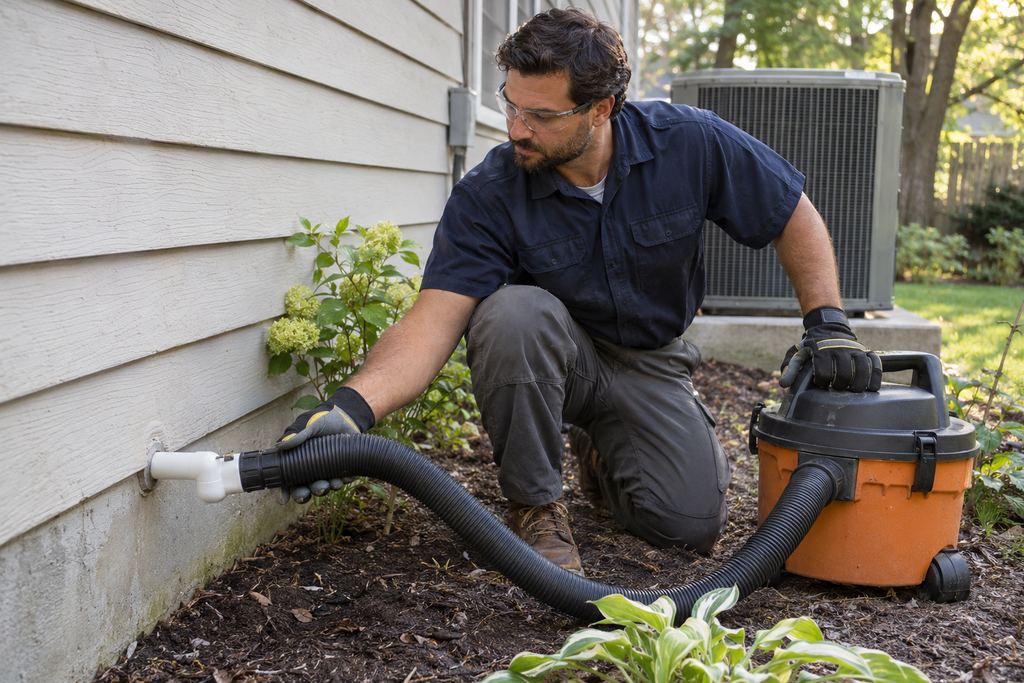
Turn the system off at the thermostat. Find the drain pan under the indoor coil and the access port or cap on the drain line near it. If your owner's manual allows it, a wet/dry vacuum on the outdoor end of the line or a vinegar flush through the access port often clears soft buildup. If water is in a ceiling, the pan is cracked, or the line stays blocked, a technician should clear it and check the float switch.
Signs the drain is backing up
- AC stops cooling and will not restart: Many systems have a float or overflow switch that cuts cooling when water rises. The thermostat may stay on while nothing runs.
- Water in the secondary pan: Attic units often sit over a second pan. Water in it means the primary drain is not flowing.
- Drips or stains below the unit: A wet ceiling under an attic air handler, or a puddle by a closet furnace. See AC leaking water.
- Musty smell near the air handler: Standing water and slime in the pan grow mold and bacteria. The musty smell guide covers the odor side.
- No drip outside on a humid day: The outdoor end of the line normally drips steadily in humid weather. Dry on a muggy afternoon is a warning sign.
Where the drain runs in your home
Where your air handler sits changes how a clog shows up and how risky it is.
Safe ways to clear a slow drain
Follow your equipment manual. These steps cover the outside of the line only. Do not open electrical panels or bypass the float switch.
- Power off
Set the thermostat to Off. Turn off the service switch at the air handler if you know where it is.
- Empty the pan
Soak up or vacuum standing water from the primary or secondary pan you can reach.
- Vacuum the outdoor end
Seal a wet/dry vacuum hose over the drain outlet outside and run it for a minute or two to pull the clog out.
- Flush from the access port
Remove the cap on the vertical tee near the unit and pour in about a cup of distilled white vinegar, or plain water if your manual says so. Wait roughly 30 minutes, then flush with water.
- Confirm flow
Restore power and set cooling. Water should soon drip at the outside end.
When to hand it off
Safe checks you can do
No tools beyond a flashlight. Turn the system off at the thermostat before opening any filter or access door.
- Vacuuming the drain outlet and flushing through the access port.
- Replacing the filter, since a dirty filter lets dust reach the coil and pan.
- Checking that a condensate pump is plugged in.
Leave these to a licensed technician
These involve high voltage, refrigerant or sealed components. Refrigerant work requires EPA Section 608 certification.
- Clearing a clog the vacuum cannot pull, or one inside a wall or slab.
- Replacing a cracked or rusted drain pan.
- Testing or replacing a float switch or condensate pump.
- Re-sloping or rerouting a line that sags and traps water.
- Treating a mold-heavy pan or coil and checking for water damage.
What a drain line repair costs depends on
Ask for a written quote. The job ranges from a quick service call to pan or pump replacement.
A flush and vacuum is short labor. A new pan, pump or float switch adds parts. Pump pricing is on the condensate pump cost page.
Attic air handlers in tight spaces or lines buried in walls take longer to reach.
Drywall, insulation and flooring repair is separate work, usually by a different trade.
Keeping condensate flowing
Condensate is the water that forms on the cold indoor coil as it pulls humidity out of the air, the same way a cold glass sweats. On a muggy day the line may carry a steady trickle for hours. Residential lines are commonly 3/4-inch PVC, and they clog from a mix of dust, algae and bacteria that grows in the warm, wet pan.
- Change filters on schedule so less dust reaches the coil.
- Flush the line through its access port at the start of the cooling season and once mid-summer, if your manual allows.
- Keep the outdoor end clear of mulch and soil.
- Ask for the drain, pan and float switch to be checked at each tune-up.
Controlling moisture is the main way to control indoor mold, so dry any wet area within a day or two. For professional clearing, see drain line cleaning.
Frequently asked questions
What is AC condensate?
It is moisture from indoor air that condenses on the cold evaporator coil. It drips into a pan and leaves through the drain line. That is normal and is part of how an AC dehumidifies.
How long should vinegar sit in an AC drain line?
A common suggestion is about 30 minutes before flushing with water. Check your equipment manual first, since some makers recommend plain water or a specific cleaner.
How do I get rid of a moldy smell from the AC?
Clear the drain so the pan dries out, replace the filter, and dry any wet materials. If the smell persists or you see growth on the coil, a technician can clean the coil and pan.
How much does it cost to fix a clogged AC drain line?
It depends on whether a simple clearing works or a pan, pump or switch needs replacing, plus access. Ask for the diagnostic fee and a written quote; see AC repair costs for typical factors.
Can I bypass the float switch to get the AC running?
No. The switch is there to stop water damage. Clear the drain or have it cleared, and let the switch reset on its own.
Related guides and services
Get the drain line cleared
Tell us where your indoor unit is and what you see in the pan. An independent HVAC contractor near you can contact you about a service visit. Availability varies by ZIP code and season.
Tell us where the water is showing up and whether the system still runs. A local contractor can follow up.
Please keep this page open.
- We pair the request with an independent contractor or partner network that works in your ZIP code.
- The contractor gets in touch to go over the details and agree on a visit.
- After checking the system they quote the job, and you choose whether to proceed.
Read how requests are handled.
Online requests are not connected to a contractor network yet. Nothing you typed was sent or saved. Please phone us instead, or try again later.
Call (888) 555-0199