Air Conditioner Disposal Without Venting Refrigerant
You cannot simply drag an old air conditioner to the curb. Every AC, from a 5,000 Btu window unit to a central condenser, holds refrigerant that federal rules say must be recovered before the metal is scrapped. The easiest route depends on the type of unit and whether you are replacing it.
- Refrigerant has to come out before scrapping
- Replacement jobs usually include haul-away; ask to be sure
- Cities, recyclers and retailers each handle loose units differently
Tell us what kind of unit it is and whether you are replacing it. A contractor in your area follows up.
Please keep this page open.
- We pair the request with an independent contractor or partner network that works in your ZIP code.
- The contractor gets in touch to go over the details and agree on a visit.
- After checking the system they quote the job, and you choose whether to proceed.
Read how requests are handled.
Online requests are not connected to a contractor network yet. Nothing you typed was sent or saved. Please phone us instead, or try again later.
Call (888) 555-0199Why AC units get special treatment
Under Section 608 of the Clean Air Act, knowingly releasing refrigerant into the air is illegal. Appliances that reach a scrap yard or landfill therefore need proof that the refrigerant was already recovered, or the facility has to recover it itself. In practice that proof is often a signed statement or a sticker showing who removed the refrigerant and when. Without it, many recyclers and municipal programs will turn the unit away.
Units built before 2010 may contain R-22, an ozone-depleting refrigerant whose production and import ended on January 1, 2020. Newer systems usually hold R-410A. Both have to be captured by someone with EPA Section 608 certification using recovery equipment. A homeowner should never cut lines or loosen fittings to empty a unit.
How to dispose of an old air conditioner, step by step
- Identify the unit
Window, portable, through-the-wall, or the outdoor half of a split system. The data plate shows the refrigerant type and the size.
- Decide whether it still works
A clean, working window unit can sometimes go to a charity resale store or a neighbor. Call first; many donation centers refuse appliances with refrigerant.
- If you are replacing it, ask the installer
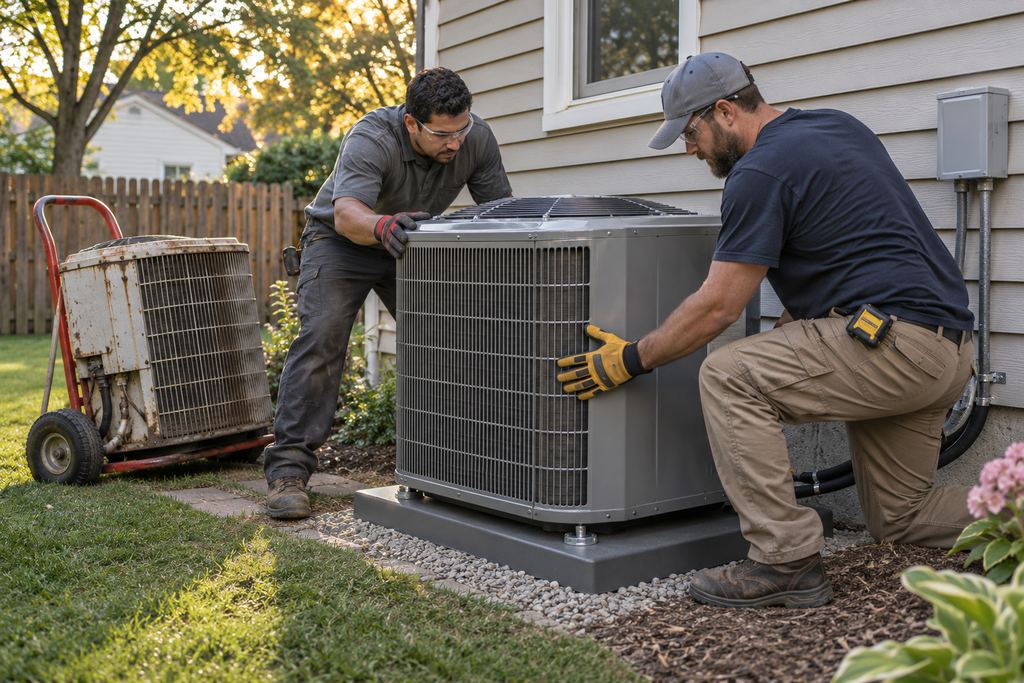
Most contractors who put in a new system recover the old refrigerant and haul the old equipment away. Get it written into the quote.
- For a loose unit, call your city or county
Ask whether bulky item or white goods pickup accepts air conditioners, whether a refrigerant removal tag is required, and what it costs.
- Check scrap metal recyclers
Some take AC units and handle recovery for a fee. Others only accept units already tagged as evacuated.
- Keep the paperwork
If someone recovers the refrigerant for you, keep the signed statement. It is what the next facility will ask for.

Disposal routes compared
Owner tasks versus technician tasks
Safe checks you can do
No tools beyond a flashlight. Turn the system off at the thermostat before opening any filter or access door.
- Unplug a window or portable unit and drain any water from its pan or reservoir.
- Remove a window unit from its frame with a helper; they are heavier than they look.
- Photograph the data plate so recyclers can see the refrigerant type.
- Call your local waste program and ask for its appliance rules.
Leave these to a licensed technician
These involve high voltage, refrigerant or sealed components. Refrigerant work requires EPA Section 608 certification.
- Recovering refrigerant from any unit, which requires EPA Section 608 certification.
- Disconnecting a central condenser: it is wired to a high-voltage disconnect and connected by refrigerant lines.
- Removing an indoor evaporator coil from a furnace or air handler.
- Capping lines and making the remaining system safe if only part of it is being removed.
What removal usually costs
There is no single price. A city may charge a small appliance fee or nothing at all. A recycler may charge for recovery on an untagged unit. A contractor removing a central system as a standalone job prices the trip, the recovery and the labor of disconnecting and carrying the equipment. When the removal is part of a new installation, it is often included. Ask for removal to appear as its own line on any installation or replacement quote so you can compare offers.
How a service request works
HVAC Service Near Me is a referral service. We don't send our own technicians. We connect you with independent local contractors.
- Describe the job
Type your ZIP code, pick a service and add a line or two about the problem or project.
- We pass it on
An independent HVAC contractor or partner network that works in your area and does that kind of job receives it.
- You hear back
The contractor gets in touch to check the details and set a time to come out.
- The choice is yours
After a diagnosis the contractor gives you a quote. Price, timing and warranty are agreed directly between the two of you.
Frequently asked questions
How do I dispose of an old window air conditioner?
Call your city or county waste program first. Many accept window units at a drop-off site or through bulky pickup, sometimes with a fee or a refrigerant removal tag. If it still works, a resale shop may take it. Shopping for its successor? See the window AC section. Retailers delivering a new unit sometimes take the old one.
Can I throw an air conditioner in the trash?
No. Air conditioners contain refrigerant that has to be recovered before the unit is scrapped or landfilled, and most trash haulers will not take them in regular pickup.
Do I need to remove the refrigerant myself?
No, and you should not try. Recovery requires EPA Section 608 certification and recovery equipment. Venting it is illegal.
Will the installer take my old central AC?
Most will when they replace the system, but confirm that removal and recovery are listed in the written quote.
What other appliances need the same handling?
Refrigerators, freezers, dehumidifiers, water coolers and portable or window ACs all contain refrigerant. Electronics such as TVs and computers fall under separate e-waste rules in many states.
Related guides and services
Need an old system removed?
If you are swapping out a central AC, or moving to a heat pump, describe the current system and HVAC Service Near Me forwards the request to an independent contractor near you. They can quote the new equipment and the removal together.
Tell us what kind of unit it is and whether you are replacing it. A contractor in your area follows up.
Please keep this page open.
- We pair the request with an independent contractor or partner network that works in your ZIP code.
- The contractor gets in touch to go over the details and agree on a visit.
- After checking the system they quote the job, and you choose whether to proceed.
Read how requests are handled.
Online requests are not connected to a contractor network yet. Nothing you typed was sent or saved. Please phone us instead, or try again later.
Call (888) 555-0199