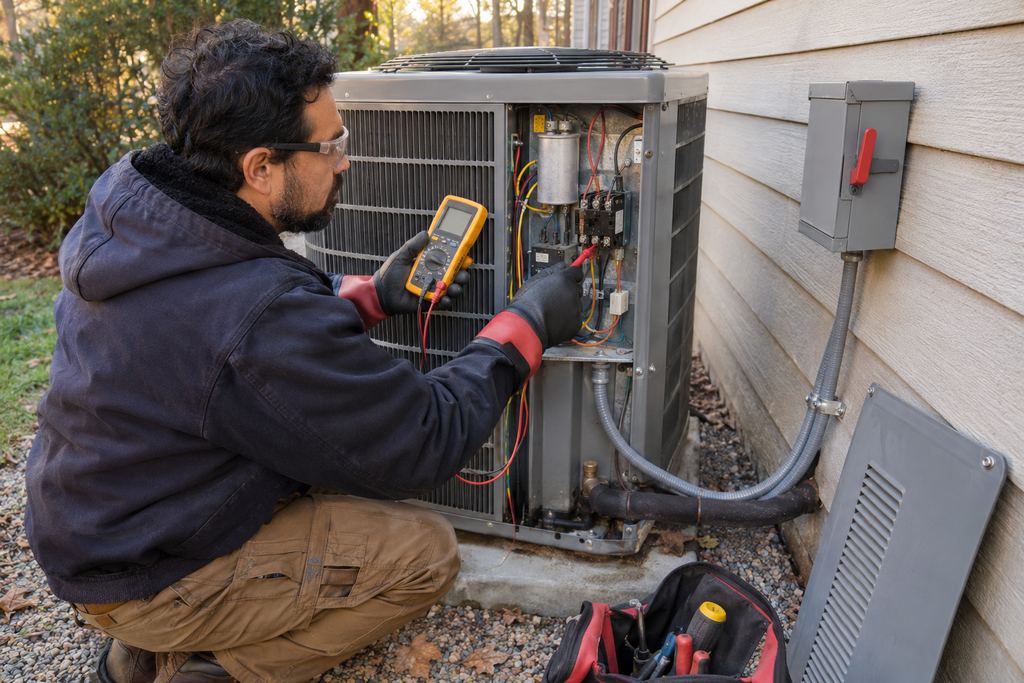
AC Clicking Noise: Telling a Normal Click From a Fault
A single soft click when the AC starts and another when it stops is the sound of a switch closing and opening. An AC clicking noise that repeats every few seconds, keeps going with no cooling, or comes with a hum is the one to act on.
Normal: one click at the thermostat or outdoor unit as a cycle begins and ends. Not normal: rapid chattering at the condenser, clicking followed by a hum and silence, or a steady tick from a fan blade. Those usually trace to a worn contactor, a weak capacitor, a thermostat or control fault, or something touching a fan. Turn the system off if the clicking repeats and cooling does not start.
Where the click comes from and what it suggests
| Pattern | Where you hear it | Likely cause | Urgency |
|---|---|---|---|
| One click at start and stop | Thermostat or outdoor unit | Relay or contactor switching | Normal |
| Click, hum, then quiet; repeats | Outdoor unit | Compressor failing to start, often a weak capacitor, with the internal overload cutting out | Turn off, call soon |
| Fast chattering | Outdoor unit | Contactor coil getting low or unstable control voltage, or pitted contacts | Turn off, call soon |
| Steady tick that speeds up with the fan | Indoor blower or outdoor fan | Blade or wheel striking a loose panel, wire or debris | Turn off, schedule repair |
| Clicking but no start on a blank thermostat | Thermostat or air handler | Control board, transformer, safety switch, or thermostat wiring | Schedule repair |
| Ticking in walls or ducts after shutdown | Ductwork | Metal expanding and contracting with temperature change | Usually harmless |
The parts behind the sound
Contactor
The contactor is an electrically operated switch in the outdoor unit. When the thermostat calls for cooling, a low voltage signal pulls it closed with a click and the compressor and fan get power. Contacts burn and pit over years, and a weak coil can buzz or chatter instead of closing firmly. More on the part is at contactor replacement.
Capacitor
The run or start capacitor gives the compressor and fan motor the boost they need to spin up. When it weakens, the compressor tries, fails, overheats slightly, and its internal overload clicks it off. Then it tries again. That loop strains the compressor, so the system should stay off until a technician tests the part. See capacitor replacement.
Thermostat and control board
Relays on the thermostat and the air handler board click as they switch. A failing thermostat can send on and off signals in quick succession, which sounds like repeated clicks and looks like the system starting and stopping.
Fans and loose hardware
A steady tick that matches fan speed is mechanical. A stick in the condenser, a loose fan guard, a wire drifting into the blades or a cracked blower wheel can all do it. Shut the system off before anyone reaches near a fan.
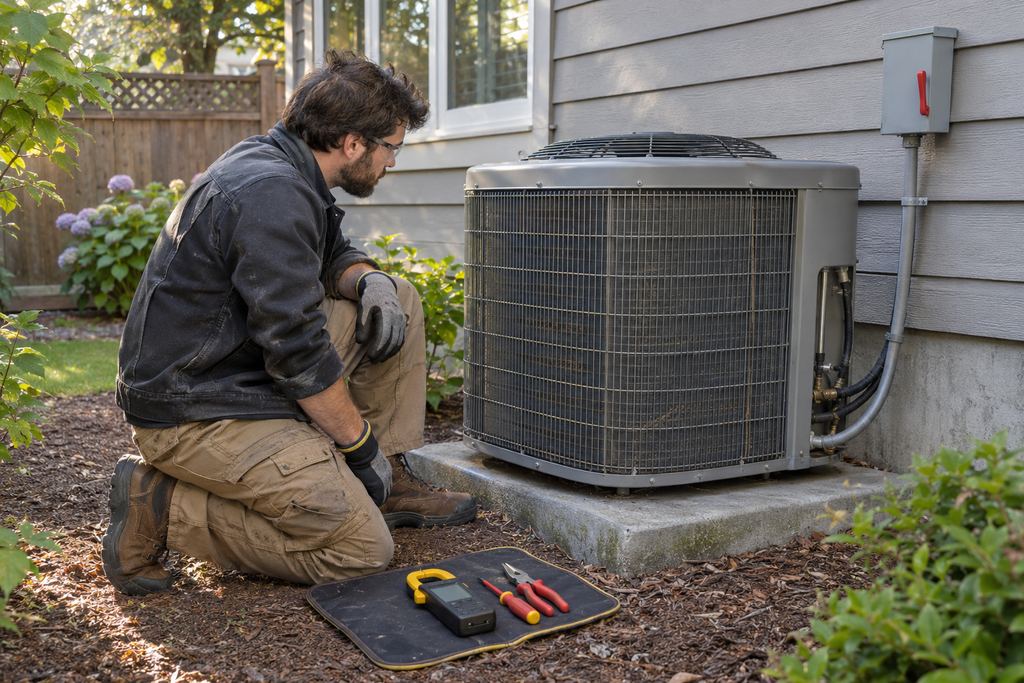
How clicking differs by system
Safe checks first, technician work second
Safe checks you can do
No tools beyond a flashlight. Turn the system off at the thermostat before opening any filter or access door.
- Note exactly when the click happens: at start, during the run, or after shutdown.
- Check that the thermostat has fresh batteries and is set to Cool with the fan on Auto.
- Look, without reaching in, for twigs or debris caught in the outdoor fan grille.
- Change a dirty filter. A starved blower can make the system trip off and restart.
- Record a short phone video of the sound to share with the contractor.
Leave these to a licensed technician
These involve high voltage, refrigerant or sealed components. Refrigerant work requires EPA Section 608 certification.
- Testing and replacing a contactor or capacitor.
- Checking control voltage, the transformer and thermostat wiring.
- Removing debris from inside the condenser and checking fan blades.
- Measuring compressor amperage and testing the overload.
What affects the repair cost
A clicking problem is often a small part, but the price still depends on what the diagnosis finds. Ask for the diagnostic fee and a written quote.
A contactor or capacitor is a short job. A compressor that has been short cycling on its overload for weeks can cost far more.
Replacing a thermostat or a control board depends on the model and the wiring.
After-hours and peak season visits can cost more. Confirm the rate before the visit.
What happens after you send a request
- Describe the click
Tell us where the sound is, how often it repeats, and whether the system cools.
- A local contractor follows up
Your request goes to an independent HVAC company in your area, which contacts you to arrange a visit if it has availability.
- Diagnosis and written quote
The technician tests the parts and gives you the price before work starts.
Keeping relays and fans quiet
Most clicking faults build slowly. A yearly visit that includes tightening electrical connections and testing capacitors and contactors catches parts before they start chattering. Keep two feet of clearance around the condenser, keep the filter fresh, and clear the grille after storms. If the noise is more of a rattle or a bang than a click, the AC making loud noise and rattling noise guides cover those.
Frequently asked questions
Is one click when the AC turns on normal?
Yes. The thermostat relay and the outdoor contactor both click as they switch. One click at start and one at stop is expected.
Should I turn the AC off if it keeps clicking?
If the clicking repeats and cooling never starts, yes. A compressor that keeps trying to start against a weak capacitor overheats and can be damaged.
Why does my AC pause before it starts after a click?
Many thermostats and outdoor controls hold the compressor off for roughly three to five minutes after it stops, so pressures can equalize. You may hear a relay click at the thermostat and then a wait before the condenser starts.
How do I stop my air conditioner from clicking?
Clear debris from the outdoor fan grille, replace batteries in the thermostat, and change the filter. If the clicking still repeats, the fix is usually a contactor, capacitor or control part that a technician replaces.
What makes a popping or cracking sound in the ducts?
Sheet metal ducts expand and contract as warm or cool air moves through them. Occasional pops are typically harmless. Loud bangs at startup can mean a duct panel flexing from high pressure and are worth a look.
Can a clicking AC cause it to stop cooling?
Yes, when the click comes from a part that never fully starts the compressor. If the house is warming, see AC not cooling for the broader checklist.
Related guides and services
Get the clicking diagnosed
Tell us where the click comes from and how often it repeats. A local HVAC contractor can contact you about scheduling a visit. Availability varies by ZIP code and season.
Say where the clicking comes from and whether the system starts. A local contractor can follow up to arrange a visit.
Please keep this page open.
- We pair the request with an independent contractor or partner network that works in your ZIP code.
- The contractor gets in touch to go over the details and agree on a visit.
- After checking the system they quote the job, and you choose whether to proceed.
Read how requests are handled.
Online requests are not connected to a contractor network yet. Nothing you typed was sent or saved. Please phone us instead, or try again later.
Call (888) 555-0199