Why Your Air Conditioner Rattles and How to Respond
An AC rattling noise almost always means a part has come loose, worn down or picked up debris. Where you hear it matters more than how loud it is, so start by standing next to each part of the system while it runs.
Rattles from the outdoor cabinet often come from twigs, a loose access panel or a fan blade that has started to wobble. Rattles near the indoor unit or vents tend to be loose duct joints, a blower wheel out of balance or a panel that was not fastened after a filter change.
Listen first: outdoor, indoor or in the walls
With the system running, find where the sound is strongest.
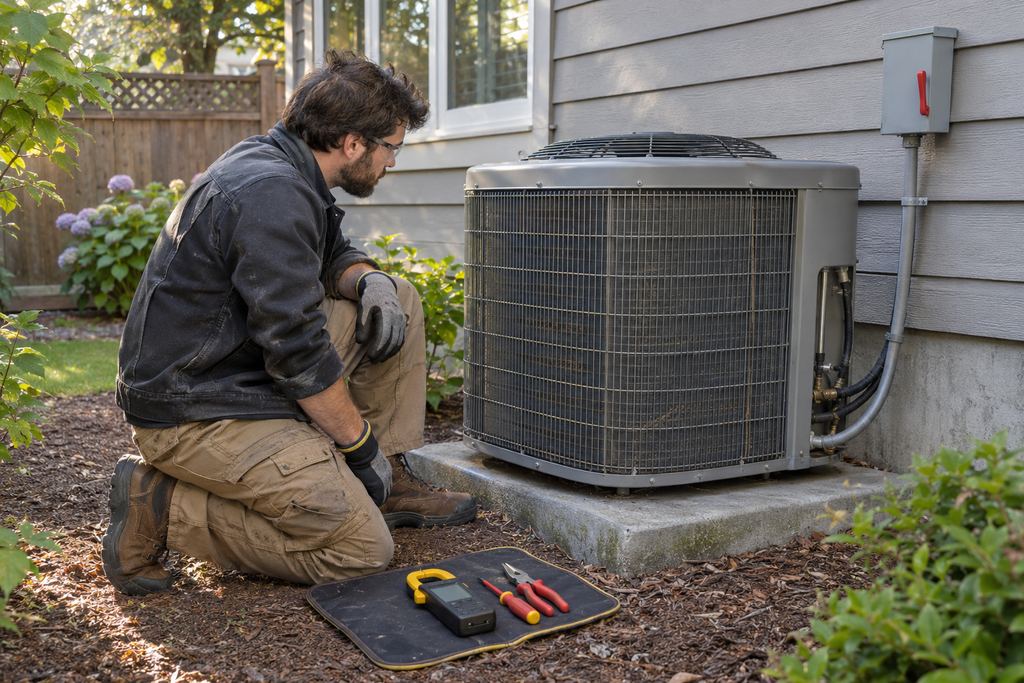
- Outdoor condenser. A tinny buzz-rattle that follows the fan speed often means sticks, leaves or a loose top grille. A deep, uneven knock can come from the fan motor bearings or the compressor mounts.
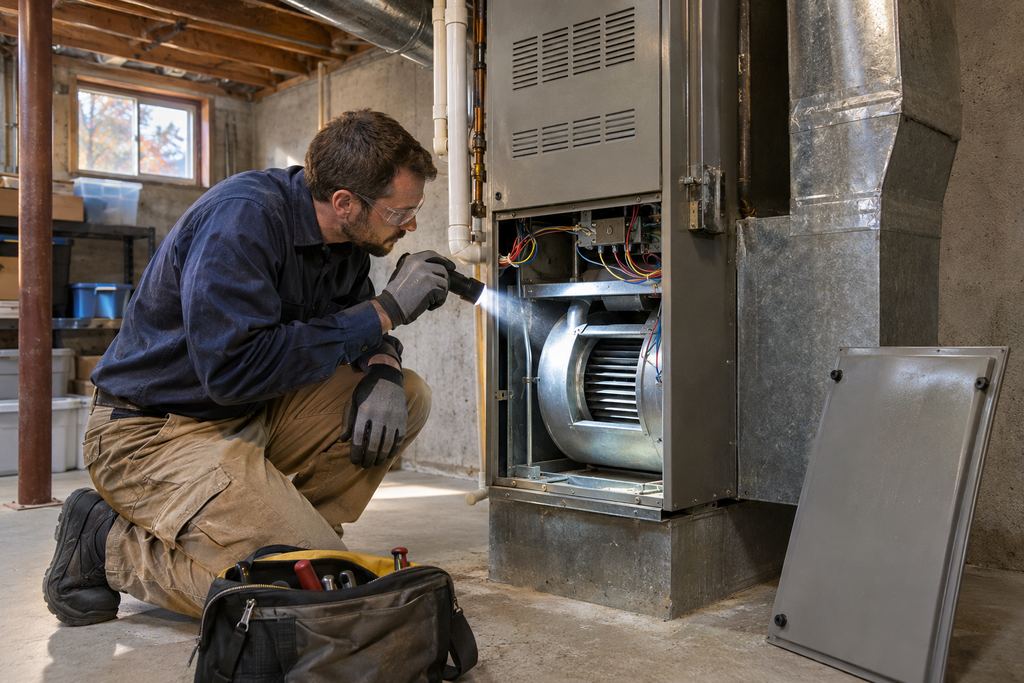
- Indoor air handler or furnace cabinet. A rattle that starts when the blower ramps up can be a loose door panel, a filter that is the wrong size and vibrates in its slot, or a blower wheel collecting dirt on one side.
- Ducts and vents. Metal ticking or flapping behind a wall usually comes from a duct joint, a damper or a register that has worked loose.
What the rattle may be telling you
| Where and when | Likely source | Urgency |
|---|---|---|
| Outdoor unit, steady with fan | Debris in the fan or a loose grille | Low, clear it once power is off |
| Outdoor unit, knocking at startup | Worn compressor mounts or a failing contactor | Book a visit soon |
| Outdoor unit, getting louder each day | Fan motor bearings or a bent blade | Shut down if it starts scraping |
| Indoor cabinet, when blower starts | Loose panel, filter or blower wheel | Moderate |
| Behind walls or ceilings | Duct joint, hanger or damper | Low to moderate |
| Any location with smell or smoke | Electrical fault or motor overheating | Turn off now and call a pro |
Checks you can make versus repairs for a technician
Safe checks you can do
No tools beyond a flashlight. Turn the system off at the thermostat before opening any filter or access door.
- Turn the system off at the thermostat, then at the outdoor disconnect, before you look inside the fan guard area from outside.
- Pick up twigs, leaves and toys around and on top of the condenser and keep about two feet clear.
- Confirm the indoor cabinet door is seated and its screws or latches are tight.
- Make sure the filter matches the size printed on the frame and sits flat in the rack.
- Press on a vent cover that buzzes. If the noise changes, that register just needs to be secured.
Leave these to a licensed technician
These involve high voltage, refrigerant or sealed components. Refrigerant work requires EPA Section 608 certification.
- Opening the electrical compartment and testing the contactor or capacitor.
- Replacing a fan motor, fan blade or blower wheel.
- Checking compressor mounts and refrigerant line clamps for vibration.
- Rebalancing or rehanging ductwork inside walls, attics or crawl spaces.
If a rattle becomes grinding or metal scraping, if you smell something burning, or if the breaker trips, turn the AC off at the thermostat and leave it off. Do not keep resetting the breaker. If you see smoke or flames, get everyone out and call 911.
What a noise diagnosis visit usually covers
Visits differ by contractor. These are reasonable items to ask about when you book.
- Run test with panels off: The technician listens with the cabinet open to locate the part that moves.
- Fan and motor inspection: Blade balance, bearing play and motor mounting on the condenser and the indoor blower.
- Electrical check: Contactor, capacitor and wire connections, since a chattering contactor can sound like a rattle.
- Line set and mounts: Refrigerant line clamps and compressor isolation pads that dampen vibration.
- Written findings: Ask for the cause, the part and the price in writing before any repair starts.
Keeping new rattles from starting
Most rattles come from parts loosening slowly over a cooling season. A spring visit catches a lot of them: the technician tightens panels, checks fan blades and looks at mounts while the unit is still quiet. Between visits, keep the outdoor unit clear of yard debris, replace filters on schedule and close the cabinet door fully after each change. The AC maintenance page explains what a seasonal visit includes.
Other noises point to different faults. A sharp repeating tick is covered on the AC clicking noise page, and screeching or banging on the loud AC noise page.
Repair now or plan a replacement
A loose panel or a fan blade is an inexpensive fix on almost any system. A rattling compressor on an older unit that also struggles to cool is a different conversation. If the system is also not cooling well or blowing warm air, ask the technician to quote both the repair and a replacement so you can compare them side by side. The AC repair cost section lists what drives the price of common parts.
Service availability depends on your ZIP code and the time of year. A rattle that is not urgent is often easier to schedule outside peak summer weeks.
Frequently asked questions
Is it safe to keep running an AC that rattles?
A light, steady rattle from a loose grille or panel is not dangerous on its own, but it can wear parts faster. Grinding, knocking that gets worse, a burning smell or a tripped breaker mean you should shut it off and call a technician.
Does the 3 minute restart rule relate to a rattle?
Many thermostats and outdoor units wait a few minutes before restarting the compressor after it shuts off. That pause lets pressures settle. If you hear a rattle right at restart, mention it, because it may point to the compressor mounts or the contactor.
How much does it cost to fix an AC compressor?
It depends on the system size, refrigerant type, warranty status and local labor. Ask for a written quote and compare it with replacement on older equipment. The compressor cost section explains the factors.
Which sounds suggest a serious breakdown is coming?
Warning signs include grinding or screeching from the outdoor unit, a breaker that trips again after one reset, burning odors, and a fan that spins slowly or not at all. Turn the system off and have it inspected.
Related guides and services
Get a rattling AC looked at
Share where the noise starts and what changed recently. An independent local contractor can follow up to schedule a diagnosis.
Describe the sound and where you hear it. Your request goes to an independent local contractor.
Please keep this page open.
- We pair the request with an independent contractor or partner network that works in your ZIP code.
- The contractor gets in touch to go over the details and agree on a visit.
- After checking the system they quote the job, and you choose whether to proceed.
Read how requests are handled.
Online requests are not connected to a contractor network yet. Nothing you typed was sent or saved. Please phone us instead, or try again later.
Call (888) 555-0199