Ductless Mini Split Installation in Washington Homes
A mini split installation in Washington is often the simplest way to add both efficient heat and summer cooling to a home that has no ducts. HVAC Service Near Me sends your project details to independent local installers so you can compare layouts and written bids.
- Single-zone and multi-zone layouts
- Sizing for heating first in western Washington
- Efficiency minimums and rebate questions
How the home is heated now, how many rooms or zones you want covered, and whether it is a house, condo or townhome.
Please keep this page open.
- We pair the request with an independent contractor or partner network that works in your ZIP code.
- The contractor gets in touch to go over the details and agree on a visit.
- After checking the system they quote the job, and you choose whether to proceed.
Read how requests are handled.
Online requests are not connected to a contractor network yet. Nothing you typed was sent or saved. Please phone us instead, or try again later.
Call (888) 555-0199Why ductless fits so many Washington houses
A large share of Washington homes and condos built from the 1960s through the 1980s were heated with electric baseboards and never had ducts. Older houses often ran on oil. For both, a ductless heat pump adds cooling for heat waves and cuts the cost of winter heat without cutting into walls for ductwork. Electric utilities including Puget Sound Energy, Seattle City Light, Snohomish County PUD and Avista have promoted ductless heat pumps, though rebate terms change.
Layouts to discuss with an installer
Sizing: heating usually decides
West of the Cascades, a ductless system heats far more hours than it cools, so the heating load at your local design temperature often sets the equipment size. East of the mountains, cold winters and hot summers both matter. Ask for a room-by-room load calculation and the unit's heating capacity at low outdoor temperatures. Oversized heads short cycle in mild weather; undersized ones leave baseboards running anyway.
Efficiency numbers to know
| Rating | What it measures | Federal minimum for split heat pumps |
|---|---|---|
| SEER2 | Cooling efficiency over a season | 14.3 since January 1, 2023 |
| HSPF2 | Heating efficiency over a season | 7.5 since January 1, 2023 |
What the installation covers
- Head and outdoor unit placement: Wall strength, airflow, condensate route and snow or rain exposure.
- Line set and condensate: Refrigerant lines and drain routed through the wall, often in a line hide.
- Electrical: Dedicated circuit and disconnect, under an L&I electrical permit in most of the state.
- Vacuum and startup: The system is evacuated, charged per the manufacturer and tested.
Mini split or a different path?
| Home | Option |
|---|---|
| Baseboard heat, no ducts | Ductless heat pump |
| Gas furnace with good ducts | Ducted heat pump or AC coil; see AC installation |
| Old mini split failing | Repair or replacement quote |
Questions for installers
- L&I registration and electrical license?
Check at lni.wa.gov; 06A covers HVAC/refrigeration electrical work. - Which rebates have you processed lately?
Then confirm the terms with the utility yourself. Do not count on the federal 25C credit; it does not apply to systems placed in service after 2025. - Where will condensate drain?
Especially for heads on interior walls. - How is the warranty registered?
Some manufacturers need registration within a set time.
Western versus eastern Washington installs
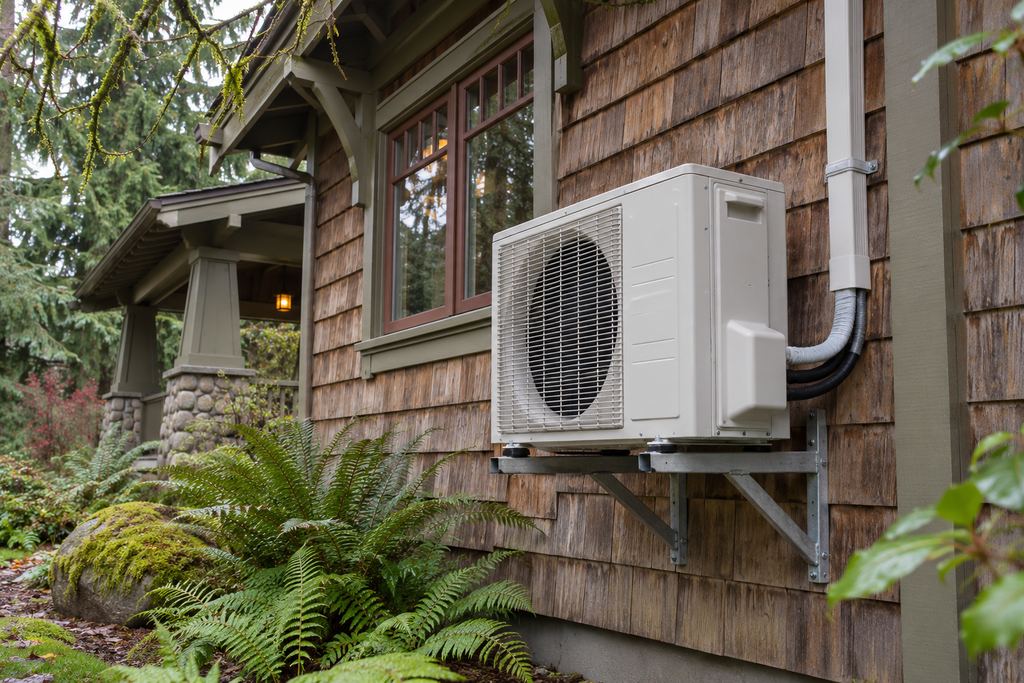
Around Puget Sound, outdoor units spend the winter in steady drizzle and temperatures that hover just above freezing, the conditions that make a heat pump defrost often. Installers there raise the outdoor unit on a stand or wall bracket so meltwater can drain away and moss and leaves do not pile up against the coil. Condo and townhouse projects add another layer: many associations have rules about where an outdoor unit and line hide can go on the exterior, so get written approval before the installer orders equipment.
In Spokane, the Tri-Cities and Yakima, the outdoor unit has to cope with real cold snaps and snow. A cold-climate model and a mounting height above typical snow depth matter more there, and installers often recommend keeping some existing heat as a backup for the coldest week of the year.
From first contact to a working system
- Walkthrough
The installer looks at each room you want covered, the exterior walls and the electrical panel.
- Layout and bid
You get a head count, head locations, outdoor unit position, model numbers and permit details in writing.
- Install day
Most single-zone jobs take a day; multi-zone systems with long line runs can take longer.
- Inspection and handoff
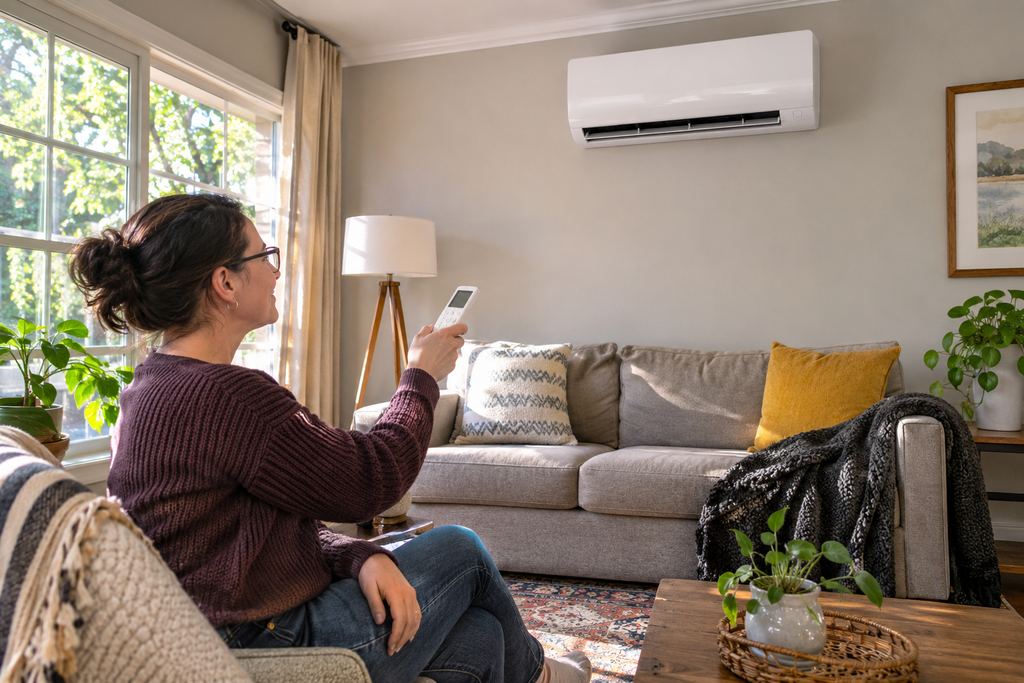
Electrical inspection, a demonstration of the remote or thermostat and a filter cleaning lesson.
How a service request works
HVAC Service Near Me is a referral service. We don't send our own technicians. We connect you with independent local contractors.
- Describe the job
Type your ZIP code, pick a service and add a line or two about the problem or project.
- We pass it on
An independent HVAC contractor or partner network that works in your area and does that kind of job receives it.
- You hear back
The contractor gets in touch to check the details and set a time to come out.
- The choice is yours
After a diagnosis the contractor gives you a quote. Price, timing and warranty are agreed directly between the two of you.
Mini-Split Installation by city in Washington
Pick your city for local details.
Frequently asked questions
How many heads do I need?
It depends on the floor plan. Open main floors can work with one head; closed bedrooms usually need their own or a ducted unit.
Will a mini split heat my house in winter?
Cold-climate models heat well below freezing. In mild western Washington winters many owners use it as the main heat.
Do I keep my baseboards?
Usually yes, as backup for rooms the heads do not reach.
Who repairs it later?
Any HVAC company that services the brand. For broken systems use Washington AC repair.
Related guides and services
Get mini split installation quotes
Tell us how the home is heated now, the rooms you want covered and the home type. Local installers can follow up.
How the home is heated now, how many rooms or zones you want covered, and whether it is a house, condo or townhome.
Please keep this page open.
- We pair the request with an independent contractor or partner network that works in your ZIP code.
- The contractor gets in touch to go over the details and agree on a visit.
- After checking the system they quote the job, and you choose whether to proceed.
Read how requests are handled.
Online requests are not connected to a contractor network yet. Nothing you typed was sent or saved. Please phone us instead, or try again later.
Call (888) 555-0199