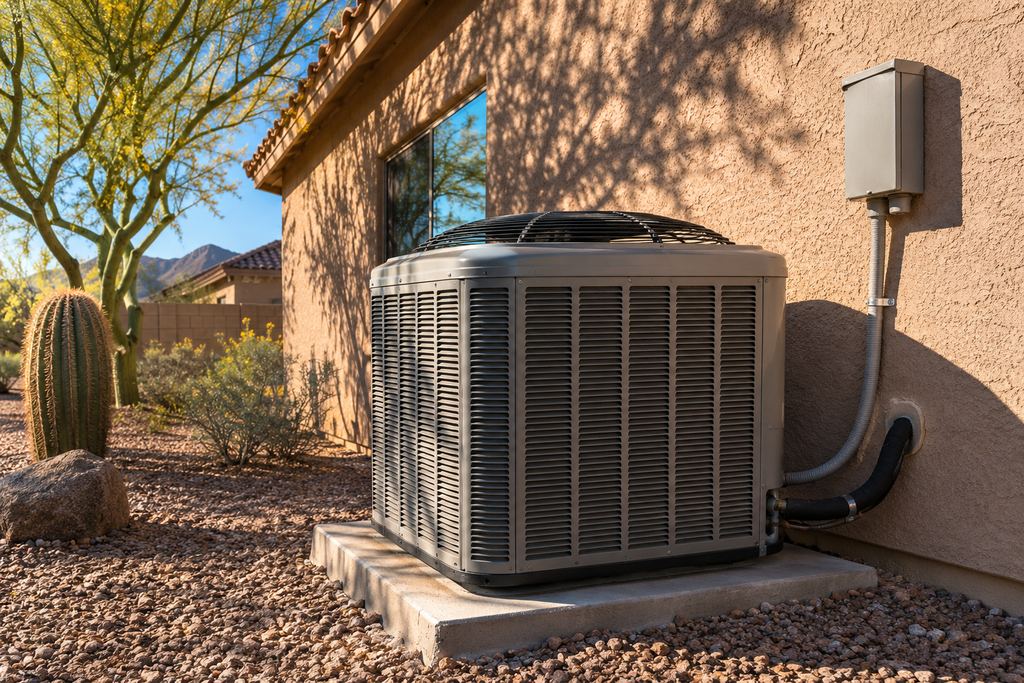
Utah AC Installation: Choosing and Sizing a New System
Before anyone talks brands, a Utah AC installation should begin with a room-by-room load calculation and a look at the cooling you rely on today: a swamp cooler, window units or a tired central system. HVAC Service Near Me forwards your project to independent installers nearby, so you end up with written quotes to set side by side.
- Central air, heat pumps or ductless heads
- Sizing that accounts for Utah's dry air and altitude
- Quote checklist before you sign
Square footage, what cools it now (swamp cooler, central AC, window units or nothing) and whether the furnace is gas or electric.
Please keep this page open.
- We pair the request with an independent contractor or partner network that works in your ZIP code.
- The contractor gets in touch to go over the details and agree on a visit.
- After checking the system they quote the job, and you choose whether to proceed.
Read how requests are handled.
Online requests are not connected to a contractor network yet. Nothing you typed was sent or saved. Please phone us instead, or try again later.
Call (888) 555-0199What makes a Utah install different
Salt Lake City sits around 4,200 feet above sea level, and summer humidity usually runs low. Builders leaned on that for decades by setting evaporative coolers on roofs. Those coolers do fine in June; once monsoon moisture rolls in during late July and August they lose their punch, and on smoky days they pull outdoor air straight inside. A good share of Utah installation projects come from owners trading a swamp cooler for refrigerated air or running the two together.
Elevation plays a part too. Air at 4,000 feet carries less heat per cubic foot than air at the coast, while published equipment capacity assumes sea level. A careful installer reads the manufacturer's performance tables instead of leaning on a square-foot shortcut.
System types to compare
Sizing comes before brand
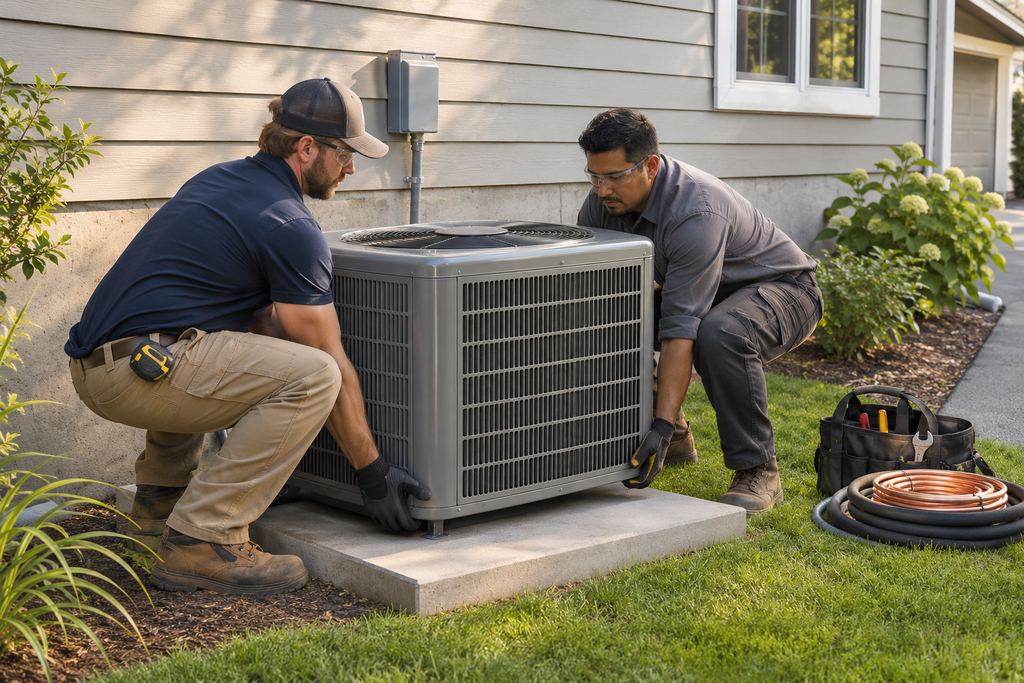
Too much capacity produces short, loud bursts of cold air and clammy, uneven rooms. Too little and the compressor never gets a break on a July afternoon. An ACCA Manual J load calculation weighs insulation, glass area, which way the house faces and how leaky it is. Have last summer's power bills ready, plus notes on which rooms overheat and roughly how old the ducts are.
How an installation project runs
- Home survey
Room measurements, a duct inspection, panel capacity and a spot for the condenser that stays clear of sprinklers and roof snow.
- Written proposal
Model numbers, refrigerant, scope of work, permits and a start date.
- Permit and install day
Old equipment hauled off, pad and line set placed, wiring connected, system charged.
- Startup
The crew confirms airflow and charge, programs the thermostat and explains warranty registration.
What changes the installation price
Pricing comes from each installer, never from HVAC Service Near Me. Weigh the bids against these variables; published national numbers live in the installation cost section.
A swamp-cooled home may need new supply runs or a ductless layout.
Adding a dedicated circuit or upgrading an older panel raises the total.
Variable-speed systems carry a higher sticker but hold temperatures steadier.
Equipment sold now runs on R-410A or on A2L types like R-454B and R-32, following the EPA AIM Act transition.
Install new or keep repairing?
| Situation | Usually points toward |
|---|---|
| Unit younger than ten years, one bad component | Repair |
| Leaking R-22 equipment | Replacement quote |
| Swamp cooler falling behind during monsoon weeks | Adding refrigerated cooling |
| Unit age multiplied by repair quote tops 5,000. Think of it as an informal screen that no DOE or industry standard sets; check the warranty, get a written diagnosis and compare the net repair quote with a real replacement quote before you choose either path. | Price both paths |
Things a homeowner can prepare
- Note hot and cold rooms: Upstairs bedrooms and west-facing rooms show the installer where airflow matters.
- Photograph the furnace data plate: It helps match a coil or heat pump.
- Think about the outdoor spot: Sprinkler heads, fences and snow sliding off the roof all affect where a pad can go.
Questions for each contractor
- What is your DOPL license number?
Look it up on the Division of Professional Licensing site; DOPL is the Utah agency that licenses HVAC contractors. - Can I see the load calculation?
A tonnage figure on its own says nothing about how it was reached. - Who pulls the permit?
Normally the installer; make sure the fee is in the bid. - Which incentives might apply?
Rocky Mountain Power, which serves much of the state, runs efficiency programs. The federal 25C tax credit no longer covers equipment placed in service after December 31, 2025; current offers show up in the ENERGY STAR rebate finder.
How a service request works
HVAC Service Near Me is a referral service. We don't send our own technicians. We connect you with independent local contractors.
- Describe the job
Type your ZIP code, pick a service and add a line or two about the problem or project.
- We pass it on
An independent HVAC contractor or partner network that works in your area and does that kind of job receives it.
- You hear back
The contractor gets in touch to check the details and set a time to come out.
- The choice is yours
After a diagnosis the contractor gives you a quote. Price, timing and warranty are agreed directly between the two of you.
Frequently asked questions
What does a Utah AC install cost?
Size, efficiency tier, the state of the ducts, electrical work and permit fees all move the number. Collect two or more written bids naming the exact model numbers so the comparison is fair. Ongoing problems with an existing unit belong on the Utah AC repair page.
Do heat pumps work in Utah winters?
Modern cold-climate models keep heating far below freezing. Some households in colder valleys keep a gas furnace to cover the harshest snaps. Ask what heating capacity the specific model holds at low outdoor temperatures.
If my landlord ignores a broken AC, can I leave the lease?
Utah's Fit Premises Act lays out what landlords must repair and how a tenant gives written notice. Whether cooling qualifies depends on your lease and the facts, so read the statute or talk to a tenant resource first.
Did air conditioning exist in the 1950s?
Yes. Window units and early central systems spread through American homes in that decade, although many Utah houses of the era relied on evaporative coolers instead.
Should I keep my swamp cooler?
Some owners run it on dry June days and switch to refrigerated air in monsoon weeks. Others pull it out to seal the roof opening. An installer can talk through the tradeoffs for your house. A cooling failure in a heat wave is covered on the Utah emergency page.
Related guides and services
Get Utah installation quotes
Tell us the home's size, the cooling it has today and whether the furnace runs on gas or electricity. Installers serving your area may reach out to schedule a survey.
Square footage, what cools it now (swamp cooler, central AC, window units or nothing) and whether the furnace is gas or electric.
Please keep this page open.
- We pair the request with an independent contractor or partner network that works in your ZIP code.
- The contractor gets in touch to go over the details and agree on a visit.
- After checking the system they quote the job, and you choose whether to proceed.
Read how requests are handled.
Online requests are not connected to a contractor network yet. Nothing you typed was sent or saved. Please phone us instead, or try again later.
Call (888) 555-0199