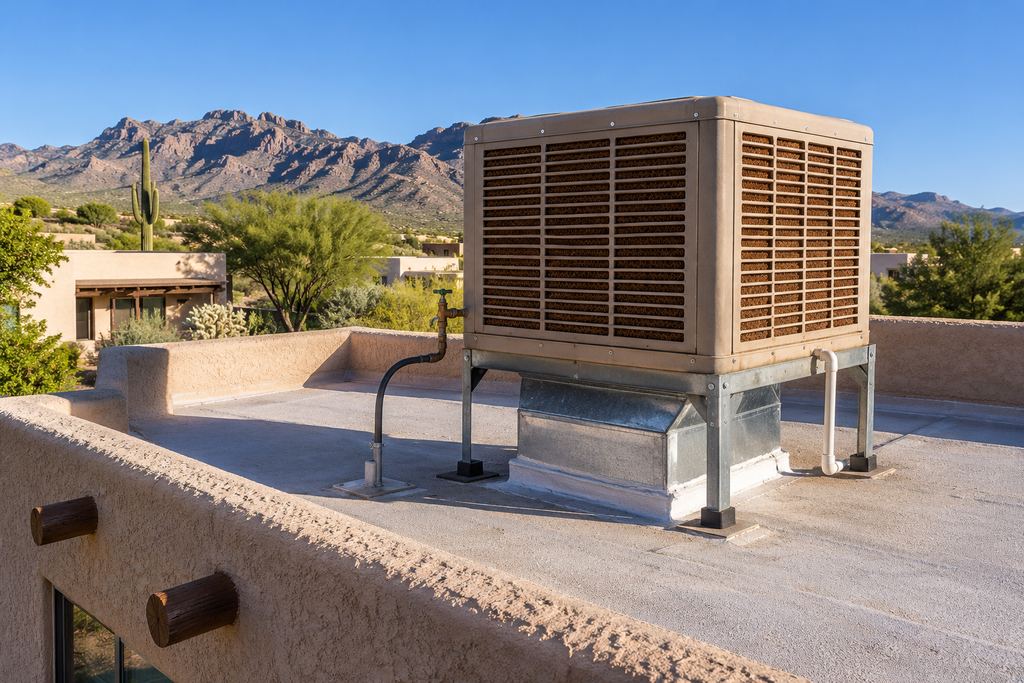
Evaporative Cooler Installation for Dry-Climate Homes
A swamp cooler pulls hot outside air through soaked pads, and the water that evaporates carries heat away with it. Evaporative cooler installation works out well in desert and high-plains towns where the air is dry, and far less well on humid days. Send the details and HVAC Service Near Me passes them to an independent local installer.
- Rooftop down-draft, side-draft and ground-mounted units
- Water supply with backflow protection, bleed line and drain
- Relief air planned so the house actually cools
Tell us the home size, where a cooler would go and whether one was installed before. A local contractor follows up.
Please keep this page open.
- We pair the request with an independent contractor or partner network that works in your ZIP code.
- The contractor gets in touch to go over the details and agree on a visit.
- After checking the system they quote the job, and you choose whether to proceed.
Read how requests are handled.
Online requests are not connected to a contractor network yet. Nothing you typed was sent or saved. Please phone us instead, or try again later.
Call (888) 555-0199First question: is your air dry enough?
Evaporative cooling depends on dry air soaking up water. In Phoenix in June or Reno in July, that works in your favor. When monsoon moisture arrives, or in a humid Gulf Coast summer, the air is already close to saturated and the cooler mostly adds moisture. Many Southwest homes run a cooler for the dry months and lean on refrigerated air when humidity climbs.
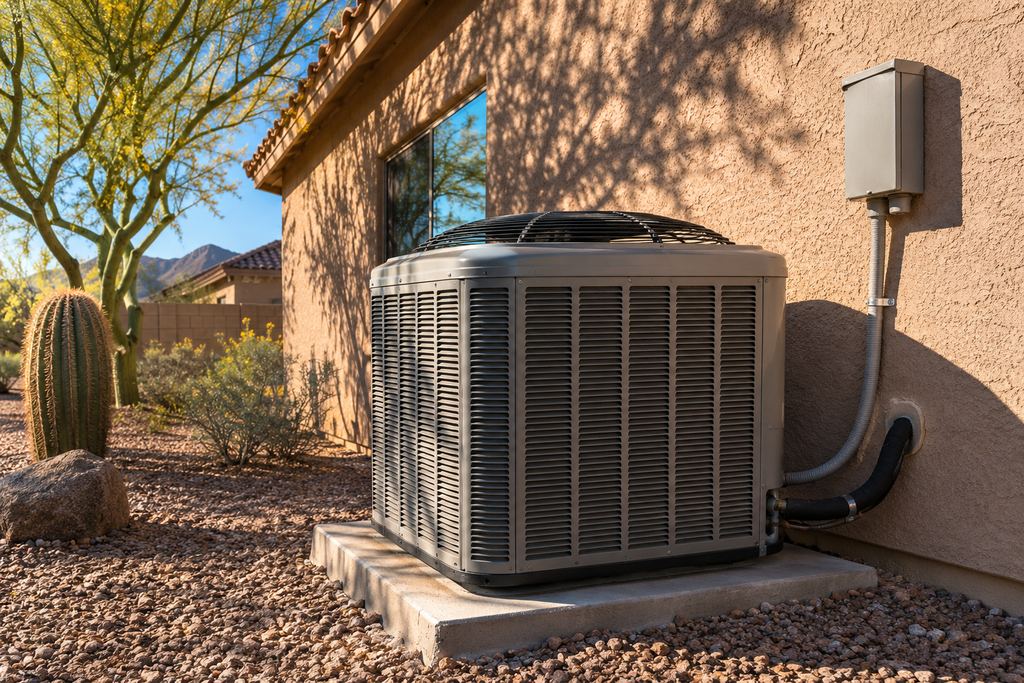
If your summers are humid most of the time, compare a refrigerated option first: our central AC installation and mini split installation pages explain those jobs.
Mounting options
What the installer has to handle
- Capacity in CFM: Coolers are rated by airflow in cubic feet per minute. The installer matches it to the area being cooled and the local climate.
- Water supply: A cold-water line with a shutoff and the backflow protection many jurisdictions require.
- Bleed-off and drain: A small continuous bleed limits mineral buildup; the drain line is routed where it will not stain the roof or wall.
- Electrical: A properly protected circuit for the fan motor and pump, plus a wall control or thermostat.
- Roof or wall opening: Flashing and a sealed curb or frame so the opening does not leak in rain.
- Relief air path: Planned openings or relief vents so the moist air the cooler pushes in has a way out.
Why a new cooler underperforms
Most complaints after a new install come from a short list of setup errors.
| Cause | What it looks like | Fix |
|---|---|---|
| No relief air | Cool air near the vent, warm and muggy elsewhere | Open windows a few inches on the far side of the house or add relief vents |
| Undersized unit | Runs on high all day and never catches up | Installer checks CFM against the area served |
| Pads not fully wet | Dry streaks on the pads, warm supply air | Adjust water distribution, check pump and float |
| Hot ductwork | Air warms on the way to the room | Insulate or reroute exposed duct in the attic |
| Humid weather | Cooling fades on muggy days | Expected physics; use refrigerated cooling on those days |
Owner tasks and installer work
Safe checks you can do
No tools beyond a flashlight. Turn the system off at the thermostat before opening any filter or access door.
- Choose which windows or vents will act as relief openings
- Clear access to the roof stand, wall or pad area
- Learn where the cooler's water shutoff and breaker are
- Run the fan only to dry the pads when you shut down for the day, if the manual suggests it
Leave these to a licensed technician
These involve high voltage, refrigerant or sealed components. Refrigerant work requires EPA Section 608 certification.
- Cutting and flashing roof or wall openings
- Plumbing the water line, backflow device and bleed-off
- Wiring the motor, pump and controls
- Building or setting a roof stand that can carry the unit's weight when full of water
Licensing and permits in cooler country
Evaporative coolers are most common in the dry West: Arizona, Nevada, inland California, New Mexico, Utah and Colorado. In Arizona, contractors are licensed by the Registrar of Contractors; in California, by the Contractors State License Board (CSLB); in Nevada, by the Nevada State Contractors Board. Ask the installer for a license number and check it on the board's site. Roof work, new electrical circuits and water connections may need a permit from your city or county.
HVAC Service Near Me does not install equipment. We pass your request to independent installers, and availability varies by ZIP code and season. Plan ahead for the evaporative cooler maintenance the unit will need each spring and fall.
How a service request works
HVAC Service Near Me is a referral service. We don't send our own technicians. We connect you with independent local contractors.
- Describe the job
Type your ZIP code, pick a service and add a line or two about the problem or project.
- We pass it on
An independent HVAC contractor or partner network that works in your area and does that kind of job receives it.
- You hear back
The contractor gets in touch to check the details and set a time to come out.
- The choice is yours
After a diagnosis the contractor gives you a quote. Price, timing and warranty are agreed directly between the two of you.
Frequently asked questions
Can a swamp cooler run without the pump?
The fan will run, but without the pump wetting the pads, the unit just blows outside air into the house without cooling it. Many controls have a fan-only or vent setting for mild evenings. A pump that has stopped should be checked before the next hot day.
What does it cost to put a swamp cooler on the roof?
It depends on the unit size, whether a roof stand and duct opening already exist, water and electrical runs, and permits. Replacing a cooler on an existing stand is a much smaller job than a first-time roof install. Ask for an itemized written quote.
Does adding ice make an evaporative cooler colder?
In a small portable unit, ice in the tank can lower the air temperature a little for a short time. A whole-house cooler moves far too much air for ice to matter; its performance depends on how dry the outdoor air is.
Do evaporative coolers work in humid areas?
Not well. They cool by evaporation, which slows when the air is already moist. They suit dry climates like the US Southwest and lose much of their effect during humid stretches.
Do I need to open windows with a swamp cooler?
Yes. The cooler pushes outside air in, and that air needs a way out. Without relief air, the house fills with humid air and cooling stops working.
Related guides and services
Plan an evaporative cooler install
Tell us the home size, where a cooler would mount and whether one was installed before. An independent local installer can follow up.
Tell us the home size, where a cooler would go and whether one was installed before. A local contractor follows up.
Please keep this page open.
- We pair the request with an independent contractor or partner network that works in your ZIP code.
- The contractor gets in touch to go over the details and agree on a visit.
- After checking the system they quote the job, and you choose whether to proceed.
Read how requests are handled.
Online requests are not connected to a contractor network yet. Nothing you typed was sent or saved. Please phone us instead, or try again later.
Call (888) 555-0199