AC Repair in Fort Worth When the House Stops Cooling
Need AC repair in Fort Worth? Describe what the system is doing and HVAC Service Near Me forwards the details to an independent HVAC repair contractor who works in your part of Tarrant County. Availability varies by ZIP code and season.
- Five checks you can do safely before the visit
- Fort Worth conditions that wear out outdoor units faster
- How to confirm the technician works under a TDLR license
A short description of the symptom and when it started helps the contractor bring the right parts.
Please keep this page open.
- We pair the request with an independent contractor or partner network that works in your ZIP code.
- The contractor gets in touch to go over the details and agree on a visit.
- After checking the system they quote the job, and you choose whether to proceed.
Read how requests are handled.
Online requests are not connected to a contractor network yet. Nothing you typed was sent or saved. Please phone us instead, or try again later.
Call (888) 555-0199Your five minutes versus the tech's toolbag
Safe checks you can do
No tools beyond a flashlight. Turn the system off at the thermostat before opening any filter or access door.
- Look at the thermostat screen. Mode on Cool, setpoint under the room reading, and swap the batteries if the display is faint
- Pull the return filter. If you cannot see light through it, put in a new one of the same size
- Find the AC breaker in the panel door listing. One reset is fine; a second trip means leave it alone
- Walk around the condenser and rake away mower clippings, cottonwood fluff and any patio furniture crowding it
- Frost on the copper line or the indoor coil means switch from Cool to Fan and give it a few hours
Leave these to a licensed technician
These involve high voltage, refrigerant or sealed components. Refrigerant work requires EPA Section 608 certification.
- Anything behind a service panel, including capacitors and contactors that hold a charge
- Finding a leak and adding refrigerant, legal only for an EPA Section 608 certified tech
- Measuring compressor and motor windings with a meter
- Deep coil cleaning with panels off
- Attic drain pans, float switches and condensate pumps
Smell something hot or electrical, see sparks at the outdoor unit, or watch the breaker drop a second time? Shut the system down at the thermostat, then at the breaker, and keep it off until a pro looks at it. Visible smoke or flames mean everyone goes outside and someone dials 911. A person who becomes confused or faints in a hot house also needs 911 first; the AC can wait.
Faults that show up often in Tarrant County homes
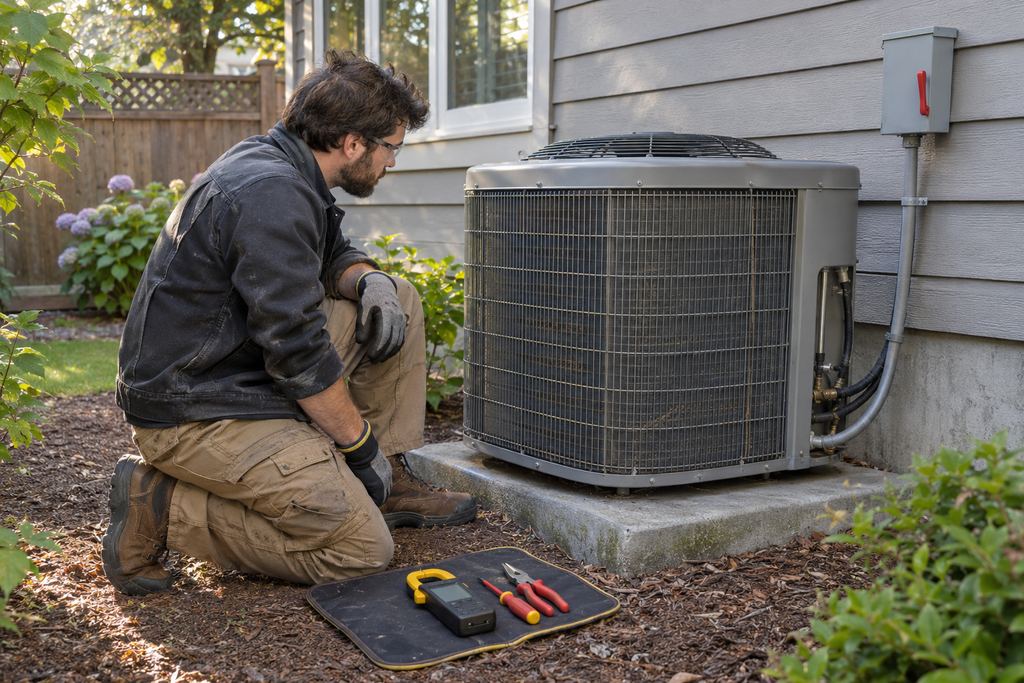
North Texas clay soil shrinks in drought and swells after rain. Over a few seasons that movement can tilt a condenser pad and stress the copper lines where they enter the house, which is one reason a technician checks the pad as well as the unit. Spring hail is the other recurring cause of trouble: bent coil fins look cosmetic but cut heat transfer, and the system runs longer to reach the same temperature.
During long heat spells the grid is part of the picture. ERCOT issues conservation appeals when demand runs high, and households that set the thermostat back and then ask the system to recover several degrees late in the day put the most strain on worn parts. If your unit struggles only at that hour, mention it on the request. It helps the technician narrow the fault.
Common symptoms include warm air from the vents, an outdoor fan that will not spin, water near the air handler and short cycling. Our guide to an AC that runs but does not cool explains what each one usually means.
Repair work a local contractor can quote
- Diagnosis first: Voltage readings, system pressures and a look at airflow, so nobody swaps parts on a guess.
- Start components: Run and start capacitors, the contactor that the thermostat signal closes, and disconnect fuses.
- Motors: The condenser fan on top of the outdoor unit and the blower that pushes air through your vents.
- Refrigerant leaks: Finding the leak with a detector or bubble test, fixing it, and weighing in the charge.
- Drainage: Clogged lines, full secondary pans and tripped float switches.
- Ducts and airflow: Disconnected or crushed attic ducts that leave rooms warm.
Vetting an HVAC company in Fort Worth
A short phone call before the visit saves trouble later.
- Which TDLR license do you work under?
In Texas the company holds the ACR contractor license and its techs are registered with TDLR. The state site has a free lookup. - Is the trip charge applied to the repair?
Some shops fold it into the invoice when you approve the work, others keep it separate. - Can I see the price before you start?
A short written note with the part name, labor and the shop's warranty on its own work is enough. - Do you carry this part on the truck?
During a July rush, blower motors and compressors can be back-ordered for several days.
How a service request works
HVAC Service Near Me is a referral service. We don't send our own technicians. We connect you with independent local contractors.
- Describe the job
Type your ZIP code, pick a service and add a line or two about the problem or project.
- We pass it on
An independent HVAC contractor or partner network that works in your area and does that kind of job receives it.
- You hear back
The contractor gets in touch to check the details and set a time to come out.
- The choice is yours
After a diagnosis the contractor gives you a quote. Price, timing and warranty are agreed directly between the two of you.
Other AC services in Fort Worth
- Fort Worth Emergency Air Conditioner Repair
- Fort Worth AC Installation Planned for North Texas Weather
AC Repair in other Texas cities
Frequently asked questions
What details make the first visit go faster?
Note whether air moves at the vents, whether the fan on the outdoor box turns, any frost or puddles, and the day it began. A phone photo of the sticker on the condenser with model and serial numbers lets the shop check parts in advance.
Why is there ice on my unit in July?
Ice forms when the coil gets colder than 32 degrees F, typically from choked airflow or a refrigerant shortage. Run Fan only until it melts, leave the ice alone rather than scraping it, and have the tech look for a leak and measure airflow.
Hail flattened my condenser fins. Repair or insurance?
Have the tech photograph the coil and write down whether it is just cosmetic fin damage or an actual leak. Your agent can tell you if your deductible makes a claim worth filing.
Do Fort Worth HVAC companies need a state license?
Yes. Contractors who do air conditioning work in Texas are licensed through TDLR, and refrigerant work additionally requires EPA Section 608 certification for the technician handling it.
Related guides and services
Send a Fort Worth repair request
A couple of lines about the symptom plus a callback number is enough. If a shop covering your ZIP code takes the job, it phones you to set a time.
A short description of the symptom and when it started helps the contractor bring the right parts.
Please keep this page open.
- We pair the request with an independent contractor or partner network that works in your ZIP code.
- The contractor gets in touch to go over the details and agree on a visit.
- After checking the system they quote the job, and you choose whether to proceed.
Read how requests are handled.
Online requests are not connected to a contractor network yet. Nothing you typed was sent or saved. Please phone us instead, or try again later.
Call (888) 555-0199