Fort Worth AC Installation Planned for North Texas Weather
Thinking about AC installation in Fort Worth? Tell us about the house and the equipment you have today. HVAC Service Near Me passes the request to an independent local installer who measures the home and prices the job in writing.
- A load calculation for your rooms before anyone names a tonnage
- New split equipment at or above the 14.3 SEER2 floor that applies in Texas
- Clear questions about the TDLR license, the permit and hail exposure
Square footage, the age of your current system and where the indoor unit sits help an installer prepare.
Please keep this page open.
- We pair the request with an independent contractor or partner network that works in your ZIP code.
- The contractor gets in touch to go over the details and agree on a visit.
- After checking the system they quote the job, and you choose whether to proceed.
Read how requests are handled.
Online requests are not connected to a contractor network yet. Nothing you typed was sent or saved. Please phone us instead, or try again later.
Call (888) 555-0199Why a Fort Worth install is planned differently
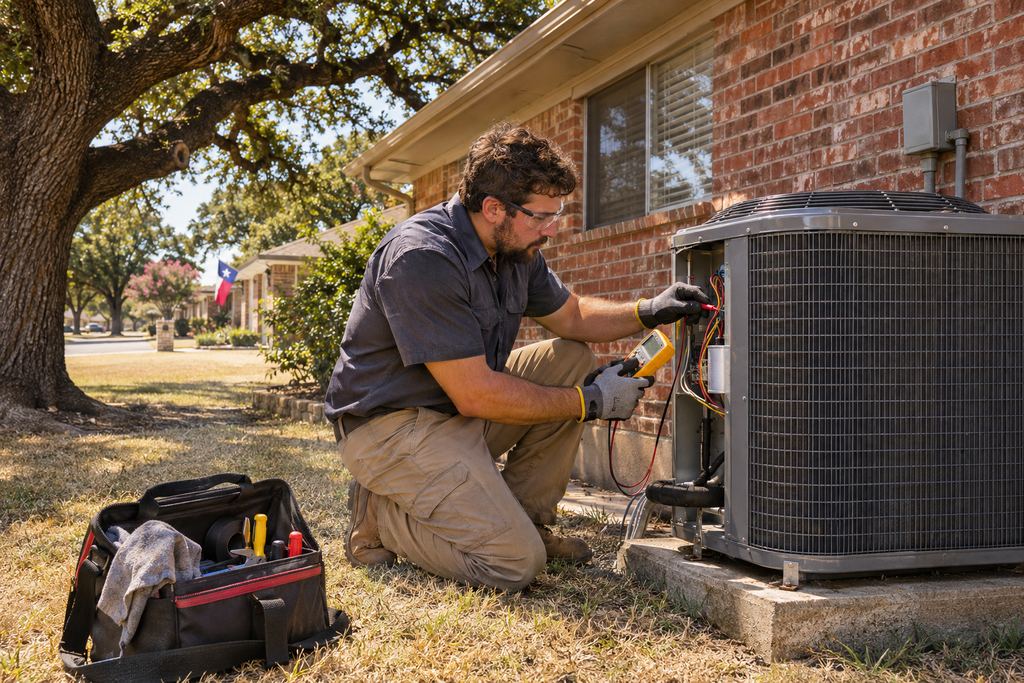
Tarrant County summers bring stretches of afternoons above 100 degrees F, and a system that was barely keeping up in May will fall behind in August. Spring brings the other local risk: hail. Hailstones can flatten the thin aluminum fins on an outdoor coil, and a flattened coil sheds heat poorly for years afterward. Where the condenser sits on the lot matters more here than in many cities.
Winter is short but not harmless. The February 2021 storm held North Texas below freezing for days, and owners who were choosing between a heat pump and a gas furnace pairing still talk about it. A good installer asks how you heat the house now and whether you want backup heat before quoting the cooling side.
For general background on the service itself, see our AC installation overview. This page covers what changes once the job is inside Fort Worth, and the Fort Worth service page lists the other request types.
How the job usually moves from survey to inspection
- Walk-through
The installer looks at the current outdoor unit, the attic or closet that holds the air handler, the ductwork and the electrical supply.
- Load calculation
Room sizes, windows, insulation and orientation go into an ACCA Manual J calculation. West-facing glass in a Fort Worth ranch house can change the result noticeably.
- Written quote
You receive model numbers, the refrigerant type, the scope of duct and electrical work, and the price for each option.
- Permit
Inside city limits, mechanical permits come from the City of Fort Worth Development Services Department. Suburbs in the county run their own offices.
- Installation day
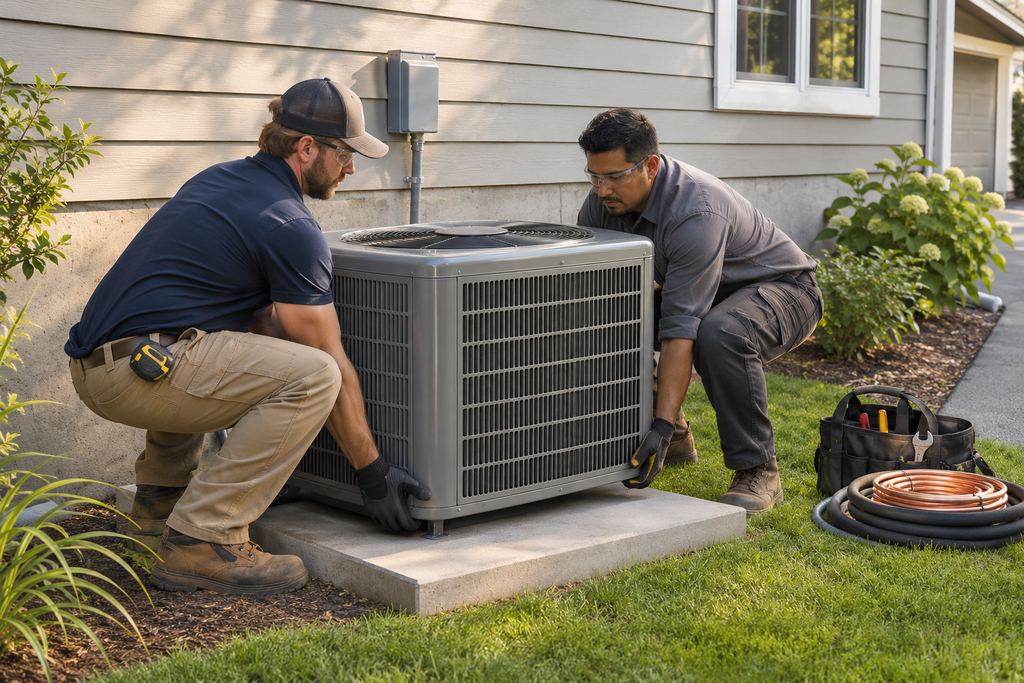
Old equipment and refrigerant are recovered, the new indoor coil and outdoor unit are set, and line sets, drain and controls are connected.
- Startup and inspection
The crew checks charge, airflow and drainage, then the city inspector signs off where a permit was required.
Line items a complete installation quote shows
- Matched equipment: Outdoor unit, indoor coil or air handler, and the furnace or heat strips if heating is included.
- Refrigerant and line set: Which refrigerant the system uses and whether the old copper lines are replaced or reused.
- Pad and placement: A level pad, clearance around the unit and any hail guard the contractor recommends.
- Drainage: Primary drain, secondary pan or float switch for attic air handlers.
- Electrical: Disconnect, breaker size and wiring changes needed for the new equipment.
- Thermostat: Whether a compatible thermostat is part of the price.
- Permit and inspection: Who files the permit and whether the fee is included.
- Warranty registration: Who registers the equipment with the manufacturer and by when.
Systems Fort Worth installers commonly price
What drives the installed price
We do not set or publish prices. These items explain why two Fort Worth quotes differ. National cost background is in the AC installation cost guide.
Tonnage from the load calculation and the SEER2 level you pick.
Leaky or undersized ducts in a hot attic may need repair before new equipment can perform.
A larger breaker, new disconnect or panel work adds cost.
Tight attics, two-story homes and rooftop placements take more labor.
City fees and refrigerant recovery from the old system.
Efficiency and refrigerant rules for new equipment
Since January 1, 2023, new split central air conditioners under 45,000 Btu/h sold in the South region, which includes Texas, must meet at least 14.3 SEER2 under DOE standards. Higher ratings cost more up front and save more over a long cooling season, so ask the installer to show both.
New systems now ship with lower-GWP refrigerants such as R-454B or R-32 under the EPA technology transitions rule. That matters if you plan to keep the old indoor coil, because mixing parts designed for different refrigerants is not a shortcut a careful installer will take. For rebates, check current federal, state and utility incentives through the ENERGY STAR rebate finder before signing.
Questions that separate careful installers from rushed ones
- What is your TDLR license number?
Texas licenses air conditioning and refrigeration contractors through TDLR, and technicians work under a licensed contractor. You can look the number up on the TDLR site. - Will you run a Manual J for this house?
Matching the old unit's size repeats any mistake made twenty years ago. - Who pulls the permit?
The contractor normally files it. Be wary of offers to skip it. - How will you protect the outdoor unit from hail?
Placement, guards and insurance questions are worth settling before the pad is poured. - What happens if the house does not hold temperature after install?
Get the callback terms in writing.
How a service request works
HVAC Service Near Me is a referral service. We don't send our own technicians. We connect you with independent local contractors.
- Describe the job
Type your ZIP code, pick a service and add a line or two about the problem or project.
- We pass it on
An independent HVAC contractor or partner network that works in your area and does that kind of job receives it.
- You hear back
The contractor gets in touch to check the details and set a time to come out.
- The choice is yours
After a diagnosis the contractor gives you a quote. Price, timing and warranty are agreed directly between the two of you.
Other AC services in Fort Worth
AC Installation in other Texas cities
Frequently asked questions
How long does a central AC installation take in Fort Worth?
A straight swap of outdoor unit and coil often fits in one working day. Adding ductwork, moving equipment or changing electrical service can stretch it to two or more days, and the city inspection is scheduled separately.
Do I need a permit to replace my AC inside Fort Worth city limits?
Mechanical permits for HVAC work inside the city are issued by the City of Fort Worth Development Services Department. Your contractor normally applies. Outside the city, check with that municipality.
What SEER2 rating should I ask for?
The legal floor for new split AC under 45,000 Btu/h in Texas is 14.3 SEER2. Ask for a quote at the minimum and one step above it, then compare the price gap against your expected years in the house.
Is a heat pump a sensible choice after the 2021 freeze?
Many Fort Worth homes run heat pumps. The question is backup heat during a multi-day freeze. Ask the installer what auxiliary heat is included and how the system behaves when outdoor temperatures drop well below freezing.
Can the old indoor coil stay?
Rarely. Today's condensers run on newer refrigerants and carry efficiency ratings tested with a specific coil, so installers swap both halves together.
Related guides and services
Start your Fort Worth installation request
Share the home's size, the age of the current system and where the air handler sits. A local installer can follow up to arrange a site visit and a written quote.
Square footage, the age of your current system and where the indoor unit sits help an installer prepare.
Please keep this page open.
- We pair the request with an independent contractor or partner network that works in your ZIP code.
- The contractor gets in touch to go over the details and agree on a visit.
- After checking the system they quote the job, and you choose whether to proceed.
Read how requests are handled.
Online requests are not connected to a contractor network yet. Nothing you typed was sent or saved. Please phone us instead, or try again later.
Call (888) 555-0199