Air Conditioner Installation for Charlotte Homes
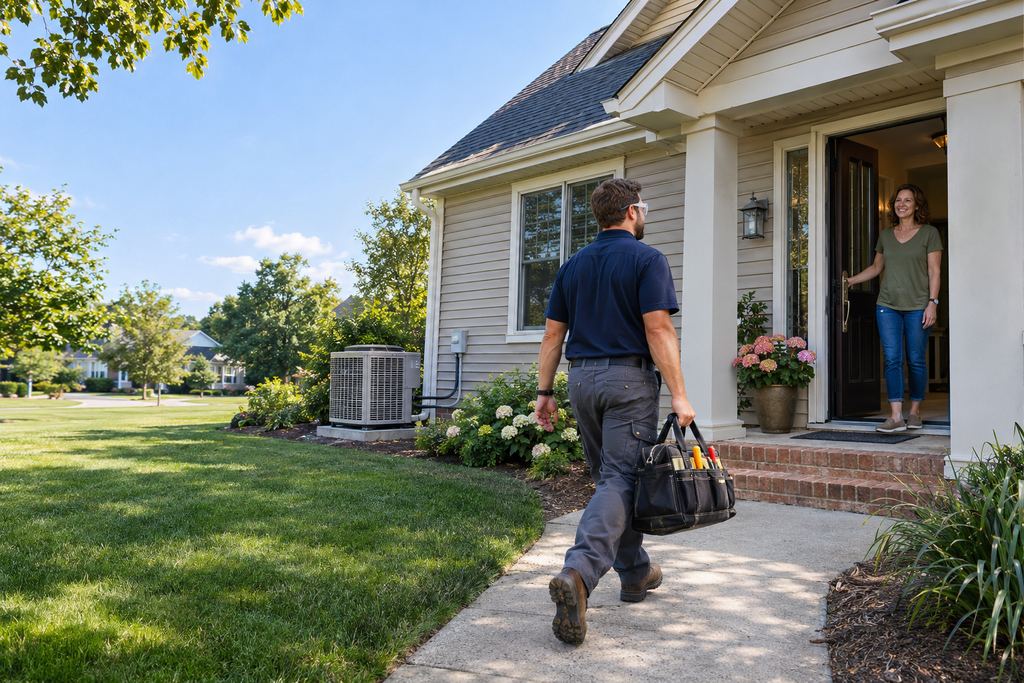
A new air conditioning installation in Charlotte comes down to three decisions: the right capacity for a humid Piedmont summer, the equipment type that suits your ducts and heat source, and an installer who pulls the Mecklenburg County permit. Send a short request and HVAC Service Near Me passes it to an independent local contractor who can quote the job.
- Load calculation before any tonnage is named
- Mechanical permit and inspection through the county
- Written, itemized quote you can compare line by line
Tell us the home's size, whether ducts are in place and what heats the house now.
Please keep this page open.
- We pair the request with an independent contractor or partner network that works in your ZIP code.
- The contractor gets in touch to go over the details and agree on a visit.
- After checking the system they quote the job, and you choose whether to proceed.
Read how requests are handled.
Online requests are not connected to a contractor network yet. Nothing you typed was sent or saved. Please phone us instead, or try again later.
Call (888) 555-0199What makes a Charlotte install different
Summer heat in Charlotte is only half the story. Dew points often sit in the upper 60s and into the 70s from June through August, so a new system spends much of its run time pulling moisture out of the air, not only lowering the temperature. Equipment that cools the house fast but stops before the coil has drained a lot of water leaves rooms feeling clammy at 74 degrees.
Housing adds its own variables. Many newer two-story houses around the city split the load between an attic air handler for the bedrooms and a second unit in the crawl space or basement for the main floor. Other houses run one system with its ducts in a vented crawl space. Each layout changes where the indoor unit goes, how long the refrigerant lines run and how much duct work the installer has to touch.
Paperwork is local too. Mecklenburg County Code Enforcement (LUESA) issues mechanical permits for Charlotte and the towns in the county, and an HVAC equipment installation in North Carolina is permitted work. If you want the general picture of the service first, the AC installation overview covers it without the local detail.
What moves the price of a new system
Contractors set their own prices. These are the items that usually separate one Charlotte quote from another.
A house with sound ducts costs less to fit than one with leaky crawl space runs or no ducts at all. Ask whether the quote includes sealing or replacing sections.
Two-story homes with separate upstairs and downstairs equipment may need two outdoor units, two indoor units and two thermostats, which roughly doubles the hardware.
Some homes heat with gas and others with a heat pump. Pairing a new AC coil with an existing furnace, switching to a heat pump, or doing both changes the equipment list.
New split AC systems in the Southeast must meet at least 14.3 SEER2. Higher ratings and variable-speed compressors cost more up front and can run quieter and drier.
A new disconnect, a breaker change, a fresh condenser pad or a condensate pump in a basement can each appear as separate lines.
Permit fees and the time the installer spends on inspection belong in the quote, not as a surprise on the final invoice.
Sizing for a muggy Piedmont summer
Capacity should come from a room-by-room load calculation, normally ACCA Manual J, that accounts for insulation, window area and direction, air leakage and the local design temperature. A rule of thumb based only on square footage tends to oversize. In Charlotte, an oversized unit short-cycles: it satisfies the thermostat in a few minutes, shuts off and leaves humidity behind.
Ask the contractor what inputs went into the calculation and what capacity it produced for each floor. Equipment with a variable or two-stage compressor can run longer at low output, which helps with moisture removal on mild, sticky days in May and September.
What a complete installation should include
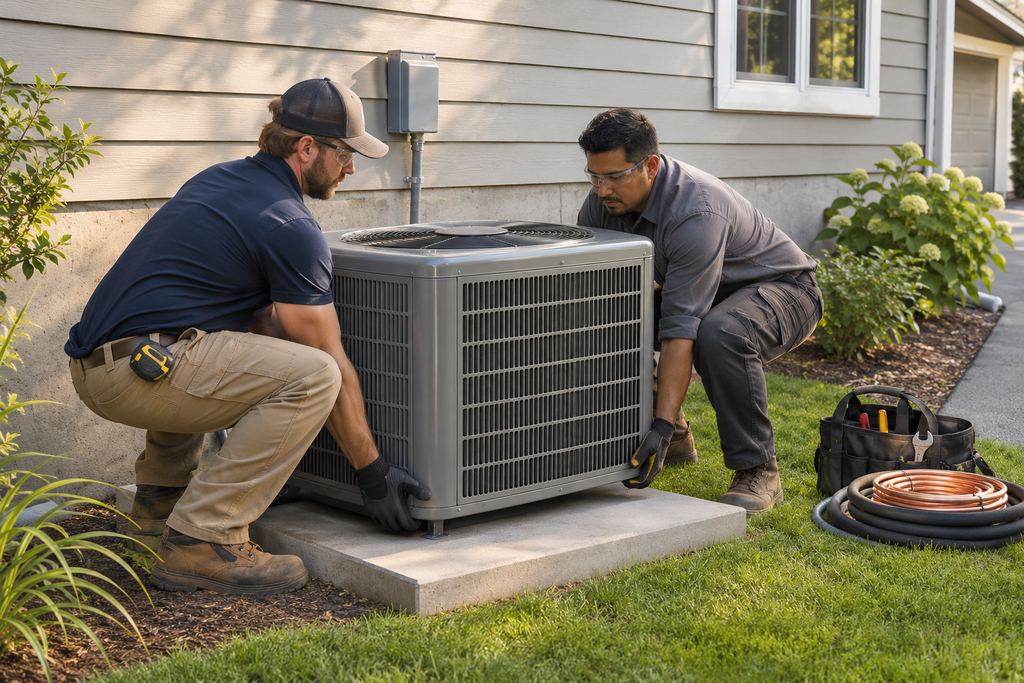
- Load calculation: Written result for the whole house or for each zone.
- Matched equipment: Outdoor unit and indoor coil or air handler listed as a matched pair, using a current refrigerant such as R-454B or R-32.
- Line set and drain: New or verified refrigerant lines, a properly sloped condensate drain and a secondary pan or float switch where the air handler sits above living space.
- Evacuation and charge: Vacuum on the new lines and a charge set to the manufacturer's method by a technician with EPA Section 608 certification.
- Permit and inspection: County mechanical permit pulled by the contractor and an inspection scheduled after the work.
- Startup record: Measured airflow, temperature split and refrigerant readings left with you, plus equipment registration details.
Installing new versus fixing what you have
A full installation is not always the answer. If your current system is under ten years old and the problem is a single failed part, a repair visit in Charlotte may be the sensible first step. Replacement makes more sense when the system uses R-22 (no longer produced), when a compressor or coil fails on an older unit, or when repair bills are stacking up season after season.
If you already know the old equipment is coming out, the Charlotte AC replacement page walks through removal, matching and disposal. This page focuses on homes adding central air for the first time or changing the system type.
How to check a Charlotte installer before you sign
- Can I see your state license number?
Heating and air conditioning contractors in North Carolina are licensed by the State Board of Examiners of Plumbing, Heating and Fire Sprinkler Contractors. You can look the number up at nclicensing.org. - Who pulls the permit?
The licensed contractor should apply for the county mechanical permit and be present or reachable for the inspection. - What insurance do you carry?
Ask for proof of general liability and workers' compensation coverage before anyone works in your attic. - Is the quote itemized?
Equipment model numbers, duct work, electrical, permit and removal should be separate lines so you can compare bids. - Who registers the warranty?
Manufacturer terms often depend on registration within a set period. Ask who handles it and request a copy.
How a service request works
HVAC Service Near Me is a referral service. We don't send our own technicians. We connect you with independent local contractors.
- Describe the job
Type your ZIP code, pick a service and add a line or two about the problem or project.
- We pass it on
An independent HVAC contractor or partner network that works in your area and does that kind of job receives it.
- You hear back
The contractor gets in touch to check the details and set a time to come out.
- The choice is yours
After a diagnosis the contractor gives you a quote. Price, timing and warranty are agreed directly between the two of you.
Other AC services in Charlotte
- AC Tune-Up in Charlotte Before the Heat Arrives
- Charlotte AC Repair Help When the House Won't Cool
- HVAC Replacement in Charlotte and Its Suburbs
AC Installation in other North Carolina cities
Frequently asked questions
How long does a central AC installation take in Charlotte?
A straight swap on existing ducts is often finished in a day. New duct work, a second system or electrical changes can stretch it to several days. The inspection is scheduled separately, so ask the contractor how they coordinate it with the county.
Do I need a permit for a new air conditioner?
Yes. Installing HVAC equipment in North Carolina requires a mechanical permit. In Charlotte and the rest of Mecklenburg County it is issued by county Code Enforcement, and the contractor normally applies for it.
Is a heat pump a reasonable choice here?
Heat pumps handle Charlotte's fairly mild winters well, with backup heat for the coldest nights. Homes with an existing gas furnace often keep it and add an AC coil, or pair the furnace with a heat pump. Ask for both options priced if you are unsure.
What size air conditioner does my house need?
Nobody can say from square footage alone. A Manual J load calculation using your insulation, windows and layout gives the answer. Be wary of a quote that names a tonnage without one.
Our house has radiators and no ducts. Can it still get central air?
Yes, either by adding ducts where attic or crawl space access allows or by installing ductless mini-split heads. A site visit is needed to judge which is practical.
Related guides and services
Get a quote for a new Charlotte system
Tell us the home's size, how it is heated and whether ducts are already in place. A local contractor can then plan the visit and quote the work in writing.
Tell us the home's size, whether ducts are in place and what heats the house now.
Please keep this page open.
- We pair the request with an independent contractor or partner network that works in your ZIP code.
- The contractor gets in touch to go over the details and agree on a visit.
- After checking the system they quote the job, and you choose whether to proceed.
Read how requests are handled.
Online requests are not connected to a contractor network yet. Nothing you typed was sent or saved. Please phone us instead, or try again later.
Call (888) 555-0199