Air Conditioner Installation in Miami
Installing air conditioning in Miami means planning for nearly year-round cooling, heavy humidity and the strictest wind provisions in the Florida Building Code. Tell us whether it is a house or a condo and what you have now, and an independent Miami-Dade installer can contact you about a site visit and quote.
- Central, ductless, packaged and condo wall systems
- Miami-Dade product approvals and permits apply
- Check installer licenses on myfloridalicense.com
House or condo, approximate size, and what you have now (central, window, wall unit or none).
Please keep this page open.
- We pair the request with an independent contractor or partner network that works in your ZIP code.
- The contractor gets in touch to go over the details and agree on a visit.
- After checking the system they quote the job, and you choose whether to proceed.
Read how requests are handled.
Online requests are not connected to a contractor network yet. Nothing you typed was sent or saved. Please phone us instead, or try again later.
Call (888) 555-0199Signs it is time for new equipment
- The system uses R-22: Production ended in 2020, so leak repairs get harder to justify each year.
- Rooms feel cool but sticky: Often a sign of an oversized or worn system that no longer removes moisture well.
- Corroded outdoor coil: Salt air near Biscayne Bay and the beaches eats fins and tubing.
- Repeated repairs on an aging unit: Capacitors, fan motors and leaks every season add up.
- Rising FPL bills with the same use: Efficiency drops as coils foul and parts wear.
- A space with no cooling yet: Converted garages, additions and older homes that relied on window units.
System types that fit Miami buildings
Size for moisture, not only for heat
Too much capacity is a classic Miami mistake. The thermostat gets satisfied within minutes, the compressor stops, and the coil never stays cold long enough to drain moisture out of the room, so you end up with a cool number on the display and clammy sheets. Over time that dampness feeds mildew in closets and on vents. A correctly sized unit runs longer, steadier cycles that dry the air.
Ask for a load calculation such as ACCA Manual J that accounts for windows, shade, insulation and how many people live there. Two-stage and variable-speed equipment can run at low speed for long periods, which helps with moisture. Some owners also add a whole-house dehumidifier; a contractor can tell you whether your home needs one.
Miami-Dade rules: wind, product approvals and permits
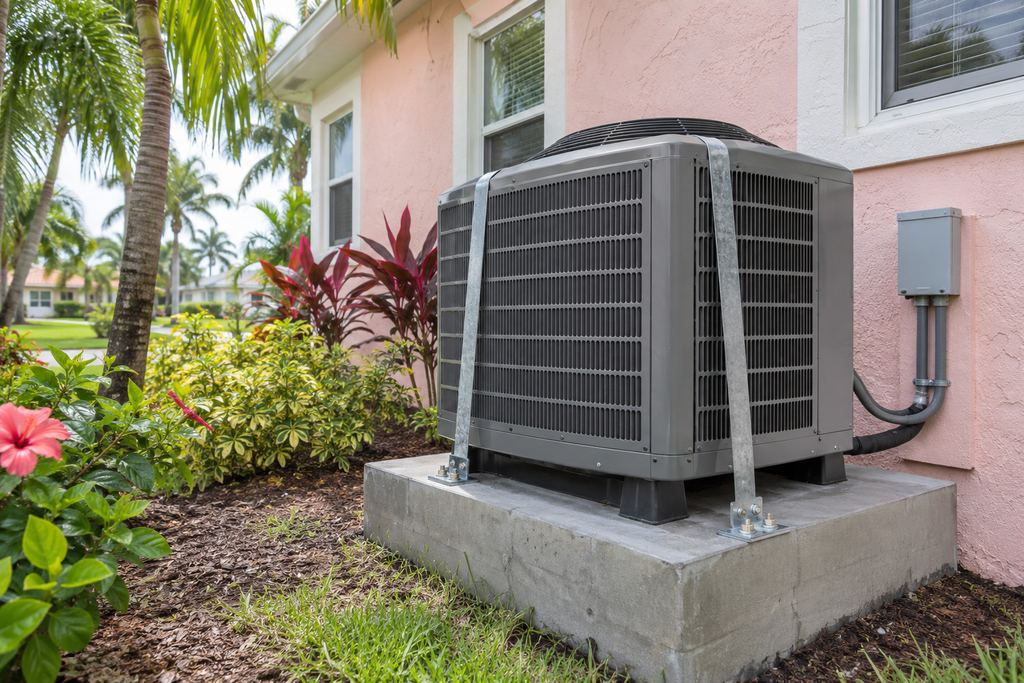
Miami-Dade and Broward make up the High-Velocity Hurricane Zone of the Florida Building Code. Outdoor and rooftop equipment has to be anchored to meet the zone's wind requirements, and some condensers and mounting systems carry Miami-Dade product approvals called Notices of Acceptance, or NOAs. Your installer should know which approvals apply to the equipment and stand being quoted.
A new installation or change-out normally needs a permit and an inspection. The county has dozens of municipalities, and many run their own building departments; Miami-Dade County handles permits in unincorporated areas. In a condo, the association may need to approve the plan, the contractor's insurance and the work hours before a permit is even filed.
Efficiency floor and refrigerants
Florida belongs to the DOE's southeastern region, where any split AC below 45,000 Btu/h has needed a rating of 14.3 SEER2 or better since the start of 2023. Systems built for the EPA's AIM Act transition use A2L refrigerants such as R-454B or R-32, which require installers to follow specific handling and installation procedures. Any technician who handles refrigerant needs EPA Section 608 certification.
FPL serves most of Miami-Dade. Higher-efficiency equipment lowers summer bills, but the payback depends on how long you plan to stay and how much you run the system. The federal 25C tax credit ended for equipment placed in service after December 31, 2025; check the ENERGY STAR rebate finder and FPL for any current programs.
What shapes an installation quote
Prices vary a lot by home and building type. Compare written quotes for the same scope.
Tonnage from the load calculation and the SEER2 rating chosen.
Reuse, repair or replacement, plus sealing in the attic.
HVHZ anchors, stands and NOA-listed components.
High-rise logistics, crane or rooftop work, and condo rules on timing.
Fees differ by municipality. The installation cost section explains common line items.
Questions to ask a Miami installer
- What is your license number?
Confirm it with Florida DBPR at myfloridalicense.com; HVAC licenses come from the CILB. - How did you size the system?
Ask for the load calculation, not just the old unit's tonnage. - Which NOA and anchoring method will you use?
Important for outdoor and roof equipment in the HVHZ. - Who files the permit and schedules the inspection?
Usually the contractor. - What labor warranty do you offer?
Get it in writing, alongside the manufacturer's registration steps.
Repair or replace?
If your current system is fairly new and just stopped cooling, a Miami AC repair visit may be enough. For older or R-22 equipment, the AC replacement in Miami page covers how to compare repair and replacement. National background is on the AC installation page.
How a service request works
HVAC Service Near Me is a referral service. We don't send our own technicians. We connect you with independent local contractors.
- Describe the job
Type your ZIP code, pick a service and add a line or two about the problem or project.
- We pass it on
An independent HVAC contractor or partner network that works in your area and does that kind of job receives it.
- You hear back
The contractor gets in touch to check the details and set a time to come out.
- The choice is yours
After a diagnosis the contractor gives you a quote. Price, timing and warranty are agreed directly between the two of you.
Other AC services in Miami
- 24 Hour and Emergency AC Repair in Miami
- Miami AC Maintenance
- Miami AC Repair for Homes and Condos
- Replacing an Air Conditioner in Miami
AC Installation in other Florida cities
Frequently asked questions
Do I need a permit to install AC in Miami?
Generally yes. A new system or change-out needs a building permit and inspection from your city or, in unincorporated areas, from Miami-Dade County. Your installer usually files it.
What is an NOA and why does it matter?
A Notice of Acceptance is Miami-Dade's product approval for exterior building products. Some condensers and mounting systems carry one, and inspectors in the hurricane zone may check that approved products and anchoring are used.
Can I install a mini-split in my Miami condo?
Often, but the association decides. Expect to submit the equipment, the outdoor unit location and the contractor's insurance for approval first.
Will a bigger AC cool my home better?
Not in Miami. Oversized systems short-cycle and leave humidity behind. A load calculation gives the right size.
Is there a tax credit for a new air conditioner?
The federal 25C credit ended for equipment placed in service after 2025. Look for utility or manufacturer offers instead.
Related guides and services
Plan your installation
Share whether it is a house or condo, the approximate size and the current equipment. An independent installer in Miami-Dade can follow up to schedule an assessment.
House or condo, approximate size, and what you have now (central, window, wall unit or none).
Please keep this page open.
- We pair the request with an independent contractor or partner network that works in your ZIP code.
- The contractor gets in touch to go over the details and agree on a visit.
- After checking the system they quote the job, and you choose whether to proceed.
Read how requests are handled.
Online requests are not connected to a contractor network yet. Nothing you typed was sent or saved. Please phone us instead, or try again later.
Call (888) 555-0199