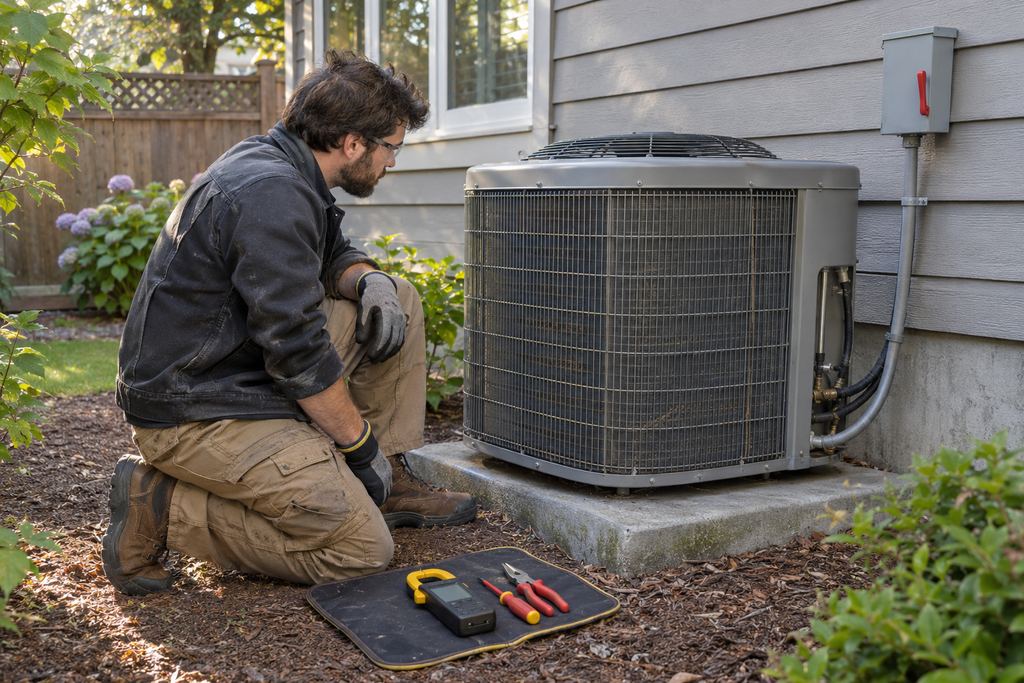
Central Air Conditioner Repair Near You
A central system that quits on a hot afternoon most often has one bad part and a lot of good ones. Use the form for your central air conditioner repair request; HVAC Service Near Me hands it to an independent HVAC contractor serving your ZIP code.
- Split systems, packaged units and heat pumps running in cooling mode
- Three or four owner checks worth doing before anyone drives out
- Plain numbers on when a new system is the smarter spend
What it is doing, how old it is and when it started. A local technician follows up to schedule a diagnostic visit.
Please keep this page open.
- We pair the request with an independent contractor or partner network that works in your ZIP code.
- The contractor gets in touch to go over the details and agree on a visit.
- After checking the system they quote the job, and you choose whether to proceed.
Read how requests are handled.
Online requests are not connected to a contractor network yet. Nothing you typed was sent or saved. Please phone us instead, or try again later.
Call (888) 555-0199Parts that fail most often
A technician pins down the culprit with a multimeter and gauges. Expect the finding to be one of these.
- Capacitor: When this small can weakens or bulges, motors buzz and refuse to spin. Details on capacitor replacement.
- Contactor: The relay that switches the outdoor unit on. Burned or pitted points mean the condenser never gets its 240 volts.
- Outdoor fan or indoor blower: Without the outdoor fan, heat cannot leave and head pressure spikes. Without the blower, the indoor coil ices over.
- Leak in the refrigerant loop: Charge only drops when refrigerant escapes somewhere. A proper job finds the hole and seals it before adding more.
- Drain blockage: Algae plugs the condensate line, the pan fills, the float switch opens, and cooling halts to protect your ceiling.
- Control side: A dead thermostat, a chewed low-voltage wire or a 3-amp fuse on the furnace board can mimic a total failure.
Before the call, and after
Safe checks you can do
No tools beyond a flashlight. Turn the system off at the thermostat before opening any filter or access door.
- Thermostat set to Cool, a few degrees under the room reading, batteries good
- Filter pulled and looked at; a gray, matted one can choke airflow until the coil freezes
- Two breakers checked, one for the condenser and one for the furnace or air handler; a tripped one gets a single reset
- Leaves, grass and clutter cleared from around the outdoor cabinet
- Frost on the copper pipe? Set the system to Fan only and let the ice melt while you wait
Leave these to a licensed technician
These involve high voltage, refrigerant or sealed components. Refrigerant work requires EPA Section 608 certification.
- Removing service panels to test capacitors, relays and boards
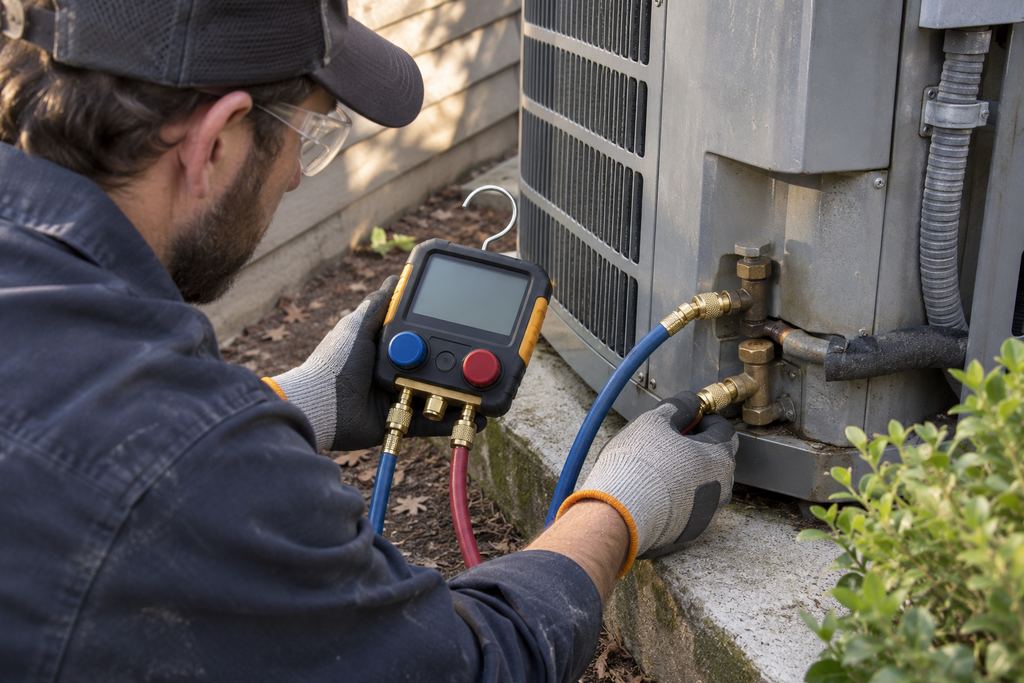
- Gauge work and leak searches; federal rules require EPA Section 608 certification for it
- Swapping motors or compressor components
- Unclogging the drain at the coil and proving the float switch works
- Any breaker that trips again after its one reset
An electrical odor, smoke, crackling or sparks at either unit: shut the system down at the thermostat and leave it for a technician. Flames or smoke filling a room mean get out, then call 911. In extreme heat, watch the people in the house too. Someone who is confused, faints or feels very hot to the touch needs 911 now, well before the AC is fixed.
What sits inside the condenser cabinet
- 1Compressor
Pumps refrigerant through the system. The most expensive part in the outdoor unit. - 2Condenser coil
Releases heat from the refrigerant to outdoor air. - 3Fan and motor
Pulls air across the coil. A failed motor can overheat the compressor. - 4Run capacitor
Helps the compressor and fan motor start and run. A common, lower-cost failure. - 5Contactor
Electrical switch that turns the unit on when the thermostat calls for cooling. - 6Service valves
Where the technician connects gauges to check refrigerant pressures.
Repair or new system?
Ask the technician to price the fix and a replacement during one visit. These patterns tend to hold.
| What you are facing | Where it usually lands |
|---|---|
| Single part failure on equipment younger than about ten years | Fix it |
| The coil has leaked for the second or third season | Get two numbers: a new coil, and a whole new system |
| Older unit that still holds R-22 | New system; production of R-22 stopped in 2020, so every recharge gets harder |
| Dead compressor in a unit well into its teens | New system, most of the time |
| Years of age multiplied by the repair bill tops 5,000. This is an informal screen, and no federal agency or trade body stands behind it; confirm the warranty status, ask for a written diagnosis and compare the repair price after any coverage with a replacement bid before you choose either path. | Consider a new system as well; the 5,000 figure is a rough guide only |
What happens with your request
HVAC Service Near Me works as a referral service. Nobody on our side turns a wrench, and we have no say in what a contractor charges. Your description goes to an independent company or partner network covering your area, and they contact you to set the visit. How quickly that happens varies by ZIP code and by month; the first heat wave of summer is the busiest stretch. If an older adult, an infant or someone with a health condition is in the house, say so in the form.
On the phone, ask three things: the diagnostic charge, whether that charge comes off the repair bill, and whether evening or weekend slots exist. If the house is getting dangerously hot, read emergency AC repair for what to ask an after-hours service.
Equipment brands
Independent technicians tend to service the big central AC names, on furnace-coil splits, air handler setups and packaged units alike. Copy the model and serial off the data plate on the outdoor cabinet and include them; it lets the contractor load the right parts on the truck. We have no affiliation with any manufacturer.
House warm while the system runs? Our AC not cooling page ranks likely causes. A yearly central AC maintenance visit finds a lot of tired capacitors and plugged drains in spring, when nobody is sweating yet.
How a service request works
HVAC Service Near Me is a referral service. We don't send our own technicians. We connect you with independent local contractors.
- Describe the job
Type your ZIP code, pick a service and add a line or two about the problem or project.
- We pass it on
An independent HVAC contractor or partner network that works in your area and does that kind of job receives it.
- You hear back
The contractor gets in touch to check the details and set a time to come out.
- The choice is yours
After a diagnosis the contractor gives you a quote. Price, timing and warranty are agreed directly between the two of you.
Frequently asked questions
What does a central AC fix usually cost?
Anywhere from a modest part plus the trip charge up to a compressor or coil job that approaches the price of new equipment. Diagnosis comes first. The AC repair cost section breaks down what drives each kind of repair.
Which central air brand holds up longest?
Who installed it and how it was sized and maintained matter more than the nameplate. Many brands share compressors and motors from the same suppliers. A brand with a dealer and parts counter in your town can be the easier one to keep alive.
My central air runs, so why is the air coming out warm?
Typical suspects: a clogged filter, ice on the indoor coil, an outdoor fan that stopped, a failed capacitor, or refrigerant lost through a leak. Do the thermostat and filter checks, then book a technician. More on AC blowing warm air.
How often does central air need professional service?
Once a year per ENERGY STAR, preferably in spring, with filter swaps between visits as the owner's manual directs.
Should I keep fixing a 15-year-old system?
For a cheap part, often yes. For a compressor, a coil or a leak that keeps coming back, put the repair bill next to a replacement quote. See central AC replacement for how to weigh them.
Related guides and services
Get your central air looked at
Write down what the system does and when it started. A nearby independent technician can reach out to book a diagnosis.
What it is doing, how old it is and when it started. A local technician follows up to schedule a diagnostic visit.
Please keep this page open.
- We pair the request with an independent contractor or partner network that works in your ZIP code.
- The contractor gets in touch to go over the details and agree on a visit.
- After checking the system they quote the job, and you choose whether to proceed.
Read how requests are handled.
Online requests are not connected to a contractor network yet. Nothing you typed was sent or saved. Please phone us instead, or try again later.
Call (888) 555-0199