Central Air Conditioner Maintenance, Season by Season
Central air conditioner maintenance has two halves. Filters, a clear outdoor unit and an open drain are yours to handle; coil cleaning, electrical checks and refrigerant readings belong to a technician during a yearly visit.
- Owner tasks that need no tools beyond a new filter
- What a technician measures on a tune-up visit
- Signs that call for a repair visit instead of waiting
Tell us the system age and when it was last serviced. A local contractor follows up to book a visit.
Please keep this page open.
- We pair the request with an independent contractor or partner network that works in your ZIP code.
- The contractor gets in touch to go over the details and agree on a visit.
- After checking the system they quote the job, and you choose whether to proceed.
Read how requests are handled.
Online requests are not connected to a contractor network yet. Nothing you typed was sent or saved. Please phone us instead, or try again later.
Call (888) 555-0199Why the yearly visit pays off
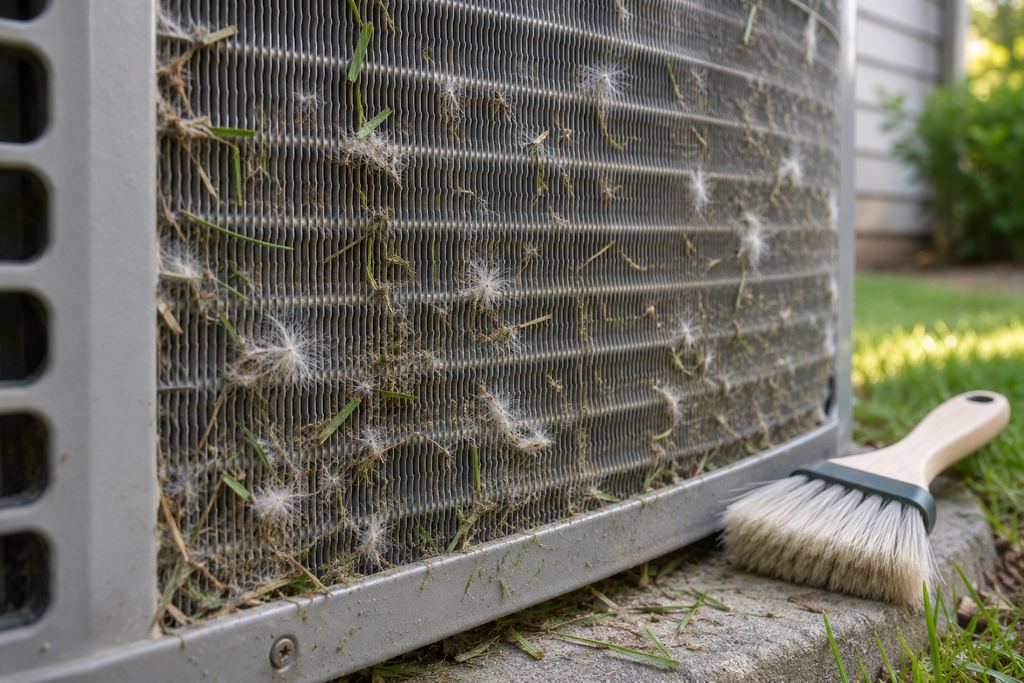
A central system loses ground slowly. Dust mats onto the indoor coil, cottonwood and grass clippings pack the outdoor fins, a capacitor drifts out of range and the drain line grows a slime plug. None of this stops the system on day one. It shows up as longer run times, a higher bill and eventually a no-cool call on the hottest weekend of the year.
ENERGY STAR advises changing filters on schedule and having cooling equipment checked by a professional every year. A spring visit, before the first heat wave, gives a technician the chance to catch a weak part while replacing it is still a planned job. Use the form and HVAC Service Near Me will hand your AC tune-up request to an independent company that works near you.
Your part and the technician's part
Safe checks you can do
No tools beyond a flashlight. Turn the system off at the thermostat before opening any filter or access door.
- Swap the filter as often as the manual says; homes with shedding pets or fresh drywall dust need it sooner
- Keep two feet or so of open space around the condenser and pull leaves, weeds and debris away from the fins
- Make sure supply registers and the return grille are open and not blocked by furniture
- Flush the condensate line only if your manual describes how, for example with water or vinegar at the access tee
- Check thermostat settings and batteries at the start of the season
- A tripped breaker gets one reset. A second trip means stop and book service
Leave these to a licensed technician
These involve high voltage, refrigerant or sealed components. Refrigerant work requires EPA Section 608 certification.
- Washing both coils, the evaporator indoors and the condenser outside
- Testing the capacitor, contactor and electrical connections
- Measuring refrigerant pressures and temperatures, and finding leaks
- Checking blower motor amperage, belt or wheel condition and airflow
- Clearing a blocked drain and testing the float or overflow switch
- Reading how many degrees the air cools as it crosses the coil
Inside a typical tune-up
Request the contractor's checklist on paper; most resemble this one.
- Thermostat and controls: Calibration, wiring and correct cooling cycle.
- Outdoor coil: Fins cleaned and straightened, debris removed from the base.
- Indoor coil and drain: Coil inspected, drain pan and line cleared, safety switch tested.
- Electrical parts: Capacitor values, contactor wear, tight terminals, voltage and amp readings.
- Refrigerant circuit: Readings checked against the charging chart printed for that unit.
- Airflow: Filter, blower, duct connections and the supply and return temperature split.
A simple yearly calendar
| When | Owner | Technician |
|---|---|---|
| Early spring | New filter, clear the yard around the condenser | Pre-season tune-up and cleaning |
| Peak summer | Check the filter monthly, watch for water near the indoor unit | Only if a symptom shows up |
| Fall | Remove leaves and clippings from the outdoor unit | Heating check if you have a furnace or heat pump |
| Winter | Brush heavy snow off the condenser top; skip plastic covers that trap moisture | None needed for a cooling-only system |
Signs that need a repair visit
Maintenance will not fix these. Request service when you see them.
Burning odor, visible smoke, sparks at the outdoor unit or a breaker that will not stay on: switch the thermostat to off and get a technician out. Smoke or flames inside the house? Get everyone outdoors first, then dial 911.
Maintenance and efficiency
A new system's SEER2 rating describes it on day one in a lab. Dirty coils, a clogged filter and leaky ducts all drag real-world performance below that number. Since January 1, 2023, the federal minimum for new split systems has been 13.4 SEER2 in northern states and 14.3 SEER2 in the southern and southwestern region for units under 45,000 Btu/h, and upkeep is what keeps a system close to what it was rated at.
Many manufacturer warranties expect reasonable upkeep, and some can ask for proof of maintenance before approving a parts claim. Keep the invoice from each visit with the model and serial numbers.
Booking a maintenance visit
- Send the details
System age, brand if known and the date of the last service. The form on this page goes to HVAC Service Near Me.
- A contractor follows up
We pass your request to an independent local contractor who confirms timing and what the visit includes.
- The visit
The technician runs the checklist and notes any part that is failing or out of range.
- You decide
Repairs found during the visit should be quoted separately; approve them only after you see the price.
How a service request works
HVAC Service Near Me is a referral service. We don't send our own technicians. We connect you with independent local contractors.
- Describe the job
Type your ZIP code, pick a service and add a line or two about the problem or project.
- We pass it on
An independent HVAC contractor or partner network that works in your area and does that kind of job receives it.
- You hear back
The contractor gets in touch to check the details and set a time to come out.
- The choice is yours
After a diagnosis the contractor gives you a quote. Price, timing and warranty are agreed directly between the two of you.
Frequently asked questions
Is 15 years a realistic life for central air?
That figure shows up in many industry estimates, and plenty of systems land near it. Salt spray near the coast, long cooling seasons, skipped filters and an oversized unit pull it down. Yearly service and correct sizing push the other way.
Why does the AC wait a few minutes before turning back on?
That pause is the three minute rule. After a compressor stops, it should wait a few minutes before restarting so the high and low pressure sides can equalize. Most thermostats enforce the delay on their own, so a short pause after you change the setting is normal.
What is the $5,000 AC rule?
It is a shortcut for repair or replace choices: multiply the system's age by the repair quote, and if the total passes 5,000, think about replacement. Treat it as a conversation starter, nothing more. When the math points toward a new unit, read our central AC replacement page.
How much should an AC maintenance visit cost?
Prices depend on your region, the season and whether the visit is a one-time call or part of a yearly plan. Ask what is included in writing and compare it with the checklist above. Our AC tune-up cost section lists what changes the price.
Can I skip a year if the system seems fine?
You can, and many systems survive it. The risk is that a weak capacitor or a dirty coil goes unnoticed until it fails in peak season, when repair schedules are longest. If you skip the visit, at least keep up with filters and the outdoor unit.
Do I need maintenance if I have a repair coming?
If the system is already failing, request a central AC repair visit instead. A technician will diagnose the fault first; cleaning and checks can follow once it runs.
Related guides and services
Book a central AC checkup
Tell us how old the equipment is and the date of its last checkup. A nearby independent contractor can reach out to set a time.
Tell us the system age and when it was last serviced. A local contractor follows up to book a visit.
Please keep this page open.
- We pair the request with an independent contractor or partner network that works in your ZIP code.
- The contractor gets in touch to go over the details and agree on a visit.
- After checking the system they quote the job, and you choose whether to proceed.
Read how requests are handled.
Online requests are not connected to a contractor network yet. Nothing you typed was sent or saved. Please phone us instead, or try again later.
Call (888) 555-0199