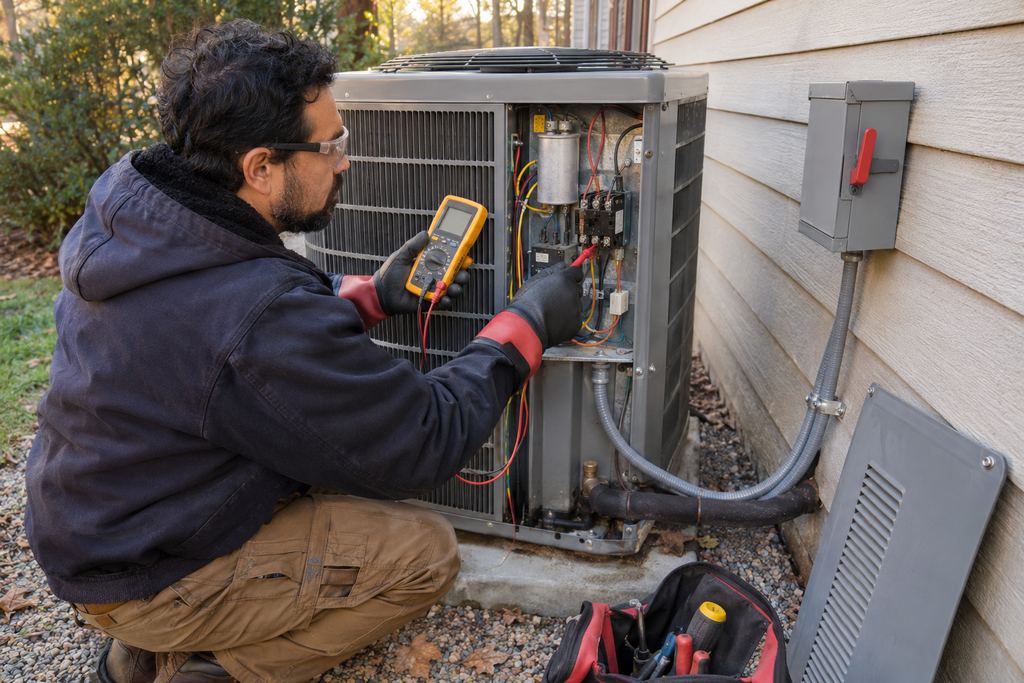
Air Conditioner Fuse Replacement and What Causes It
A central air conditioner usually has fuses in two places: cartridge fuses in the disconnect box beside the outdoor unit, and a tiny blade fuse guarding the 24-volt circuit on the furnace or air handler board. Air conditioner fuse replacement is quick once the cause is known, but a fuse that blew once tends to blow again if nobody finds out why.
- A blown fuse is a symptom; something drew too much current
- The outdoor disconnect stays live on its supply side even with the fuse block pulled
- A technician sizes the fuse from the unit's nameplate and tests the circuit
Tell us what stopped working. A local contractor confirms the cause before quoting.
Please keep this page open.
- We pair the request with an independent contractor or partner network that works in your ZIP code.
- The contractor gets in touch to go over the details and agree on a visit.
- After checking the system they quote the job, and you choose whether to proceed.
Read how requests are handled.
Online requests are not connected to a contractor network yet. Nothing you typed was sent or saved. Please phone us instead, or try again later.
Call (888) 555-0199Two fuses, two kinds of failure
How a blown fuse shows up
- Outdoor unit dead, indoor blower running: Points to the disconnect fuses, the contactor or the capacitor.
- Thermostat blank with fresh batteries: A blown low-voltage fuse can cut power to the thermostat on hardwired models.
- System dies right after a storm: Surges and brownouts can take out fuses and boards.
- Fuse blows again soon after replacement: A short or a failing motor or compressor is drawing too much current.
- Burnt smell near the unit: Shut the system down and call for service.
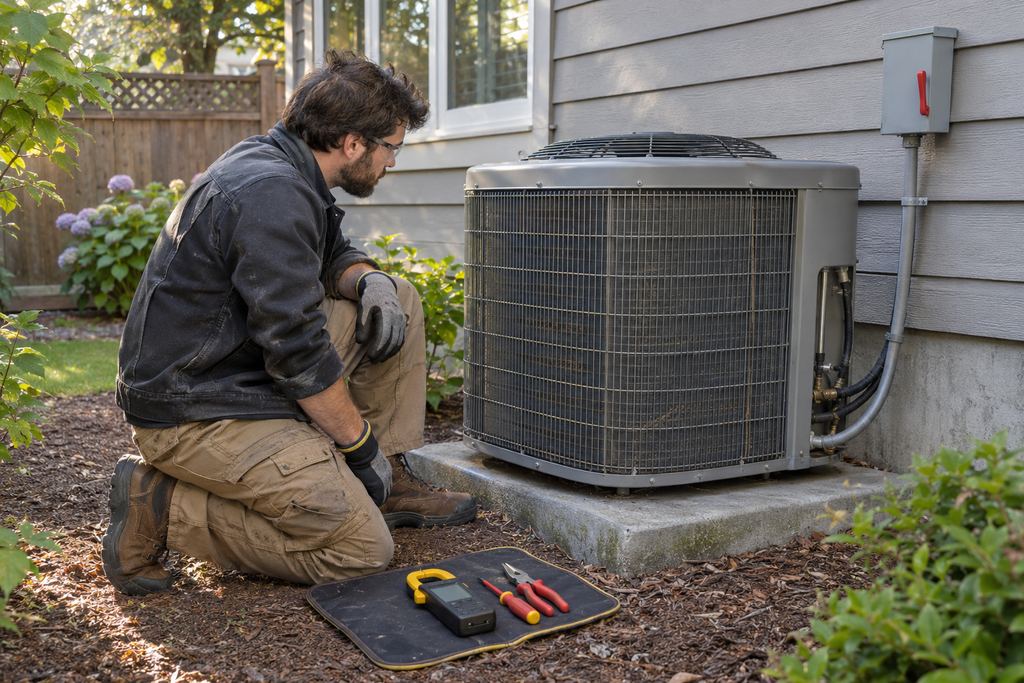
The supply side of the outdoor disconnect stays energized even when the fuse block is pulled. Line voltage there can kill. Sparks, a scorched odor or a breaker that keeps tripping mean the system stays off: thermostat first, then the breaker, then a phone call to a repair company. Smoke or fire means getting everyone outside and dialing 911.
Owner checks and technician work
Safe checks you can do
No tools beyond a flashlight. Turn the system off at the thermostat before opening any filter or access door.
- Confirm the thermostat mode reads Cool with a target a few degrees under the room
- Fit new thermostat batteries if the screen is faint
- Scan the main panel; a tripped AC or furnace breaker gets one reset, no more
- Find the light-style switch near the indoor unit and make sure nobody flipped it off
- Rake leaves and clippings back from the condenser
Leave these to a licensed technician
These involve high voltage, refrigerant or sealed components. Refrigerant work requires EPA Section 608 certification.
- Opening the disconnect and testing the fuses
- Matching fuse type and size to the nameplate
- Finding the short in thermostat wiring that blew a board fuse
- Checking start components and measuring how many amps the compressor pulls
- Repairing damaged wiring
Why AC fuses blow
Fuses open when current runs higher than they are rated for. In the outdoor circuit, the common causes are a weak capacitor that makes the compressor struggle to start, a failing fan motor, a burned contactor, a compressor drawing high amps, or loose and corroded connections. Undersized fuses installed by a previous owner also blow under normal starts.
The low-voltage fuse on the control board blows from a short in the thermostat wire. Lawn equipment cutting the cable to the outdoor unit, a wire rubbing on sheet metal or a mistake during a thermostat swap are frequent culprits.
Every condenser has a data label stating the largest overcurrent device allowed. A technician uses it to pick the right replacement. A larger fuse than listed is not a fix; it removes protection. If the breaker in your panel trips rather than a fuse, see AC tripping the breaker.
What the repair bill depends on
Fuses are inexpensive. The bill follows the diagnosis. Ask for a written quote.
Most of a simple fuse job is the visit and testing time.
A capacitor, contactor or fan motor repair adds parts and labor.
Cut or shorted thermostat wire may need a new run to the outdoor unit.
After-hours and peak-season calls often carry higher rates.
How a service request works
HVAC Service Near Me is a referral service. We don't send our own technicians. We connect you with independent local contractors.
- Describe the job
Type your ZIP code, pick a service and add a line or two about the problem or project.
- We pass it on
An independent HVAC contractor or partner network that works in your area and does that kind of job receives it.
- You hear back
The contractor gets in touch to check the details and set a time to come out.
- The choice is yours
After a diagnosis the contractor gives you a quote. Price, timing and warranty are agreed directly between the two of you.
Frequently asked questions
How can I tell if my AC blew a fuse?
Air moving indoors with a quiet condenser outside, or a thermostat screen that suddenly goes dark, are typical clues. Only a technician should confirm it, because testing the disconnect means working near live voltage.
How much does it cost to replace an AC fuse?
Fuses cost little, which leaves the total to the service call and whatever repair the cause requires. Ask for a written quote that names the cause.
What kind of fuse does an AC unit need?
The condenser label gives the top rating allowed, and the disconnect takes the matching cartridge type. Control boards use a small low-voltage fuse marked on the board. A technician matches both.
Can I replace a blown AC fuse myself?
We do not recommend it. The disconnect stays live on the supply side, and a fuse that blew usually has a cause that needs testing. Replacing it without a fix can damage the compressor or start a fire.
My AC stopped after a power outage. Is it a fuse?
It can be, but many systems simply need a few minutes or a breaker reset. Our page on an AC that will not restart after an outage walks through it.
Related guides and services
Request help with a blown fuse
Tell us what stopped working and whether the outdoor unit runs. A local contractor can follow up to find the cause and quote the repair before replacing parts.
Tell us what stopped working. A local contractor confirms the cause before quoting.
Please keep this page open.
- We pair the request with an independent contractor or partner network that works in your ZIP code.
- The contractor gets in touch to go over the details and agree on a visit.
- After checking the system they quote the job, and you choose whether to proceed.
Read how requests are handled.
Online requests are not connected to a contractor network yet. Nothing you typed was sent or saved. Please phone us instead, or try again later.
Call (888) 555-0199