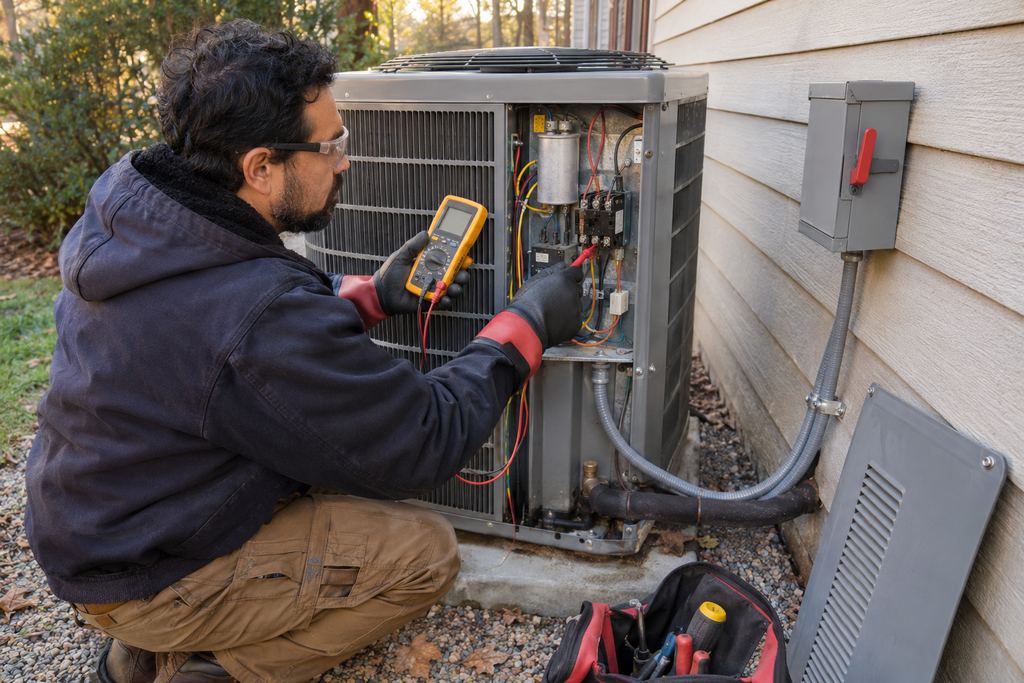
AC Not Working After a Power Outage: How to Restart It
When the AC is not working after a power outage, the system is often fine and just needs a clean restart. Sometimes, though, the surge or brownout around the outage damaged a capacitor, a control board or a motor, and that needs a technician.
Turn the thermostat to Off, then switch off the AC breakers for the indoor and outdoor units. Wait about 30 minutes for power to settle, switch the breakers back on, then set the thermostat to Cool. Allow five minutes for the built-in restart delay. If the thermostat lost its settings, re-enter them. If a breaker trips again, the outdoor unit hums without spinning, or you smell burning, leave the system off and call for service.
What are you seeing now that power is back?
- Thermostat blank: Batteries, a tripped breaker for the air handler, or a blown low voltage fuse from the surge.
- Thermostat on, nothing runs: A tripped breaker, the thermostat reset to Off or Heat, or a lockout still timing out.
- Indoor fan runs, outside unit silent: Outdoor breaker tripped, or a capacitor or contactor damaged by the surge.
- Outdoor unit hums but the fan does not turn: Likely a failed capacitor. Turn the system off.
- AC runs but air is warm: The compressor may not be running. See AC blowing warm air.
- Burning smell or breaker trips again: Turn off and leave it off. Call a technician. For smoke, leave and call 911.
Safe restart after an outage
- Confirm the outage is over
Wait until power has been stable for a while. Flickering power or repeated short outages can damage equipment.
- Thermostat to Off
This stops the system from trying to start the moment power returns.
- Breakers off
Switch off the breakers labeled for the AC, furnace or air handler.
- Wait about 30 minutes
Gives the grid time to settle so the equipment does not restart into a dip or spike.
- Breakers on
Switch them back on. If one trips immediately, leave it off and call for service.
- Thermostat to Cool
Check mode, setpoint and schedule. Then wait about five minutes for the compressor delay.
- Watch and listen
Both the indoor blower and the outdoor fan should run, and the air should cool within a few minutes.
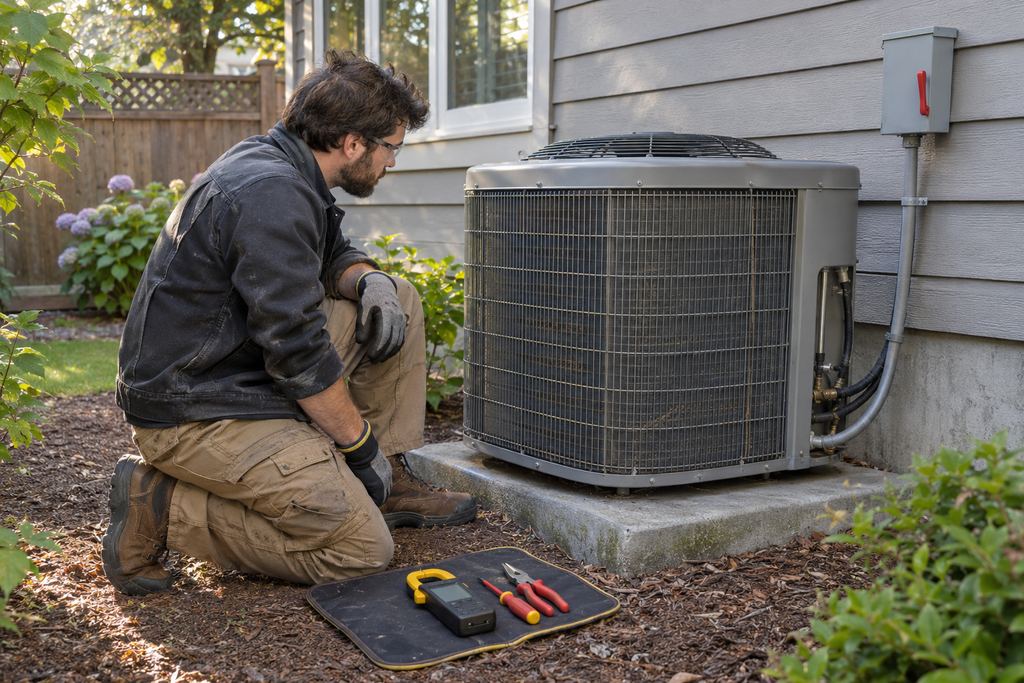
Why the AC may not come back
Thermostat lost its settings
Some thermostats return to factory defaults, an Off mode or a heating schedule after an outage. Smart thermostats may need to reconnect to Wi-Fi before they follow a schedule.
Tripped breakers
Surges and sudden restarts can trip AC breakers. One reset is fine. Repeated trips mean a fault; see AC tripping breaker.
Restart delay
Many thermostats and outdoor controls keep the compressor off for roughly three to five minutes after power returns or a cycle ends, so pressures can equalize. Some newer systems run longer startup routines.
Surge damage
Power surges and brownouts can damage capacitors, control boards and motors. A failed capacitor makes the outdoor unit hum without starting; a damaged board can leave the thermostat blank or the system unresponsive. These parts need a technician; see capacitor replacement.
Something else entirely
If the system does not start and nothing above fits, the problem may not be related to the outage. The AC not turning on guide covers the full set of no-start causes.
Reset tips by system type
What you can do vs. what needs a technician
Safe checks you can do
No tools beyond a flashlight. Turn the system off at the thermostat before opening any filter or access door.
- Turning the thermostat off and back on, and re-entering settings.
- Resetting AC breakers once.
- Replacing thermostat batteries.
- Using the reset button on a window or portable unit's plug.
- Checking for an obvious blockage around the outdoor unit after a storm.
Leave these to a licensed technician
These involve high voltage, refrigerant or sealed components. Refrigerant work requires EPA Section 608 certification.
- Testing capacitors, contactors and control boards for surge damage.
- Replacing a blown control fuse or transformer.
- Finding why a breaker keeps tripping.
- Diagnosing a compressor that will not start.
Protecting the system next time
- When an outage starts, turn the thermostat to Off so the system does not slam on when power returns.
- Ask an electrician or HVAC contractor about surge protection for the outdoor unit or the whole house.
- Keep a spare set of thermostat batteries.
- A yearly tune-up that tests capacitors can catch weak parts before a surge finishes them off.
Frequently asked questions
Does the AC work during a power outage?
Not without electricity. Running central air from a generator takes a unit sized for the load and a transfer switch installed by an electrician. For a long outage, plan to stay somewhere cool.
How long should I wait before turning the AC back on?
Many people wait about 30 minutes after power is stable, with breakers off and the thermostat off, then restart. After switching on, expect a three to five minute compressor delay on many systems.
Why does my AC stop and then start again after an outage?
Restart timers, a thermostat rebooting, or a smart thermostat reconnecting can make it start and stop at first. If it keeps cycling or shuts down repeatedly, see AC keeps shutting off.
Should I turn the AC off if it is not cooling after the power returns?
If the outdoor unit hums without its fan turning, a breaker trips, or there is a burning smell, yes. Leave it off and call a technician. Running it can damage the compressor.
Can a power outage damage my AC?
The outage itself usually does not, but surges and brownouts around it can damage capacitors, control boards and motors.
Related guides and services
Get help after the outage
Tell us what the thermostat and the outdoor unit are doing since power came back. A local HVAC contractor can contact you about a visit. Availability varies by ZIP code and season.
Tell us what happened when the power came back and what the AC does now. A local contractor can follow up.
Please keep this page open.
- We pair the request with an independent contractor or partner network that works in your ZIP code.
- The contractor gets in touch to go over the details and agree on a visit.
- After checking the system they quote the job, and you choose whether to proceed.
Read how requests are handled.
Online requests are not connected to a contractor network yet. Nothing you typed was sent or saved. Please phone us instead, or try again later.
Call (888) 555-0199