High Static Pressure in HVAC Systems Explained
Static pressure is the resistance your blower pushes against as it moves air through filters, coils and ducts. High static pressure in an HVAC system means that resistance is above what the equipment was built for, and the result is less air, more noise and harder working parts.
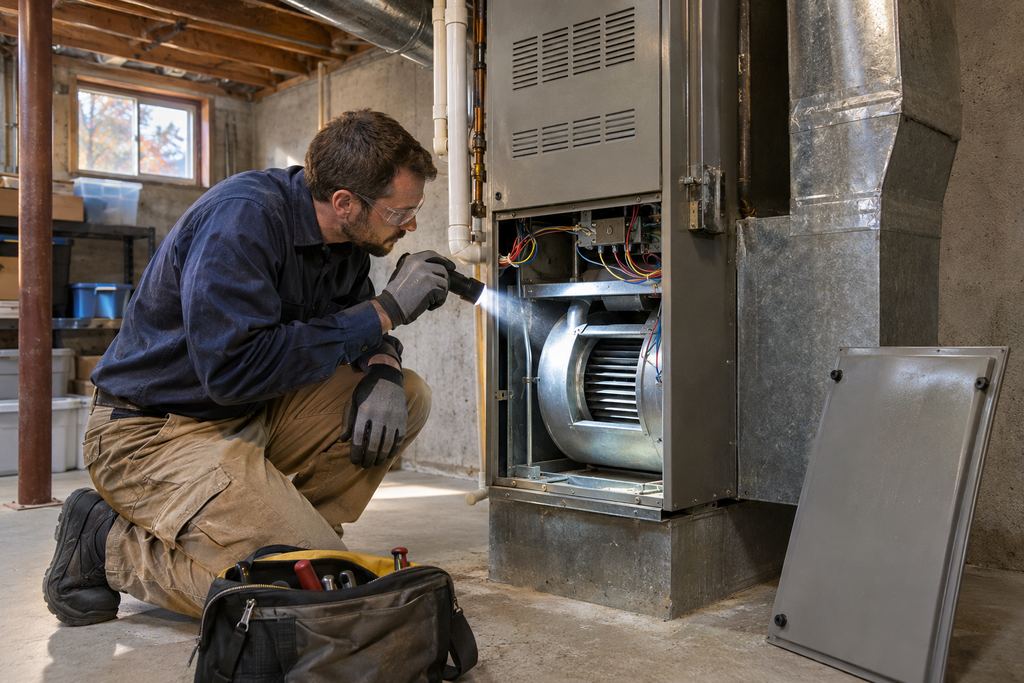
A technician measures total external static pressure with a manometer at the supply and return sides of the air handler, in inches of water column. Many standard residential furnaces and air handlers are rated for a maximum around 0.5 in. w.c., though the true limit is on each unit's data plate. Readings above the rating usually come from restrictive filters, undersized or crushed return ducts, a dirty coil, or closed registers. Fixes range from a different filter to adding return air.
What the number means
Think of the blower as a fan trying to breathe through a straw. The narrower the straw, the harder it works and the less air comes out. Static pressure puts a number on that squeeze. It is read in inches of water column, abbreviated in. w.c. or "WC, which describes how high the pressure would push a column of water.
Total external static pressure, or TESP, adds the pressure on the return side of the blower to the pressure on the supply side. The manufacturer publishes a maximum for each model, and a blower table that shows how much air it moves at each pressure. When TESP climbs above that maximum, airflow falls below what the coil and furnace need.
Reading a static pressure result
Ratings differ by model. Compare the measured number with the data plate or installation manual, not with a general rule.
| Measured TESP vs. rated maximum | What it usually means |
|---|---|
| Well below the rating | Ducts and filter allow good airflow. Check that airflow is still enough for the system size. |
| Near the rating | Working, but little margin. A dirty filter or new filter type can push it over. |
| Above the rating | Airflow is restricted. Expect lower capacity, noise and extra wear. Find the restriction. |
| Far above, for example 0.8 in. w.c. on a 0.5 in. rated unit | A significant restriction, often an undersized return or a very restrictive filter. Plan duct changes. |
Signs of high static pressure
- Whistling at grilles or the filter slot: Air forced through small openings at high speed.
- Weak airflow in far rooms: Rooms at the end of long runs get little air.
- Blower sounds loud or strained: Variable speed motors ramp up trying to hit their airflow target.
- Frozen coil in summer: Low airflow lets the evaporator get too cold. See AC freezing up.
- Furnace overheating in winter: Limit switches trip and the burner shuts down early.
- Uneven temperatures and poor cooling: The system runs but the house lags. Compare with AC not cooling.
What causes high static pressure
High efficiency 1-inch filters can add a lot of resistance. A deeper media cabinet often does the same job with less drag.
One small return for a whole house is a common problem. The return side often causes more pressure than the supply.
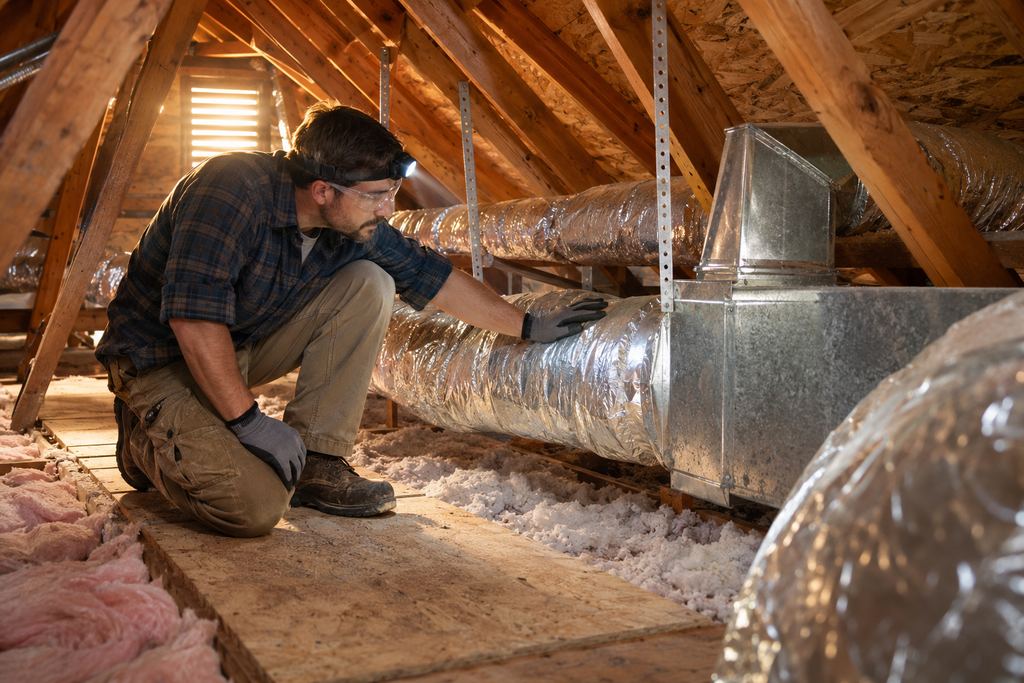
Long, sagging or pinched flex runs add resistance fast.
Dust on wet fins narrows the air path. See evaporator coil cleaning.
Closing vents in a ducted system does not save energy and raises duct pressure.
A new, bigger AC on old ductwork can need more air than the ducts can carry.
What you can do and what a technician measures
Safe checks you can do
No tools beyond a flashlight. Turn the system off at the thermostat before opening any filter or access door.
- Replace the filter, and check that its size and type match what the system calls for.
- Open closed supply registers and clear furniture from return grilles.
- Look in accessible attics or basements for flex duct that is crushed or disconnected, without moving insulation near wiring.
- Write down rooms that are hot, noisy or weak to share with the technician.
Leave these to a licensed technician
These involve high voltage, refrigerant or sealed components. Refrigerant work requires EPA Section 608 certification.
- Measuring TESP and pressure drop across the filter and coil with a manometer.
- Checking blower speed settings against the blower table.
- Cleaning the coil or blower wheel.
- Duct testing, resizing returns and replacing restrictive fittings. See air duct testing and air duct repair.
Fixes, from simple to structural
Filter changes
Switching from a thin, very fine filter to a deeper 4 or 5 inch media filter in a proper cabinet can cut filter resistance while keeping filtration. This is often the cheapest improvement.
Return air
Adding a second return, enlarging the return grille, or replacing a narrow return duct gives the blower room to breathe. Many high readings trace to the return side.
Supply fixes
Straightening and shortening flex runs, replacing crushed sections and sealing leaks help. Sealing ducts is mostly about energy loss and comfort; it usually does not raise static pressure much on its own.
Equipment and sizing
If the system is larger than the ducts can serve, the fix is either duct work or a correctly sized unit. Proper sizing starts with a load calculation such as ACCA Manual J, and duct design follows. A worn blower motor is a separate issue; see blower motor replacement.
Repair now or plan for replacement
On a system with years of life left, fix the restriction now: filter, return air and duct changes protect the blower and coil. If the equipment is near the end of its life, put the duct work into the replacement project so the new unit is sized for the house and the ducts are sized for the new unit. Ask for static pressure readings before and after any job so you can see the change.
Frequently asked questions
How do you fix high static pressure in an HVAC system?
Find the biggest restriction first. Common fixes are a less restrictive or deeper filter, more return air, repaired flex duct, a clean coil and correct blower settings.
What causes high static pressure?
Restrictive filters, undersized returns, crushed ducts, dirty coils, closed registers and equipment that needs more air than the ducts can deliver.
Is 0.8 static pressure good?
On a unit rated for about 0.5 in. w.c., 0.8 is well above the limit and means airflow is restricted. Some equipment is rated higher, so compare with the data plate.
Is higher static pressure better?
No. Higher pressure means more resistance and less air. You want a reading within the manufacturer's rating with the airflow the system needs.
Does closing vents help with high static?
No. Closing supply registers raises pressure in the ducts and can make the problem worse.
Related guides and services
Have your airflow measured
Tell us what you notice at the vents and the age of your system. A local contractor can contact you about a static pressure and duct evaluation. Availability varies by ZIP code and season.
Share the reading if you have one, plus what you notice at the vents. A local contractor can follow up about a duct evaluation.
Please keep this page open.
- We pair the request with an independent contractor or partner network that works in your ZIP code.
- The contractor gets in touch to go over the details and agree on a visit.
- After checking the system they quote the job, and you choose whether to proceed.
Read how requests are handled.
Online requests are not connected to a contractor network yet. Nothing you typed was sent or saved. Please phone us instead, or try again later.
Call (888) 555-0199