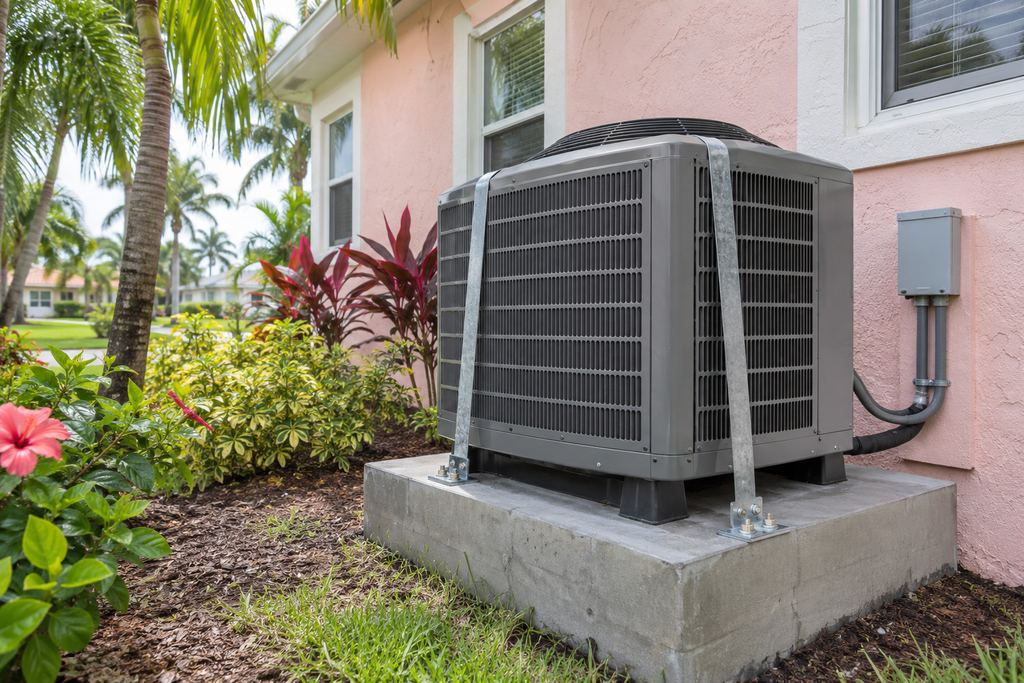
AC Repair in Florida
Florida cooling seasons are long, so a minor fault can become a warm bedroom or a stained ceiling within days. Describe what the unit is doing, add your ZIP code, and we pass the request to an independent HVAC contractor working in your region of the state.
- Requests go to independent local contractors, not to a call center crew
- Check any contractor's state license at myfloridalicense.com
- Contractor availability shifts with location and season
Share your ZIP code and what the system is doing. Availability varies by area and season.
Please keep this page open.
- We pair the request with an independent contractor or partner network that works in your ZIP code.
- The contractor gets in touch to go over the details and agree on a visit.
- After checking the system they quote the job, and you choose whether to proceed.
Read how requests are handled.
Online requests are not connected to a contractor network yet. Nothing you typed was sent or saved. Please phone us instead, or try again later.
Call (888) 555-0199What a repair visit in Florida usually looks like
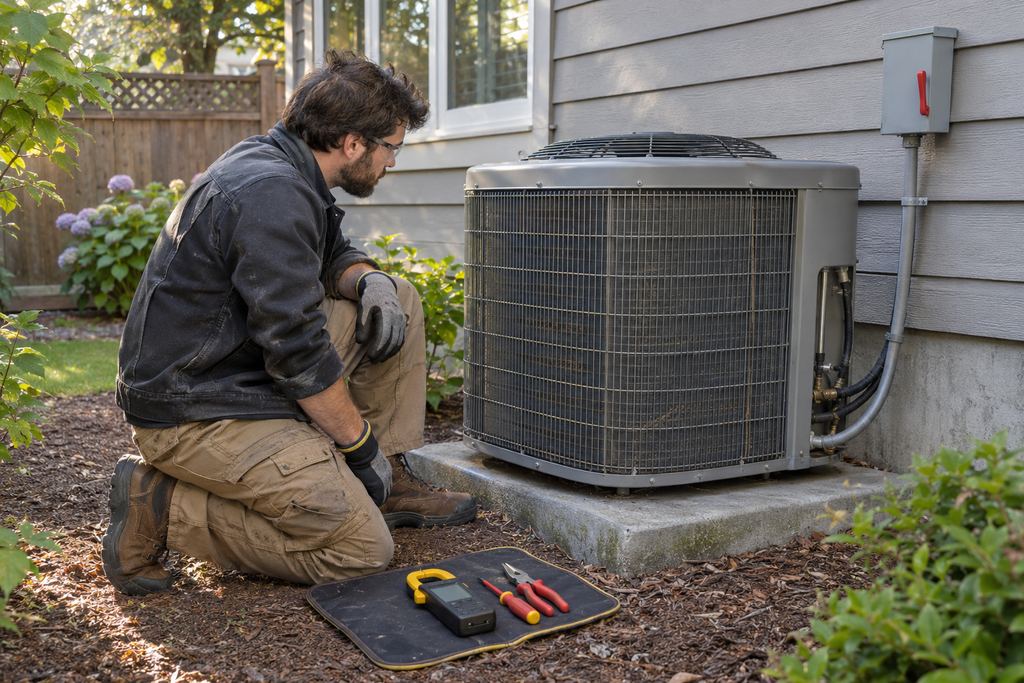
People usually call because something feels wrong: registers pushing lukewarm air, a puddle by the indoor unit, a breaker that won't stay on, or a condenser that buzzes without the fan turning. The technician confirms the thermostat is calling for cooling, measures voltage and amperage at the outdoor unit, checks the condensate drain and, when the readings point there, connects gauges to look at the refrigerant side.
You should hear what failed, what the fix involves and what it costs before parts go in. A written estimate matters most when the diagnosis lands on a compressor, a coil or a refrigerant leak, because those repairs are where the repair or replace question begins. For price research, the AC repair cost section lists the factors that move a quote up or down.
Florida homes put more hours on a cooling system than homes in most states. Federal household energy surveys from the EIA place Florida near the top for the share of homes with air conditioning, and many systems here also run through mild winters as heat pumps. That duty cycle is why parts that last a long time up north, such as contactors, capacitors and fan motors, often wear out sooner here.
Pick the symptom closest to yours
Why Florida systems break down
The same few conditions show up again and again across the state.
Equipment you are likely to have
Knowing your system type helps the contractor bring the right parts.
Work a Florida HVAC contractor commonly takes on
- Clearing clogged condensate lines: Flushing the drain, cleaning the pan and testing the float switch.
- Capacitor and contactor replacement: Common after storms and in older outdoor units.
- Fan and blower motor repair: For outdoor fans that stop spinning or indoor blowers that hum.
- Refrigerant leak search and repair: Handled by a technician with EPA Section 608 certification.
- Thermostat diagnosis and replacement: Including wiring checks when a new thermostat will not power on.
- Coil cleaning and fin straightening: Useful near the coast and after storms.
- Duct repair in attics: Reconnecting or resealing runs that leak cooled air into the attic.
- Post-storm inspection: Checking wiring, the pad, anchoring and the coil after wind or water.
Checks you can make first, and what to leave alone
Safe checks you can do
No tools beyond a flashlight. Turn the system off at the thermostat before opening any filter or access door.
- Look at the thermostat: Cool mode, a setpoint a few degrees under the room, and working batteries if it takes them
- Replace a dirty filter, or check the one at the return grille
- Flip a tripped AC breaker back one time only, and leave it off if it trips again
- Pull palm fronds, mulch and storm litter away from the condenser
- Frost on the copper line or indoor coil? Set the system to fan only until it melts
- Flush the condensate line only the way your owner's manual describes
Leave these to a licensed technician
These involve high voltage, refrigerant or sealed components. Refrigerant work requires EPA Section 608 certification.
- Testing or replacing capacitors, contactors and control boards
- Anything inside the electrical disconnect or the panel
- Checking refrigerant pressure, finding leaks and recharging
- Restarting a unit that sat in floodwater
- Bypassing or removing a float switch that keeps shutting the system off
Leave the system switched off when you smell something burning, notice smoke coming from a register, see sparks near the condenser, or watch the breaker trip each time you reset it. Visible flames or smoke filling a room: get everyone out, then dial 911. Dial 911 too for anyone at home who turns confused, faints or stops sweating during a hot spell.
How repair needs differ across Florida
| Region | What to keep in mind |
|---|---|
| North Florida, including Jacksonville | Winters bring freezing nights, so heat pump heating and defrost problems show up alongside summer cooling calls. Spring pollen loads filters quickly. |
| Central Florida, including Orlando and Tampa | Frequent afternoon storms in summer. Surge damage and drain clogs are regular reasons for a visit. |
| South Florida, including Miami and Fort Lauderdale | Cooling demand nearly all year, salt exposure near the coast and many condo buildings with shared rules for equipment. Miami-Dade and Broward follow the High-Velocity Hurricane Zone rules for exterior equipment. |
When a repair stops making sense
ENERGY STAR advice is to price new equipment once a unit passes roughly ten years and the service calls start piling up. A common estimate for a Florida central system is 10 to 15 years of service, with coastal units often at the short end. Treat that as a rough estimate, since sizing, maintenance and installation quality move it a lot.
Two details shape the decision here. First, R-22 equipment gets harder to justify every season: manufacturers stopped producing that gas in 2020, so each leak repair depends on a shrinking, pricey stock of reclaimed refrigerant. Second, any new split AC under 45,000 Btu/h installed in Florida since January 1, 2023 must meet at least 14.3 SEER2 under the Department of Energy's regional standard, so a replacement will usually use less electricity than the unit it replaces. If you are leaning toward a new system, the AC replacement page explains how quotes are built.
Before you hire anyone in Florida
- Is the license active?
In Florida, HVAC licenses come from the Construction Industry Licensing Board, part of DBPR. Type the business name or license number into myfloridalicense.com to see its status. - Does the person doing refrigerant work carry an EPA Section 608 card?
EPA rules make that card mandatory for refrigerant work. - How much is the service call, and is it credited toward the repair?
Ask before the visit so the first bill is not a surprise. - Can I get the estimate in writing?
It should name the part, the labor and any warranty on the work. - Does the job need a permit?
Routine repairs usually do not, but equipment change-outs generally do. Ask the contractor which applies.
How a service request works
HVAC Service Near Me is a referral service. We don't send our own technicians. We connect you with independent local contractors.
- Describe the job
Type your ZIP code, pick a service and add a line or two about the problem or project.
- We pass it on
An independent HVAC contractor or partner network that works in your area and does that kind of job receives it.
- You hear back
The contractor gets in touch to check the details and set a time to come out.
- The choice is yours
After a diagnosis the contractor gives you a quote. Price, timing and warranty are agreed directly between the two of you.
AC Repair by city in Florida
Pick your city for local details.
Frequently asked questions
How many years does an air conditioner last in Florida?
Many central systems give roughly 10 to 15 years, with coastal units often wearing out sooner because of salt and long run seasons. That is a general estimate, not a promise; regular coil and drain cleaning helps a unit reach the upper end.
Which state has the fewest homes with air conditioning?
Federal residential energy surveys show the lowest shares in Alaska and parts of the Pacific Northwest, where summers are mild. Florida sits at the opposite end, with nearly every home cooled.
Who are the top HVAC companies in Florida?
This site does not rank contractors. A practical shortlist starts with an active license on myfloridalicense.com, proof of insurance, a clear diagnostic fee and a written estimate. Recent reviews from your own area help more than statewide lists.
What is the $5,000 rule for AC repair?
Some homeowners use this shortcut: take the unit's age in years and multiply it by the repair price. A product over roughly 5,000 suggests getting replacement quotes too. Nobody official sets this number, and it leaves out energy use, refrigerant type and duct condition, so treat it as a conversation starter. This is an informal screen, and no federal agency or trade body stands behind it; check the warranty, get a written diagnosis and compare the net repair quote with a real replacement quote.
Should I run my AC after a hurricane?
Walk around it first. Branches in the fan grille, a pad that moved, or a waterline on the cabinet are all reasons to wait. Where floodwater reached the unit, keep the breaker off until a professional has looked over wiring and controls. Hurricane season runs June 1 to November 30.
Can a contractor still recharge an old R-22 system?
Yes, but only from reclaimed stock, and that supply keeps shrinking now that new R-22 has not been made since 2020. A technician can explain whether a leak repair is worth it or whether replacement is the better use of the money.
Get your Florida AC looked at
Enter a ZIP code plus a sentence about the symptom. When an independent contractor near you takes Florida repair calls, they get your note and reach out to set up a time.
Share your ZIP code and what the system is doing. Availability varies by area and season.
Please keep this page open.
- We pair the request with an independent contractor or partner network that works in your ZIP code.
- The contractor gets in touch to go over the details and agree on a visit.
- After checking the system they quote the job, and you choose whether to proceed.
Read how requests are handled.
Online requests are not connected to a contractor network yet. Nothing you typed was sent or saved. Please phone us instead, or try again later.
Call (888) 555-0199