Installing an Air Conditioner in Colorado
Plenty of Colorado houses were built with no air conditioning at all, or with an evaporative cooler on the roof. If you are adding central air, a heat pump or ductless heads, the elevation, the dry climate and the hail all shape the right design. Send a few details and an independent local installer can follow up with a quote visit.
- Why altitude and low humidity change equipment choices
- Permits come from your city or county, not the state
- Hail guards, pads and placement on the Front Range
- What separates a cheap quote from a sound one
ZIP code, approximate square footage, what cools the home now (nothing, a swamp cooler, window units, an old AC) and whether there are ducts.
Please keep this page open.
- We pair the request with an independent contractor or partner network that works in your ZIP code.
- The contractor gets in touch to go over the details and agree on a visit.
- After checking the system they quote the job, and you choose whether to proceed.
Read how requests are handled.
Online requests are not connected to a contractor network yet. Nothing you typed was sent or saved. Please phone us instead, or try again later.
Call (888) 555-0199Three things that make Colorado installs different
First, elevation. Denver sits at roughly 5,280 feet and many mountain towns far higher. Thinner air carries less heat across a coil, and gas furnaces paired with a new coil are affected too, so ask each bidder how their equipment selection accounts for altitude rather than reading capacity straight off a sea-level chart.
Second, dry air. Summer humidity on the Front Range is low, so the system spends most of its effort lowering temperature rather than pulling moisture. That is why evaporative coolers work here at all, and why they fade on the rare muggy monsoon afternoon. Third, weather. Hailstorms batter outdoor units, and wildfire smoke drifts in many summers, which makes a tight house and a good filter rack more valuable than in most states.
Picking a system type
What a careful installation includes
- A room-by-room load calculation: ACCA Manual J is the standard method. It replaces rules like one ton per 500 square feet, which ignore insulation, windows and elevation.
- Duct inspection: Older ducts sized only for heat may be too small for cooling airflow, and returns are often undersized.
- Electrical capacity: Many older homes need a new circuit or panel space. Electrical work in Colorado is done under a state-licensed electrician.
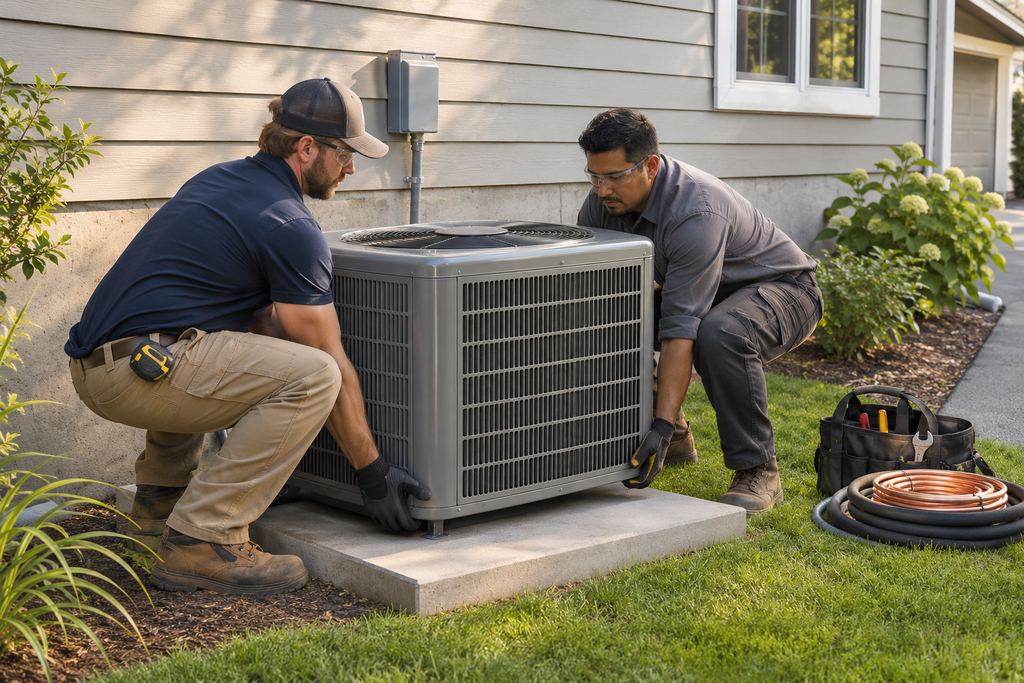
- Pad, stand and hail protection: A level pad, clearance from the roof drip line and an optional hail guard reduce storm damage.
- Permit and inspection: The contractor should pull the local mechanical permit and schedule the inspection.
- Commissioning: Refrigerant charge verified by measurement, airflow checked, and the thermostat set up and explained.
Licensing is local in Colorado
Colorado does not issue a statewide HVAC contractor license. Mechanical contractor licensing and permits come from cities and counties, so the rules in Denver differ from those in Colorado Springs, Fort Collins or a mountain county. Electricians and plumbers, by contrast, are licensed by state boards under DORA. When you vet a bidder, ask which local license they hold where you live, confirm the permit will be pulled in their name, and check that the crew handling refrigerant has EPA Section 608 certification.
What moves the quote
Installers set their own prices. These are the items that change the number from one Colorado home to the next.
| Item | Why it changes the price |
|---|---|
| Existing ducts | A home with good forced-air ducts needs far less work than one with only baseboard heat. |
| Equipment type | Central AC, a cold-climate heat pump and multi-zone ductless each price differently. |
| Efficiency tier | Colorado falls in the DOE North region, where the split AC minimum is 13.4 SEER2. Higher tiers cost more up front. |
| Electrical upgrades | A new 240-volt circuit or panel work adds an electrician's bill. |
| Access | Tight crawlspaces, finished basements and steep lots add labor time. |
| Removing old equipment | Hauling a roof-mounted swamp cooler and patching the roof is its own line item. |
When you need cooling before the install date
A heat wave can arrive weeks before an installer has an opening. A window unit in one bedroom, closing blinds on west-facing glass and running fans at night when the air outside cools down can bridge the gap. Older adults and anyone with a medical condition should not ride out a hot spell in an uncooled upstairs room; if someone shows signs of heat illness, call 911.
After the install, a yearly check keeps the warranty paperwork in order and catches hail damage early. Cost background is in the AC installation cost section, and the general AC installation service page covers the process in more detail.
How a service request works
HVAC Service Near Me is a referral service. We don't send our own technicians. We connect you with independent local contractors.
- Describe the job
Type your ZIP code, pick a service and add a line or two about the problem or project.
- We pass it on
An independent HVAC contractor or partner network that works in your area and does that kind of job receives it.
- You hear back
The contractor gets in touch to check the details and set a time to come out.
- The choice is yours
After a diagnosis the contractor gives you a quote. Price, timing and warranty are agreed directly between the two of you.
Frequently asked questions
Do most Colorado homes have air conditioning?
Newer suburban homes usually do. Many older homes along the Front Range were built without it and rely on fans or an evaporative cooler. Hotter summers and wildfire smoke have pushed more owners to add central air, heat pumps or mini-splits.
How much does it cost to add AC in Colorado?
It depends mostly on whether you have usable ducts, the equipment type and any electrical work. Collect at least two written quotes that list the model numbers, the load calculation and the permit. The installation cost section explains each factor.
What is the $5,000 rule?
A rule of thumb some contractors use when an existing system breaks: age in years times the repair price. Above about 5,000, replacing often makes more sense. It is informal and does not apply to a first-time installation.
Can a landlord in Colorado refuse to add air conditioning?
Adding a system a unit never had is generally a landlord's choice. Repairing equipment the lease provides is a different question that depends on the lease and state law, so ask a tenant rights organization if you rent.
Related guides and services
Ask for a Colorado installation quote
Share your ZIP code, square footage and what cools the house now. An independent local installer may contact you to schedule a site visit; booking lead times vary by town and season.
ZIP code, approximate square footage, what cools the home now (nothing, a swamp cooler, window units, an old AC) and whether there are ducts.
Please keep this page open.
- We pair the request with an independent contractor or partner network that works in your ZIP code.
- The contractor gets in touch to go over the details and agree on a visit.
- After checking the system they quote the job, and you choose whether to proceed.
Read how requests are handled.
Online requests are not connected to a contractor network yet. Nothing you typed was sent or saved. Please phone us instead, or try again later.
Call (888) 555-0199