Installing Air Conditioning in a Sacramento Home
A new air conditioner in Sacramento is a permitted job with state energy rules attached, not just a box swap in the side yard. HVAC Service Near Me passes your AC installation request to independent local contractors. They inspect the house, size the system, pull the permit and give you a written quote you can compare.
- New systems, change-outs and conversions to heat pumps
- Permit, HERS verification and inspection explained up front
- Every contractor quote is theirs to set, never ours
Approximate square footage, the age of the current system (or none), and whether ducts are in the attic or under the floor.
Please keep this page open.
- We pair the request with an independent contractor or partner network that works in your ZIP code.
- The contractor gets in touch to go over the details and agree on a visit.
- After checking the system they quote the job, and you choose whether to proceed.
Read how requests are handled.
Online requests are not connected to a contractor network yet. Nothing you typed was sent or saved. Please phone us instead, or try again later.
Call (888) 555-0199What you are actually buying
Most Sacramento projects fall into one of three groups. The first is a change-out: the old condenser and indoor coil, often 15 to 25 years old, come out and matched new equipment goes in on the existing ducts. The second is a conversion, where a gas furnace plus AC gives way to an all-electric heat pump that heats in January and cools in August. The third is a first installation in a house that never had central air, which in this region usually means an older bungalow, a converted garage or an addition.
The price, the permit scope and the amount of duct work differ a lot between those three. When you fill in the request, say which one you think applies. A contractor will confirm it on site, but starting with the right category keeps the first conversation useful.
The Sacramento conditions a system has to handle
The California Energy Commission places the Sacramento area in Building Climate Zone 12, an inland zone with hot, dry summers and cool, damp winters. July and August afternoons sit in the 90s for weeks, and several days a year go above 100. The evening Delta breeze helps overnight, but it does nothing for the 4 p.m. load on a west-facing two-story house.
Housing stock matters too. Postwar ranch homes and the large subdivisions built from the 1980s onward mostly put the furnace or air handler and the ductwork in the attic. That attic is the hottest place on the property in summer, so leaky or poorly insulated ducts there throw away a large share of the cooling before it reaches a room. Two-story homes often have a hot upstairs no matter how big the outdoor unit is, which is a duct and zoning issue rather than a tonnage one.
Then there is smoke. Wildfire seasons have pushed smoke into the valley for days at a time. The EPA suggests using a MERV 13 filter, or the highest rating the system can handle, when smoke is a concern. If cleaner indoor air during fire season matters to you, ask the installer whether the new air handler and return can take a deeper, higher-rated filter.
Getting the size right for a Zone 12 house
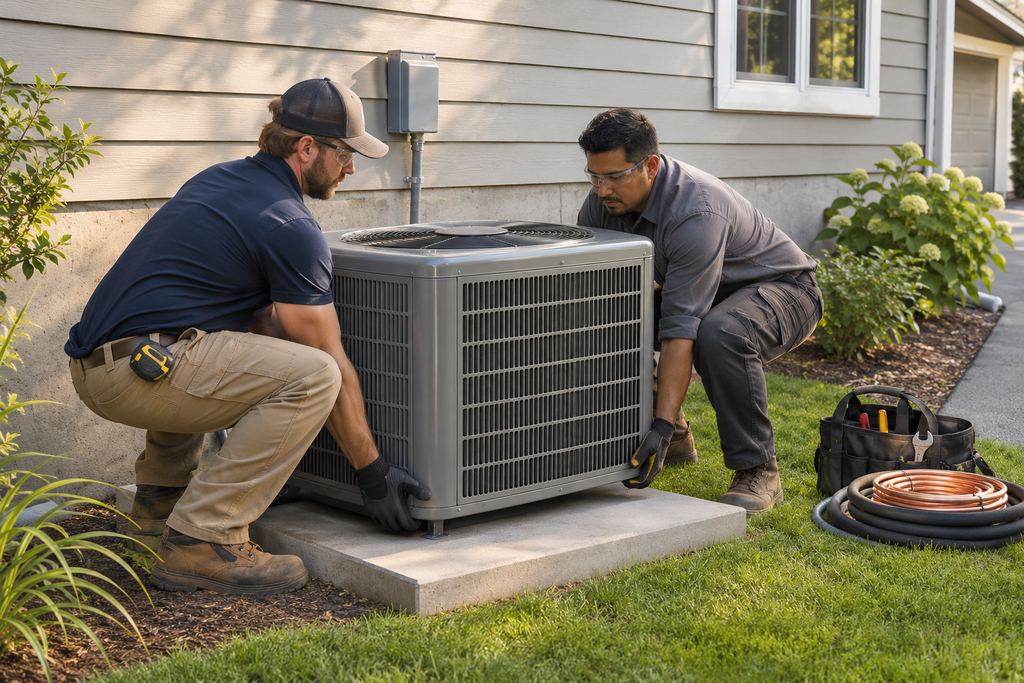
Bigger is the instinct after a miserable August, and it is usually the wrong one. An oversized condenser cools the air near the thermostat fast, shuts off, and leaves the back bedrooms and the upstairs behind. It also starts and stops far more often, which wears the compressor and the contactor. An undersized one simply runs flat out from noon to nine and still loses ground on a 106 degree day.
A real load calculation looks at the things that set heat gain in a Sacramento house: square footage per floor, ceiling height, attic insulation depth, window area on the west and south walls, shading from trees or the neighbor's house, and how tight the envelope is. Two houses of the same size on the same street can need different capacity because one has a row of afternoon-facing sliding doors. If a bid simply repeats the tonnage stamped on the old unit, ask how the estimator knows the original was right in the first place.
Equipment options contractors will offer
These are the system types that show up most often on Sacramento quotes.
Permits and HERS testing under Title 24
California's Building Energy Efficiency Standards, Title 24 Part 6, treat replacing an air conditioner as an alteration. That means a permit from the city or county building department. Depending on the climate zone and what is being replaced, the job may also need third-party verification by a HERS rater. In inland zones like Sacramento's, that can include a duct leakage test, a check of airflow and refrigerant charge, or both. If ducts leak more than the standard allows, sealing or replacing them becomes part of the job.
This is the area where quotes vary most. A low bid that leaves out the permit and HERS test is not comparable with one that includes them, and skipping the permit can cause problems when you sell the house. Ask each contractor to state on paper who pulls the permit, who schedules the HERS rater and whether the price covers any duct sealing the test requires. The California Energy Commission publishes the standards and consumer guidance.
Ducts: seal, repair or replace
A new outdoor unit cannot fix a duct system that leaks into a hot attic. In many older Sacramento homes the original ducts are decades old, the tape has let go at the joints, and some runs have been crushed by later work in the attic. The HERS leakage test often reveals this, but you can ask for a visual inspection at the estimate stage as well.
There are three levels of response. Sealing the joints and boots with mastic is the lightest. Replacing damaged sections, such as a flattened run to a bedroom, is the middle option. Full replacement with new, properly insulated duct sized for the new equipment is the heaviest and costs the most, but it is sometimes what finally makes a stubborn upstairs comfortable. Have each contractor say which of these the price includes. The national pages on duct sealing and duct replacement explain the work in more detail.
Efficiency and refrigerant rules that apply here
| Rule | What it means for a Sacramento install |
|---|---|
| DOE regional standard, effective January 1, 2023 | California is in the Southwest region. A new split AC under 45,000 Btu/h must meet at least 14.3 SEER2 plus an EER2 requirement for hot-weather efficiency. |
| SEER2 and EER2 ratings | SEER2 reflects seasonal performance. EER2 reflects efficiency at high outdoor temperatures, which matters on a 105 degree afternoon. |
| A2L refrigerants | Under the EPA technology transitions rule, new residential equipment moved to lower-GWP refrigerants such as R-454B and R-32 starting in 2025. |
| R-22 phaseout | Production and import of R-22 ended in 2020. A new outdoor unit cannot simply be connected to an old R-22 indoor coil. |
| EPA Section 608 | Recovering the old refrigerant and charging the new system requires a certified technician. |
How a typical installation unfolds
- Site visit and load calculation
The estimator measures rooms, notes windows, insulation and orientation, and should run a load calculation such as ACCA Manual J rather than matching the old unit's size.
- Written quote
Equipment model numbers, matched coil, SEER2 and EER2 ratings, duct work, electrical, permit, HERS testing and removal of old equipment, all listed.
- Permit
The contractor files with the city or county building department before work starts.
- Removal
Refrigerant is recovered from the old system and the equipment is hauled away.
- Installation
New condenser or heat pump on its pad, new coil and air handler or furnace, line set, drain, thermostat and electrical disconnect.
- Commissioning
Evacuation, charge by weight and measurement, airflow setup and a run test in cooling mode.
- Verification and inspection
The HERS rater tests what the permit requires and the building inspector signs off.
What drives the installed price
HVAC Service Near Me does not price installations. For national context, the AC installation cost section explains typical ranges, and local written quotes give the real number.
A heat pump conversion costs more than an AC-only swap, and a larger home needs more capacity.
Moving above the 14.3 SEER2 minimum, or to variable speed, raises equipment cost and can lower summer bills.
Attic ducts that fail the leakage test may need sealing or replacement.
A heat pump conversion sometimes needs a panel upgrade or a new circuit.
Fees and the rater's visit belong on the quote.
A cramped attic, a long line set run or a roof-mounted unit adds labor.
SMUD rates and incentives
SMUD, the publicly owned utility that serves Sacramento, puts residential customers on time-of-day rates. In summer the highest price falls in the early evening, the same hours when a poorly sized or inefficient system works hardest. An efficient, properly sized system with a programmable or smart thermostat lets you pre-cool the house in the afternoon and coast through the peak.
SMUD has offered rebates for heat pumps and efficient equipment, and programs change through the year. Check smud.org and the ENERGY STAR rebate finder before signing. The federal 25C tax credit ended for property placed in service after December 31, 2025, so do not plan your budget around it.
Signs the current system is near the end
- Age past 15 years: Especially equipment installed before 2010 that runs on R-22.
- Repeat repairs: A capacitor one summer, a fan motor the next, a leak after that.
- Rising bills: SMUD statements climbing while your settings stay the same.
- Rooms that never cool: The upstairs or the far end of the house stays several degrees warmer on hot days.
- Major failure: A failed compressor or a leaking evaporator coil on an older unit.
- Noise and humidity: Loud starts, rattles or a sticky feel indoors on the few humid days.
Repair or replace: a sensible way to decide
Some contractors use the informal $5,000 rule: multiply the age of the system by the repair estimate, and if the total is over $5,000, look at replacement. It is a rule of thumb, not a standard, and it ignores things like refrigerant type and how long you plan to stay in the house. Neither the Department of Energy nor any trade group publishes this rule, so treat it as an informal screen; look up what the warranty still covers, confirm the diagnosis in writing and set actual repair and replacement quotes side by side before deciding. A more useful approach is to ask for a written repair price and a written replacement price at the same visit and compare them against the age, the refrigerant and your summer bills.
If the system still has years left and the repair is minor, Sacramento AC repair is the better move. If it is an R-22 unit with a leak, the math usually tips toward replacement.
What to have ready for the estimate visit
A little preparation makes the first visit more productive and the quotes easier to compare.
- The data plate photo: A picture of the label on the outdoor unit and the furnace or air handler, showing model, serial and refrigerant.
- Recent SMUD bills: A few summer months give the estimator a sense of how hard the system works.
- A list of problem rooms: Which rooms stay hot, and at what time of day.
- Attic access cleared: The hatch reachable and stored items moved so the ducts can be seen.
- Your plans for the house: An addition, solar panels, a remodel or a sale within a few years can all change the recommendation.
- Heating preference: Whether you want to keep gas heat or move to a heat pump.
Questions that separate one installer from another
- What is your CSLB license number and classification?
HVAC work in California needs a license from the Contractors State License Board, normally C-20. Look it up on cslb.ca.gov to confirm status, bond and workers' compensation. - Did you run a load calculation?
Ask to see it. Sizing by the old unit's tonnage repeats any original mistake. - Is the indoor coil being replaced too?
A matched outdoor unit and coil are needed for the rated efficiency, and an old R-22 coil cannot be reused with the new refrigerant. - Who handles the permit and HERS test?
Get it in writing, with fees included. - What warranty applies, and who registers it?
Manufacturer coverage often depends on registration within a set period. Ask the contractor to register the equipment and to explain their own labor warranty separately. - What happens if the duct test fails?
Find out before signing whether sealing is included or priced separately.
A note on brands
Quotes in Sacramento commonly include equipment from the large national manufacturers. HVAC Service Near Me is independent and is not affiliated with or authorized by any brand. The installation quality, the load calculation and the duct work tend to matter more to how the house feels in August than the logo on the condenser. Compare quotes on matched model numbers, SEER2 and EER2 ratings and warranty terms rather than brand name alone.
Keeping a new system in shape
A new system still needs care. Change the filter on the schedule the manufacturer gives, keep the outdoor unit clear of weeds and stored items, and book a professional check each spring before the heat arrives. The Sacramento tune-up page describes what a visit should cover. Many manufacturers also require proof of maintenance to honor warranty claims, so keep the receipts. For a national overview of the service itself, see AC installation, and the Sacramento hub lists every service for the area.
How a service request works
HVAC Service Near Me is a referral service. We don't send our own technicians. We connect you with independent local contractors.
- Describe the job
Type your ZIP code, pick a service and add a line or two about the problem or project.
- We pass it on
An independent HVAC contractor or partner network that works in your area and does that kind of job receives it.
- You hear back
The contractor gets in touch to check the details and set a time to come out.
- The choice is yours
After a diagnosis the contractor gives you a quote. Price, timing and warranty are agreed directly between the two of you.
Other AC services in Sacramento
- Sacramento AC Down in the Heat? Getting Urgent Repair
- Sacramento AC Tune-Ups Before the Triple-Digit Days
- Sacramento AC Repair Requests, Matched to Local Contractors
- Ductless Mini-Split Installation for Sacramento Homes
AC Installation in other California cities
Frequently asked questions
Do I need a permit to replace my AC in Sacramento?
Yes. Title 24 treats an AC change-out as an alteration that needs a building permit, and HERS verification such as a duct leakage test may be required depending on the scope.
What SEER2 rating does a new AC need in California?
At least 14.3 SEER2 for a split AC under 45,000 Btu/h, plus an EER2 requirement, under the DOE Southwest regional standard that took effect January 1, 2023.
Should I switch to a heat pump?
In Sacramento's climate a heat pump handles both summer cooling and the mild winters well, and it removes a gas appliance. Costs depend on electrical capacity and duct condition, so ask for a heat pump option on the same quote as a straight AC replacement.
How long does an installation take?
The equipment swap itself is often one or two days. Permitting, the HERS visit and the final inspection add time, which the contractor can estimate for your city or county.
Can a contractor reuse my existing ducts?
Often, if they are in fair shape and sized for the new system. In Sacramento the HERS duct leakage test may decide it for you. If the ducts leak beyond the allowed limit, sealing or replacing them becomes part of the job.
Is a bigger AC better for very hot summers?
No. An oversized system short-cycles, leaves rooms uneven and wears parts faster. Capacity should come from a load calculation for your house, not from the size of the old unit or the hottest day you remember.
Is the federal tax credit still available?
The 25C credit ended for property placed in service after December 31, 2025. Check SMUD and the ENERGY STAR rebate finder for current local incentives.
Who does the installation?
An independent, licensed HVAC contractor. HVAC Service Near Me is a referral service and does not employ technicians, set prices or perform installations.
Related guides and services
Get Sacramento installation quotes
Share the approximate size of the home, the age of the current system and where the ducts run. An independent contractor will contact you to schedule a site visit and a written quote.
Approximate square footage, the age of the current system (or none), and whether ducts are in the attic or under the floor.
Please keep this page open.
- We pair the request with an independent contractor or partner network that works in your ZIP code.
- The contractor gets in touch to go over the details and agree on a visit.
- After checking the system they quote the job, and you choose whether to proceed.
Read how requests are handled.
Online requests are not connected to a contractor network yet. Nothing you typed was sent or saved. Please phone us instead, or try again later.
Call (888) 555-0199