HVAC Duct Replacement When Repairs Stop Working
Most ductwork can be patched or sealed. Replacement is for the cases where patching would just be chasing failures: flex duct that tears when touched, metal rusted through, or a layout so undersized that no equipment will cool the house properly. Done right, a replacement is also a chance to fix the design.
- For ducts that are failing throughout, not one bad run
- Sized with Manual D to match the equipment
- Sealed, insulated and tested before the job is closed
Tell us the age of the ducts and the problems you see. A contractor in your area follows up.
Please keep this page open.
- We pair the request with an independent contractor or partner network that works in your ZIP code.
- The contractor gets in touch to go over the details and agree on a visit.
- After checking the system they quote the job, and you choose whether to proceed.
Read how requests are handled.
Online requests are not connected to a contractor network yet. Nothing you typed was sent or saved. Please phone us instead, or try again later.
Call (888) 555-0199When replacement beats repair
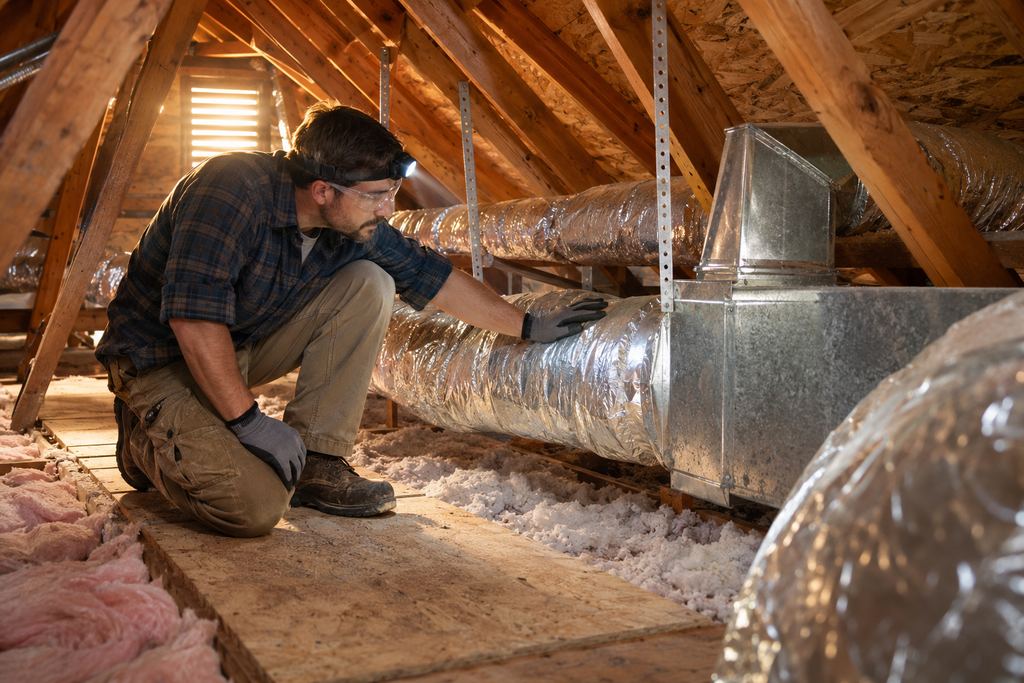
Start with what you can see. In a hot attic, the plastic jacket and inner liner of old flex duct can become brittle and split. In a damp crawl space, sheet metal rusts at the seams and the bottom of trunks. Either condition across most of the system means each repair uncovers the next problem. The other trigger is design: if the ducts were too small from the start, the blower works against high static pressure, rooms at the end of runs stay warm, and registers whistle. Sealing will not fix that.
If only a few sections are damaged, duct repair or sealing is usually the better value. A duct inspection with a static pressure reading and a leakage test makes the decision less of a guess.
What a duct replacement can include
Getting the size right this time
Bigger is not automatically better. Oversized supply ducts slow the air down so much that it dribbles out of the registers and never mixes with the room; undersized ones push static pressure up and make the blower loud and hot. The target is the airflow each room needs, which comes from a room-by-room load, delivered at a pressure the blower is rated for. That is what ACCA Manual D is for. Returns deserve equal attention: many older houses have a single hallway return, and bedrooms with doors closed starve for air. A replacement is the cheapest moment to add a return to those rooms or a jumper duct over the door, because the attic or basement is already open. If a new duct layout is needed for an addition at the same time, design both together.
The replacement process
- Assessment
The contractor inspects the existing ducts, measures static pressure and confirms equipment size.
- Load and design
Manual J for room loads, Manual D for duct sizes. Ask to see the layout.
- Quote and permit
Written scope with materials, insulation level, testing and removal. Permit where required.
- Tear-out
Old ducts removed and hauled away, with suspected asbestos tested first.
- Install
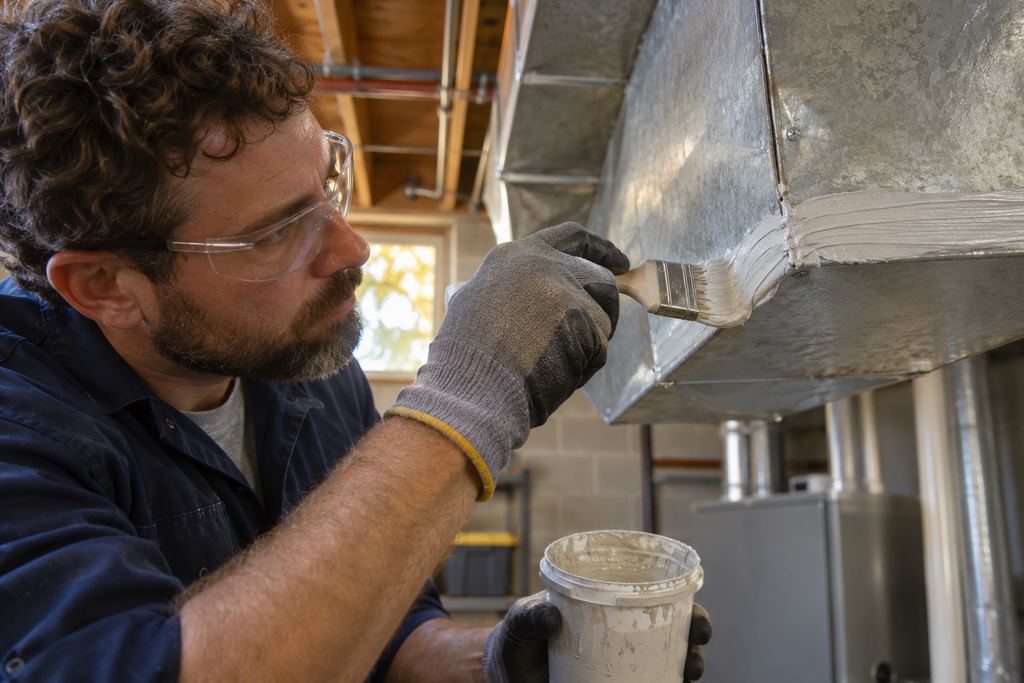
New runs hung and supported, joints sealed, insulation installed.
- Test and balance
Leakage test, airflow checks at registers and damper adjustments.
Duct replacement cost
This Old House's air duct replacement guide (June 2026) prices the job by length: about $16 to $19 per linear foot, roughly $3,100 to $3,700 for 200 feet and $7,800 to $9,300 for 500 feet. It notes that a small, simple job can come in under $2,000 and a large or complex one can pass $8,000. Those per-foot figures leave out wall and ceiling repair, removal of old ducts, asbestos or mold work and permits, and none of them is an HVAC Service Near Me price.
Two homes with the same square footage can get very different quotes, because access, run count and testing rules drive the labor. Get at least two written quotes from contractors who inspect the ducts in person and base any new layout on a Manual D design.
What moves a duct replacement quote
An open basement is the easiest case. Attics with low clearance, crawl spaces and ducts inside finished walls or ceilings add labor and sometimes drywall repair.
Each supply branch and return adds material, a boot, a register and time. Two homes of equal square footage can have very different run counts.
Insulated flex duct, sheet metal trunks and duct board differ in material cost and installation time. Many systems mix them.
Replacing ducts in the same layout is simpler than redesigning to fix airflow problems, which needs a Manual D calculation and may add returns.
Ducts in unconditioned space must be sealed and insulated to local code levels.
Some jurisdictions require a permit and a duct leakage test for replacement. Testing is an added line.
Old wrap, tape or duct board may contain asbestos and need testing before removal. Mold or pest contamination adds cleanup.
A new AC or furnace at the same time may change plenums and transitions, and the two jobs are often priced together.
Keeping the duct bill in check
Start with a diagnosis rather than a full tear-out. A leakage test and a static pressure reading can show that half the system is fine and only the attic branches need work, which turns a whole-house job into a partial one. If you are also replacing the air conditioner, ask for duct and equipment work on one quote; crews already on site for the plenum and transitions can often handle trunk changes with less duplicated labor.
Timing helps too. Attic duct work in August is slow, hot labor, and spring or fall calendars tend to have more room. Clear storage away from attic access and crawl space hatches before the visit so billed hours go to ducts instead of moving boxes. Finally, ask about state or utility programs: some efficiency rebates cover duct sealing or insulation, and the ENERGY STAR rebate finder lists what is active by ZIP code.
How to compare duct replacement quotes
- Did both contractors see the ducts?
A quote from square footage alone misses access and run count. - Is the layout the same or redesigned?
A redesign can fix comfort problems but costs more. - What material is used for trunks and branches?
Compare like with like. - Are sealing, insulation level and testing listed?
Ask what R-value and which sealant. - Are permit, removal and drywall repair included?
These are common gaps between quotes. - What is the labor warranty?
Get it in writing.
Keeping new ducts in shape
New ducts stay efficient if nobody crushes them. Keep attic storage off flex runs, use a filter that fits the slot without gaps, and have the technician glance at accessible ducts during yearly AC maintenance. If rooms change, such as a finished basement or an addition, ask for a load check before adding branches to the existing system.
How a service request works
HVAC Service Near Me is a referral service. We don't send our own technicians. We connect you with independent local contractors.
- Describe the job
Type your ZIP code, pick a service and add a line or two about the problem or project.
- We pass it on
An independent HVAC contractor or partner network that works in your area and does that kind of job receives it.
- You hear back
The contractor gets in touch to check the details and set a time to come out.
- The choice is yours
After a diagnosis the contractor gives you a quote. Price, timing and warranty are agreed directly between the two of you.
Frequently asked questions
How often should HVAC ducts be replaced?
There is no fixed schedule. Replace them when they fail throughout, are contaminated, or were never sized correctly. Well-installed sheet metal in a dry space can last for decades.
How long does AC ductwork last?
It depends on material, location and installation quality. Sheet metal in a dry basement can last as long as the house; flex duct in a hot attic degrades sooner. Condition, not age alone, decides replacement.
How much does new HVAC ductwork cost?
It depends on access, the number of runs, materials and code requirements. This Old House's June 2026 guide puts replacement at about $16 to $19 per linear foot nationally, before drywall repair, removal or permits. Get written, itemized quotes after an inspection; HVAC Service Near Me does not set prices.
What is the $5,000 rule for HVAC?
It is a shortcut for deciding about furnaces and air conditioners: multiply age by the repair quote and look harder at replacement above 5,000. Treat the rule as an informal screen rather than a DOE or trade standard; check the warranty, get a written diagnosis and compare the net repair quote with a real replacement quote. Nobody applies it to ductwork, which is replaced for condition and airflow, not age.
What is the 2 foot rule for ductwork?
Different people mean different things by it, commonly the maximum sag of flex duct between hangers. No building code calls it that. Your installer should follow the support spacing printed by the duct manufacturer and whatever the local mechanical code says.
How long does duct replacement take?
A straightforward attic or basement job can take a day or two. Redesigns, tight access and drywall work add time.
Related guides and services
Request duct replacement quotes
Tell us how old the ducts are and what problems you see. HVAC Service Near Me sends the request to an independent contractor in your area.
Tell us the age of the ducts and the problems you see. A contractor in your area follows up.
Please keep this page open.
- We pair the request with an independent contractor or partner network that works in your ZIP code.
- The contractor gets in touch to go over the details and agree on a visit.
- After checking the system they quote the job, and you choose whether to proceed.
Read how requests are handled.
Online requests are not connected to a contractor network yet. Nothing you typed was sent or saved. Please phone us instead, or try again later.
Call (888) 555-0199