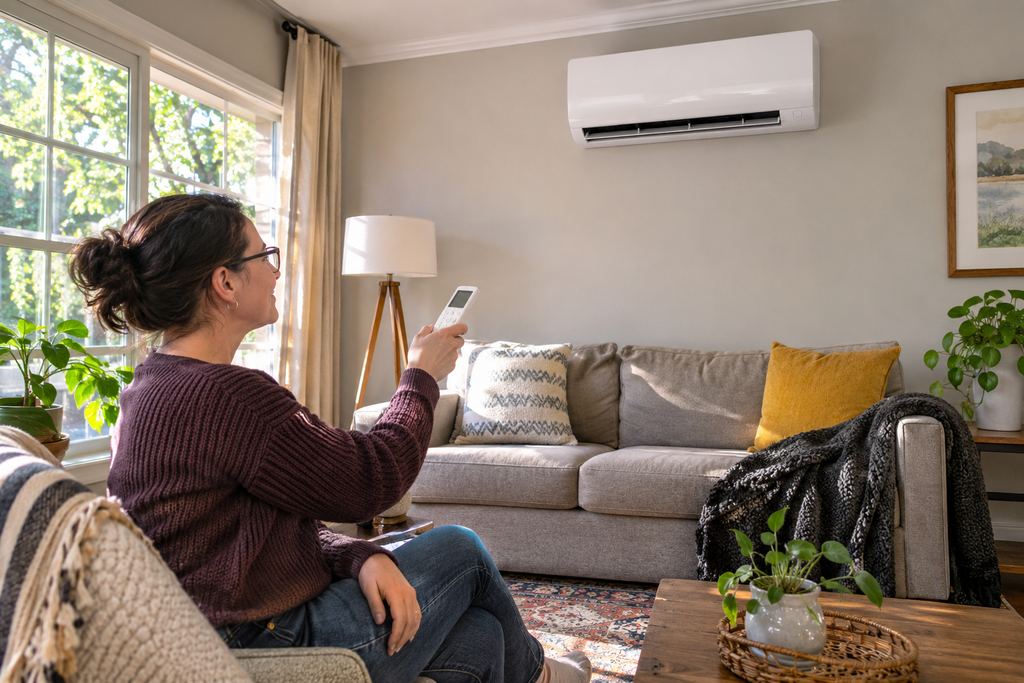
Mini Split Service From Local Ductless Contractors
Is a ductless unit that is blinking, dripping or blowing warm air? HVAC Service Near Me routes what you tell us to an independent ductless contractor nearby, so you can describe the problem once and get a call back about a visit.
- For one-head systems and multi-head setups
- Diagnosis, cleaning, drain work and seasonal checks
- Whether a contractor is free soon depends on ZIP code and season
Share the brand if you know it, the number of indoor heads and what the unit is doing. A contractor near you can follow up.
Please keep this page open.
- We pair the request with an independent contractor or partner network that works in your ZIP code.
- The contractor gets in touch to go over the details and agree on a visit.
- After checking the system they quote the job, and you choose whether to proceed.
Read how requests are handled.
Online requests are not connected to a contractor network yet. Nothing you typed was sent or saved. Please phone us instead, or try again later.
Call (888) 555-0199What a ductless service call can include
Wall, ceiling and floor units
In a ductless system, copper lines carry refrigerant from the condenser outside to each indoor head, and no ductwork is involved. The indoor side comes in several shapes, and each one has its own service quirks.
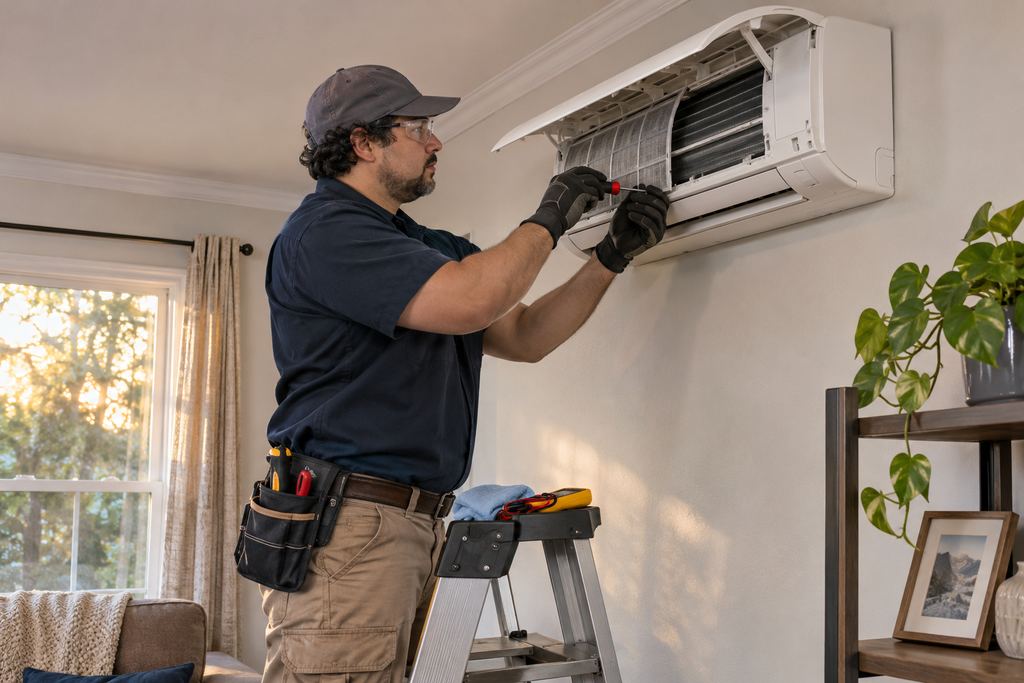
- You will see high-wall heads in most homes. The barrel-shaped fan behind the louvers gathers grime out of sight, so technicians often hang a drain bag under the head and wash it where it hangs.
- A ceiling cassette usually lifts its water with a small pump. When that pump fails, water shows up on the ceiling grille.
- Floor consoles sit at knee height and pick up pet hair and carpet lint faster than wall units.
- Concealed ducted heads hide in a soffit or closet and need access panels for filter and coil work.
When you request service, mention which types you have and how many. Four heads on one condenser take far longer than one bedroom unit.
Check these first, leave the rest to a technician
Safe checks you can do
No tools beyond a flashlight. Turn the system off at the thermostat before opening any filter or access door.
- Look at the remote screen: Cool or Heat should show, not Dry or Fan, and fresh batteries rule out a dead remote
- Pull out and rinse the washable filters as the owner's manual describes, then let them dry
- Check the breaker panel for a tripped switch; one reset is fine, a second trip means leave it off
- Give the condenser outside some breathing room by moving bins, leaves or snow away from it
- Note how many times the indicator light flashes, or the code on the display, and pass it along
Leave these to a licensed technician
These involve high voltage, refrigerant or sealed components. Refrigerant work requires EPA Section 608 certification.
- Taking covers off the head for a coil wash
- Electrical testing of inverter boards, thermistors, fan motors and the compressor
- Leak search with gauges or a detector, brazing or flare repair, then evacuation and recharge
- Replacing a condensate pump or rerouting a drain line
- Anything behind the service panel of the condenser, where high voltage and stored charge live
A burning odor, visible sparks, smoke from a head or repeated breaker trips all mean the same thing: cut power at the breaker and get a pro out. Actual smoke or flames mean everyone leaves the building and someone calls 911. In extreme heat, a person who becomes confused or has hot, red skin and a very high temperature may have heat stroke, which also calls for 911; the NWS heat page explains what to do until help arrives.
How often a ductless system needs a visit
A yearly professional visit is the usual advice for heating and cooling equipment, and a ductless heat pump that carries a house through summer and winter racks up hours fast. Pets, cooking near a head and nonstop use are good reasons to book twice a year, in spring and fall. The filters in between are on you; owner's manuals tend to ask for a rinse every two to four weeks in peak season.
A tune-up usually covers filter and coil inspection, a check of the drain, a look at electrical connections and refrigerant line insulation outdoors, and a test of heating and cooling at each head. A written scope of the visit makes it easy to compare offers.
Repair it or plan for replacement
A plugged drain, a faulty thermistor or a tired fan motor is cheap enough to fix on almost any system. The math changes on an older install facing a dead compressor, a coil that leaks or an outdoor board on a discontinued model. Ask the technician whether parts are still available and what shape the remaining components are in. If replacement looks likely, the mini split replacement page explains how those quotes are put together.
Questions to ask before the visit
- Which ductless brands do you see most?
Some contractors focus on a few ductless brands and carry their parts. - What does the first visit cost?
Some contractors charge a call-out fee and some fold it into the repair price. Get the answer before they drive out. - How do you clean the indoor heads?
Rinsing filters takes five minutes; washing the coil and fan takes much longer and needs tools. - Can you look at every head in one visit?
Useful on multi-zone systems where one fault can show up on several heads.
How a service request works
HVAC Service Near Me is a referral service. We don't send our own technicians. We connect you with independent local contractors.
- Describe the job
Type your ZIP code, pick a service and add a line or two about the problem or project.
- We pass it on
An independent HVAC contractor or partner network that works in your area and does that kind of job receives it.
- You hear back
The contractor gets in touch to check the details and set a time to come out.
- The choice is yours
After a diagnosis the contractor gives you a quote. Price, timing and warranty are agreed directly between the two of you.
Frequently asked questions
How frequently does a ductless system need a pro?
Book a professional at least once a year and rinse the filters yourself every two to four weeks in peak season. Systems used for both heat and cooling, or in dusty homes, may need a visit each spring and fall.
What happens during a ductless service visit?
They read error codes, check airflow, electrical parts, sensors and the drain, and, if needed, test refrigerant pressures. The refrigerant side is legally limited to technicians holding EPA Section 608 certification.
Can a general AC company service a mini split?
Some do and some avoid it. Ductless equipment relies on inverter boards and brand-specific diagnostics, so ask how often the company works on your brand.
What causes a sour or moldy smell from a head?
The wet fins and squirrel-cage fan inside the head trap dust, and that film feeds mold and bacteria. Rinsing the filters helps a little; a professional cleaning of the head usually fixes the smell.
How do I find mini split service near me?
Fill in the request form with your ZIP code and a sentence or two about what the unit does. If a contractor who takes ductless calls works in your area, they reach out to you. Match rates change with location and season.
Related guides and services
Get your ductless system looked at
Send the brand, the number of heads and what you are seeing. A ductless contractor in your area can then call to arrange a time.
Share the brand if you know it, the number of indoor heads and what the unit is doing. A contractor near you can follow up.
Please keep this page open.
- We pair the request with an independent contractor or partner network that works in your ZIP code.
- The contractor gets in touch to go over the details and agree on a visit.
- After checking the system they quote the job, and you choose whether to proceed.
Read how requests are handled.
Online requests are not connected to a contractor network yet. Nothing you typed was sent or saved. Please phone us instead, or try again later.
Call (888) 555-0199