AC Condenser Replacement: What the Job Involves
An AC condenser replacement swaps the outdoor unit of a split system: the cabinet that holds the compressor, condenser coil and fan. It is a refrigerant job, so the new unit has to suit the indoor coil and the refrigerant your system uses. Before you approve one, get the failed part named in writing and compare it with the cost of a compressor replacement or a matched system.
- Confirm which part failed before paying for a whole outdoor unit
- Check that the new condenser is rated with your indoor coil
- Compare one written quote for the condenser with one for a matched system
Share your ZIP code and what the last technician found. A local contractor confirms the diagnosis before quoting.
Please keep this page open.
- We pair the request with an independent contractor or partner network that works in your ZIP code.
- The contractor gets in touch to go over the details and agree on a visit.
- After checking the system they quote the job, and you choose whether to proceed.
Read how requests are handled.
Online requests are not connected to a contractor network yet. Nothing you typed was sent or saved. Please phone us instead, or try again later.
Call (888) 555-0199Condenser, compressor or the whole outdoor unit?
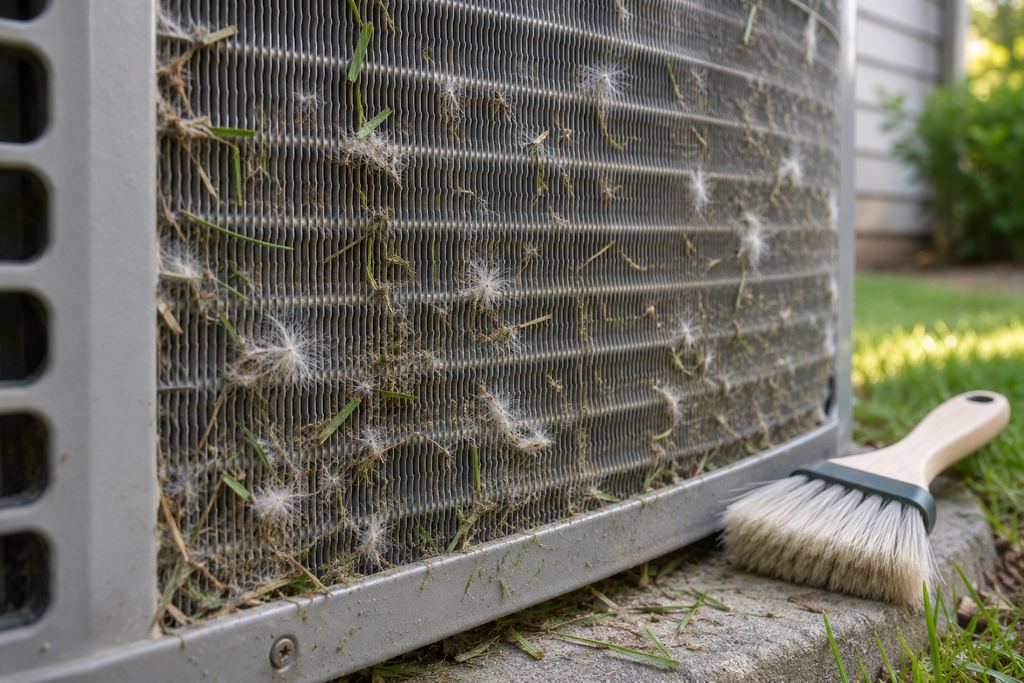
Homeowners and contractors use the word condenser in two ways. Strictly, it is the finned coil that wraps the outdoor cabinet and sheds heat from the refrigerant. In everyday speech it means the entire outdoor unit. A quote that says "replace condenser" can mean either, so ask which one is on the paper.
Many outdoor faults do not call for a new unit. A weak run capacitor, a burned contactor or a seized fan motor is a part repair; see capacitor replacement for the most frequent one. Replacing the outdoor unit becomes a serious option when the compressor has failed, the coil leaks in several places, the cabinet is badly corroded or a storm or falling limb crushed it.
Systems built for R-22 add another wrinkle. New R-22 has not been produced or imported since January 1, 2020, and new outdoor units no longer ship for it. Swapping only the outdoor half of an R-22 system usually means changing refrigerant type, which in turn affects the indoor coil and the line set.
Equipment this page covers
AC condenser replacement cost
None of the publishers we checked prices an outdoor-unit-only swap. Carrier's October 2026 price guide gives $3,000 to $15,000 or more for central AC including installation, and estimates 4 to 8 hours of labor when only the outdoor unit is replaced. Trane's May 2026 repair article lists a compressor at $900 to $2,900 and a condenser coil at $1,000 to $4,000 or more, which helps when a repair is the alternative. Treat all three as national planning figures; HVAC Service Near Me does not set prices.
The new outdoor unit is the largest line on the bill. Labor, refrigerant recovery and recharge, a matched indoor coil if the old one cannot stay, the line set, a disconnect or pad, the permit and haul-away of the old unit follow. Ask for quotes that name the exact outdoor and indoor model numbers and price each of those lines.
What moves the price of a new outdoor unit
We do not publish prices. Ask each contractor for an itemized written quote and compare these lines.
Tonnage and the SEER2 rating of the new unit set the equipment cost. Higher efficiency models cost more up front.
Units for R-410A, R-454B or R-32 are priced differently, and a refrigerant change can add a coil or line set.
If the coil must change to match, the job grows. Reusing a line set requires a flush or a clean, sized pipe.
A larger tonnage costs more. A load calculation confirms the size instead of copying the old unit.
Roof units, long line sets and tight side yards add labor.
A new disconnect, whip, breaker change or pad leveling shows up as separate items on some quotes.
Many jurisdictions require a mechanical permit to change an outdoor unit. Ask whether it is included.
Registration deadlines and labor coverage differ by maker and installer. Read both documents before signing.
Repair the part or replace the unit
| What the technician found | Usually repaired | Replacement worth pricing |
|---|---|---|
| Fan runs, compressor hums and stops | Capacitor or contactor at fault | Compressor tests as failed on an older unit |
| Refrigerant leak | One reachable leak at a fitting or valve | Several pinholes across a corroded coil |
| Outdoor fan not spinning | Fan motor or blade swap | Motor plus other major parts failing together |
| Physical damage | Bent fins, a loose panel | Crushed coil or cabinet from hail, a limb or a vehicle |
| System on R-22 | Small repair with recovered refrigerant | Any repair that needs a large refrigerant charge |
What a proper condenser swap includes
- Refrigerant recovery: Old refrigerant is pulled into a recovery cylinder, never released. This requires EPA Section 608 certification.
- Match check: The installer looks up the outdoor and indoor model numbers in the AHRI Directory to confirm a rated pairing.
- Line set decision: The copper is pressure tested and cleaned, or replaced if its size or condition does not suit the new unit.
- Brazing with nitrogen: Joints are brazed while nitrogen flows, which keeps scale out of the system.
- Pressure test and vacuum: The circuit is tested for leaks and evacuated to a deep vacuum before refrigerant is released.
- Charge and startup: The refrigerant charge is set to the maker's method, and the installer records readings at startup.
Your part and the technician's part
Safe checks you can do
No tools beyond a flashlight. Turn the system off at the thermostat before opening any filter or access door.
- Write down the model and serial numbers from both data plates
- Note the age of the system and any past refrigerant top-offs
- Clear leaves and debris around the outdoor unit so it can be inspected
- Keep copies of old invoices and warranty registration
Leave these to a licensed technician
These involve high voltage, refrigerant or sealed components. Refrigerant work requires EPA Section 608 certification.
- Disconnecting power at the disconnect and wiring the new unit
- Recovering, weighing and charging refrigerant
- Brazing, pressure testing and pulling a vacuum
- Confirming the indoor coil, metering device and line set suit the new unit
Questions to put to every contractor
- Which part failed and how did you test it?
A named fault and a reading are more useful than "the unit is shot". - Is the new outdoor unit rated with my indoor coil?
Ask for the AHRI reference number for the pair. - Are you reusing the line set, and how will you clean it?
Reuse can be fine. The plan should be written down. - Who pulls the permit?
Find out whether the permit fee is in the price and who books the inspection. - Can I see the license and insurance?
Check the license number with your state or local licensing board before work starts.
How a service request works
HVAC Service Near Me is a referral service. We don't send our own technicians. We connect you with independent local contractors.
- Describe the job
Type your ZIP code, pick a service and add a line or two about the problem or project.
- We pass it on
An independent HVAC contractor or partner network that works in your area and does that kind of job receives it.
- You hear back
The contractor gets in touch to check the details and set a time to come out.
- The choice is yours
After a diagnosis the contractor gives you a quote. Price, timing and warranty are agreed directly between the two of you.
Frequently asked questions
How much of a condenser replacement is labor?
Carrier's 2026 guide estimates 4 to 8 hours of labor when only the outdoor unit is replaced. The share of the bill depends on access, the line set and whether the indoor coil changes too, so ask for a quote that separates equipment, labor, refrigerant, permit and electrical items.
Can only the outdoor unit be replaced?
Often yes, when the indoor coil is in good shape, uses the same refrigerant and is a rated match for the new unit. When the system ran on R-22 or the coil is old, a contractor may recommend changing both halves.
How do I shut off power to the outdoor unit?
Turn the AC off at the thermostat and switch off the breaker labeled for the condenser. The outdoor disconnect box stays energized on its supply side, so leave opening it and any wiring to a technician.
What happens when a condenser goes bad?
Warm air from the vents, a fan that does not spin, a compressor that hums and trips off, or ice on the copper lines are common signs. Shut the system off if it keeps tripping the breaker or smells hot, and request a diagnosis.
Is it smarter to replace the whole system?
Price both. A full matched system can make sense if the furnace or air handler is near the end of its life or the system uses R-22. A single outdoor unit can make sense on a younger system with a sound coil.
Is a capacitor repair a cheaper alternative?
When the capacitor is the real fault, yes, by a wide margin. See capacitor replacement cost, and ask what tests ruled it out before you buy a new condenser.
Related guides and services
Get a quote for a new outdoor unit
Send your ZIP code, the model numbers if you have them and what the last technician found. A local contractor can follow up to confirm the fault and quote the replacement in writing.
Share your ZIP code and what the last technician found. A local contractor confirms the diagnosis before quoting.
Please keep this page open.
- We pair the request with an independent contractor or partner network that works in your ZIP code.
- The contractor gets in touch to go over the details and agree on a visit.
- After checking the system they quote the job, and you choose whether to proceed.
Read how requests are handled.
Online requests are not connected to a contractor network yet. Nothing you typed was sent or saved. Please phone us instead, or try again later.
Call (888) 555-0199