AC Condenser Cleaning for the Outdoor Unit
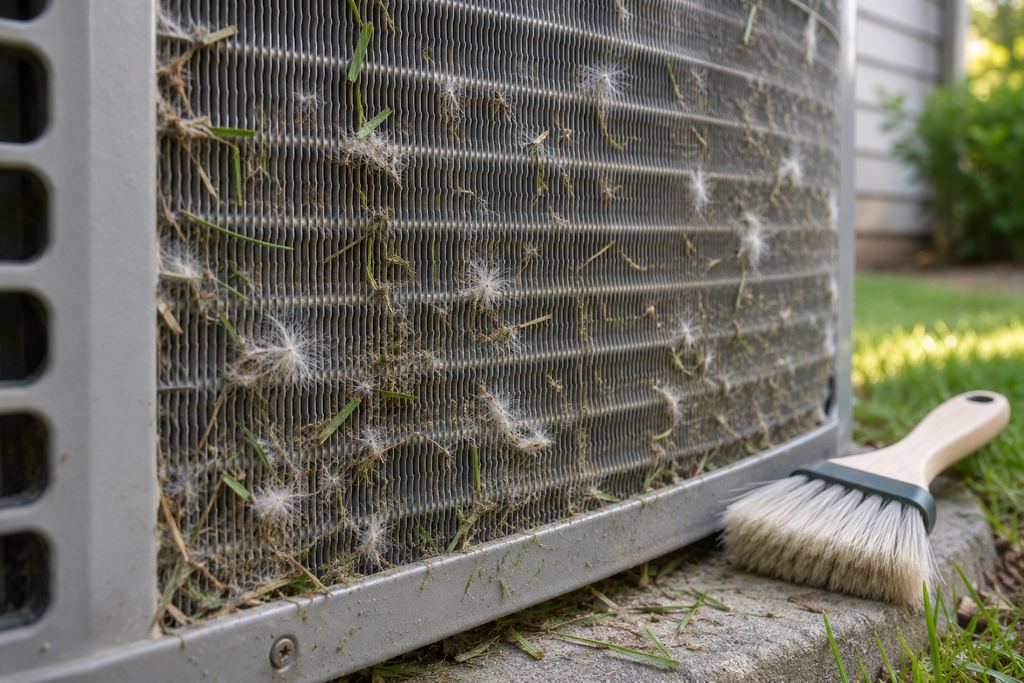
The condenser outside your house dumps the heat your air conditioner pulls from indoors. When its coil is wrapped in dirt, grass or cottonwood fluff, that heat stays trapped, pressures climb and the compressor works harder. A cleaning brings the airflow back.
- Coil, fan area and cabinet base cleaned with the power off
- Low-pressure rinse and coil-safe cleaner
- Quick check of fan, capacitor and contactor during the visit
Tell us about the outdoor unit. A local contractor follows up to schedule.
Please keep this page open.
- We pair the request with an independent contractor or partner network that works in your ZIP code.
- The contractor gets in touch to go over the details and agree on a visit.
- After checking the system they quote the job, and you choose whether to proceed.
Read how requests are handled.
Online requests are not connected to a contractor network yet. Nothing you typed was sent or saved. Please phone us instead, or try again later.
Call (888) 555-0199Why a dirty condenser costs you
Air pulled through the fins carries heat away from the refrigerant. Debris on the coil acts like a blanket. The system then runs at higher head pressure, uses more electricity and can trip on high pressure or overheat on the hottest afternoons. Cleaning the outdoor coil and keeping the area around the condenser clear are standard maintenance tasks.
Watch for a few signs: matted fins you can see from the side, longer run times, or warm air from the top fan that feels weaker than usual.
Condenser styles and what changes
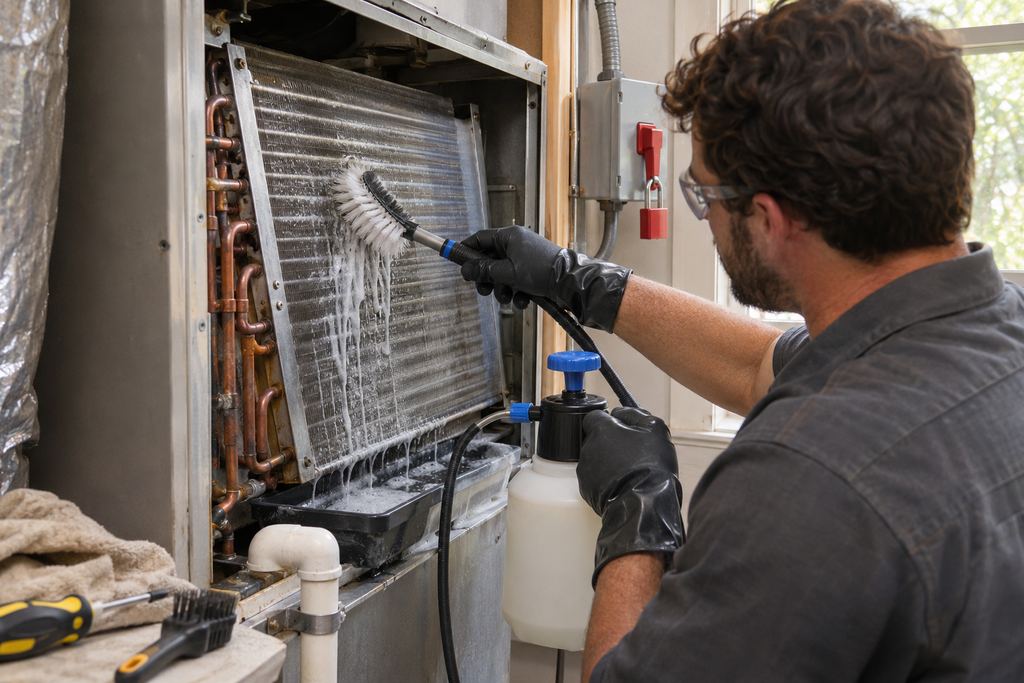
How a technician cleans the condenser
- Shut down power
At the thermostat, then at the outdoor disconnect and breaker.
- Clear the surroundings
Leaves, weeds and clippings are removed from the base and sides.
- Open the top
On many units the fan grille lifts off so debris inside the cabinet can be removed.
- Apply coil cleaner
A product made for aluminum fins loosens grime.
- Rinse from inside out
Gentle water pushes dirt back the way it came in, instead of deeper into the coil.
- Comb fins and restart
Bent areas are straightened, panels go back on, and the unit is run and checked.
What you can do between visits
Safe checks you can do
No tools beyond a flashlight. Turn the system off at the thermostat before opening any filter or access door.
- Keep shrubs and fences about two feet from the condenser
- Pick up leaves and grass clippings around the base
- With power off, rinse the outside of the coil gently with a garden hose if the manual allows
- Point mower discharge away from the unit
Leave these to a licensed technician
These involve high voltage, refrigerant or sealed components. Refrigerant work requires EPA Section 608 certification.
- Removing the fan grille and top panel
- Chemical coil cleaning from inside the cabinet
- Testing the fan motor, capacitor and contactor
- Repairing damaged fins or a leaking coil
Related coil work
The indoor coil needs attention too, though less often. See AC coil cleaning for both coils and coil cleaning cost for pricing. If the outdoor fan is not spinning at all, cleaning will not help; read condenser fan motor replacement. A dirty coil over many summers adds stress to the compressor, the most expensive part in the unit.
How a service request works
HVAC Service Near Me is a referral service. We don't send our own technicians. We connect you with independent local contractors.
- Describe the job
Type your ZIP code, pick a service and add a line or two about the problem or project.
- We pass it on
An independent HVAC contractor or partner network that works in your area and does that kind of job receives it.
- You hear back
The contractor gets in touch to check the details and set a time to come out.
- The choice is yours
After a diagnosis the contractor gives you a quote. Price, timing and warranty are agreed directly between the two of you.
Frequently asked questions
What does the 3 minute rule mean for an AC?
It refers to waiting a few minutes after the system shuts off before restarting it, so pressures can equalize and the compressor is not forced to start against high pressure. Many thermostats and controls build in a short delay for this reason.
Can I spray water on the condenser while it is running?
Turn it off first. Water near live wiring and a spinning fan is not safe. Rinse with the power off and a gentle stream.
Is dish soap safe on AC coils?
A mild solution is sometimes used on the outside of the coil, but a coil cleaner made for HVAC equipment is the safer choice. Rinse well and follow the manual.
How often should the outdoor coil be cleaned?
Many systems need it about once a year, often during a tune-up. Yards with trees that shed fluff, dusty sites and coastal air may call for more.
Related guides and services
Book condenser cleaning
Tell HVAC Service Near Me about your outdoor unit. A local contractor follows up to schedule the cleaning and checks the unit while there.
Tell us about the outdoor unit. A local contractor follows up to schedule.
Please keep this page open.
- We pair the request with an independent contractor or partner network that works in your ZIP code.
- The contractor gets in touch to go over the details and agree on a visit.
- After checking the system they quote the job, and you choose whether to proceed.
Read how requests are handled.
Online requests are not connected to a contractor network yet. Nothing you typed was sent or saved. Please phone us instead, or try again later.
Call (888) 555-0199