Installing Air Conditioning in Philadelphia
Most Philadelphia houses were heated by hot water or steam radiators long before anyone thought about cooling, so an air conditioning installation here usually starts with a question about air paths. With no ducts, ductless heads are the common answer. With a forced-air furnace already in the basement, central air can share its ducts. Give HVAC Service Near Me a sketch of the house and the request goes to an independent installer who takes jobs in the city.
- Ductless, central or a mix of both
- What L&I and the state expect from an installer
- Line items that move the quote
Note the ZIP code, house type (row, twin or single), the number of floors and what heats it in winter.
Please keep this page open.
- We pair the request with an independent contractor or partner network that works in your ZIP code.
- The contractor gets in touch to go over the details and agree on a visit.
- After checking the system they quote the job, and you choose whether to proceed.
Read how requests are handled.
Online requests are not connected to a contractor network yet. Nothing you typed was sent or saved. Please phone us instead, or try again later.
Call (888) 555-0199Which kind of system fits which house
Why Philadelphia installs take planning
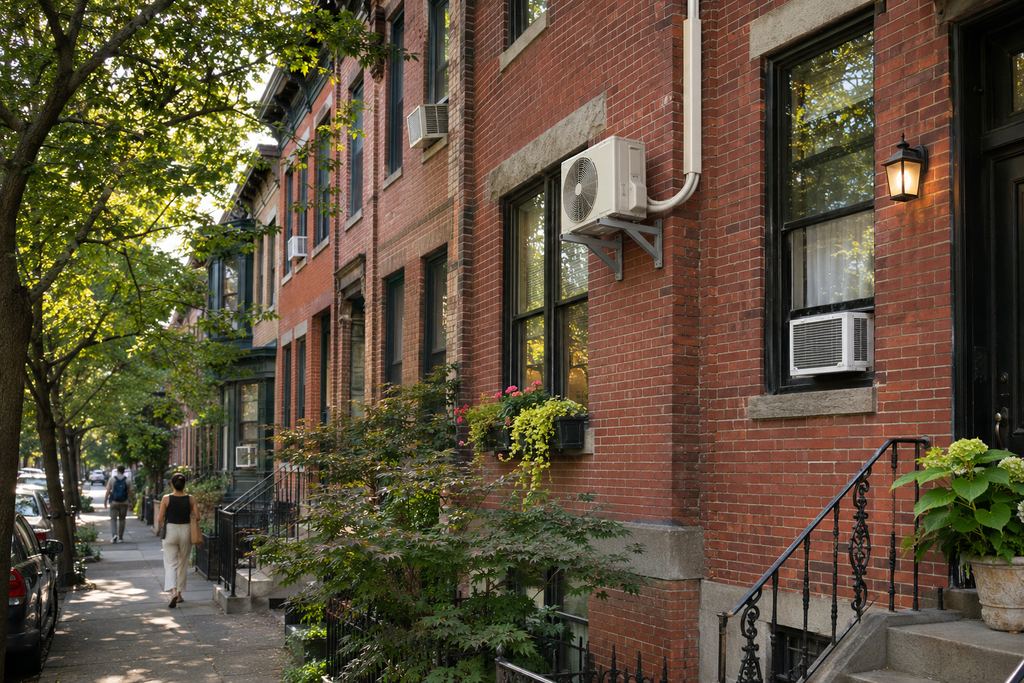
Attached houses leave little room. On a typical rowhouse the outdoor unit goes on the flat roof, on a wall bracket over the back yard, or in a narrow side alley, and the refrigerant lines have to travel two or three floors to reach it. Every bend and penetration is a spot the installer has to seal against water and air leaks. Roof placements also mean the installer has to work around the roof membrane without damaging it, which is worth asking about directly.
Heat is the reason people make the call. The city's Department of Public Health declares Heat Health Emergencies when dangerous heat sets in, and upper floors of brick rowhouses hold that heat long after sunset. If someone in the house is elderly or has a medical condition, say so in the request; installers may plan the order of rooms around it.
What moves the installation quote
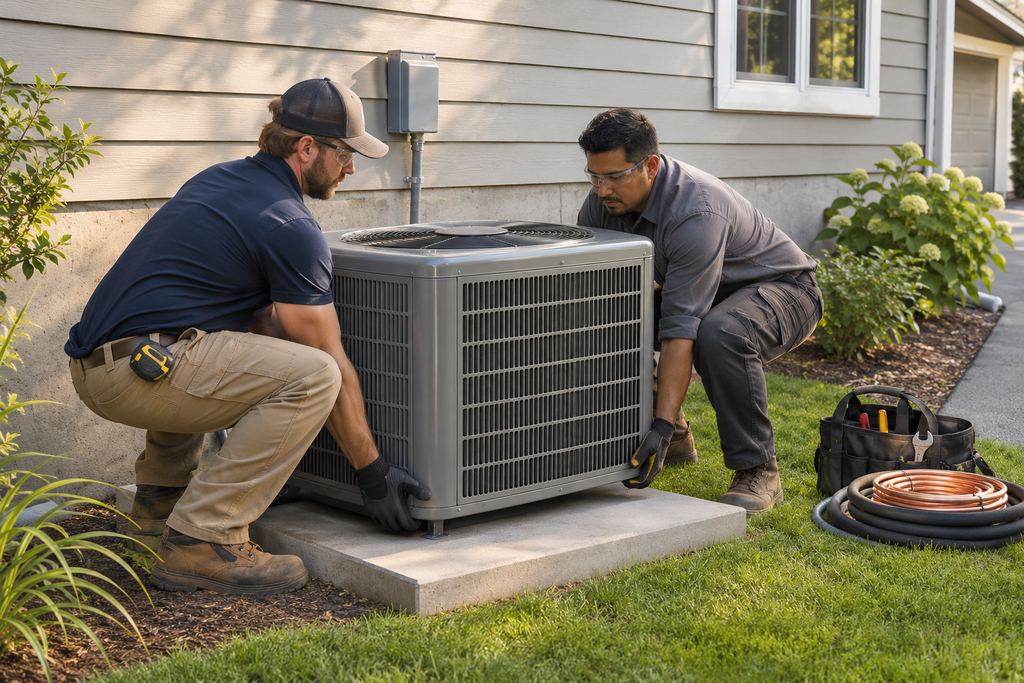
Contractors set their own prices after seeing the house. These are the variables behind the gap between two quotes.
Each ductless head adds equipment, a line set and a drain route.
Roof sets need hoisting or carrying; wall brackets need solid masonry.
Older panels in row homes sometimes need an upgrade for a new circuit.
Pennsylvania's federal floor since 2023 is 13.4 SEER2 for split central air; higher-rated or ENERGY STAR equipment costs more to buy.
Philadelphia's Department of Licenses and Inspections issues mechanical and electrical permits.
PECO and state programs change; check the ENERGY STAR rebate finder for what applies now.
What a complete installation includes
- Load calculation: Per room, accounting for brick walls, top-floor heat and window exposure.
- Permit and inspection: Applied for by the contractor through L&I.
- Weather-tight penetrations: Sealed wall and roof openings for lines and wiring.
- Condensate routing: Drains for every head, with a pump where gravity will not work.
- Current refrigerant: New equipment uses lower-GWP refrigerants such as R-454B or R-32.
- Startup and handover: Charge verified, remotes or thermostat explained, warranty paperwork left with you.
Questions to put to a Philadelphia installer
- Are you licensed with L&I?
Contractors performing permitted work in the city need a Philadelphia license. You can check status on phila.gov. - What is your Attorney General registration number?
Pennsylvania home improvement contractors register under the Home Improvement Consumer Protection Act and must print the number on the contract. - How will you protect the roof?
Ask about stands, pads and how the line set penetration is flashed. - Where does each drain go?
A head without a clear drain path leaks inside the wall later. - Who registers the warranty?
Manufacturers often require registration; read their terms and keep the confirmation.
Installs take days to schedule. If the house is dangerously hot in the meantime, use a city cooling center or a cooler place, and call 911 for anyone showing confusion, fainting or a stopped sweat response.
More on installation
The national AC installation overview covers sizing and the steps of a typical job, and other services for the city are listed under Philadelphia.
How a service request works
HVAC Service Near Me is a referral service. We don't send our own technicians. We connect you with independent local contractors.
- Describe the job
Type your ZIP code, pick a service and add a line or two about the problem or project.
- We pass it on
An independent HVAC contractor or partner network that works in your area and does that kind of job receives it.
- You hear back
The contractor gets in touch to check the details and set a time to come out.
- The choice is yours
After a diagnosis the contractor gives you a quote. Price, timing and warranty are agreed directly between the two of you.
Other AC services in Philadelphia
AC Installation in other Pennsylvania cities
Frequently asked questions
Can a rowhouse with radiators get central air?
Sometimes, with a small-duct or attic air handler system, but ductless mini-splits are usually simpler. They need only a small hole per head and no new ductwork through plaster walls.
Do I need a permit for a mini-split in Philadelphia?
Mechanical and electrical work usually needs permits from the Department of Licenses and Inspections. Your installer should file them.
Where does the outdoor unit go on a rowhouse?
On the roof, on a wall bracket over the yard, or on a pad in the yard or alley. The installer weighs noise, drainage, service access and how far the lines must run.
Is there a federal tax credit for new AC?
Not anymore at the federal level: 25C ended for equipment placed in service after December 31, 2025. Check current state, utility and local programs through the ENERGY STAR rebate finder.
Does HVAC Service Near Me install the system?
No. It sends your request to an independent installer, who quotes the job and does the work.
Related guides and services
Plan AC installation in Philadelphia
Describe the house and the rooms that need cooling. An independent installer who works in the city may contact you to schedule a look, depending on their calendar.
Note the ZIP code, house type (row, twin or single), the number of floors and what heats it in winter.
Please keep this page open.
- We pair the request with an independent contractor or partner network that works in your ZIP code.
- The contractor gets in touch to go over the details and agree on a visit.
- After checking the system they quote the job, and you choose whether to proceed.
Read how requests are handled.
Online requests are not connected to a contractor network yet. Nothing you typed was sent or saved. Please phone us instead, or try again later.
Call (888) 555-0199